

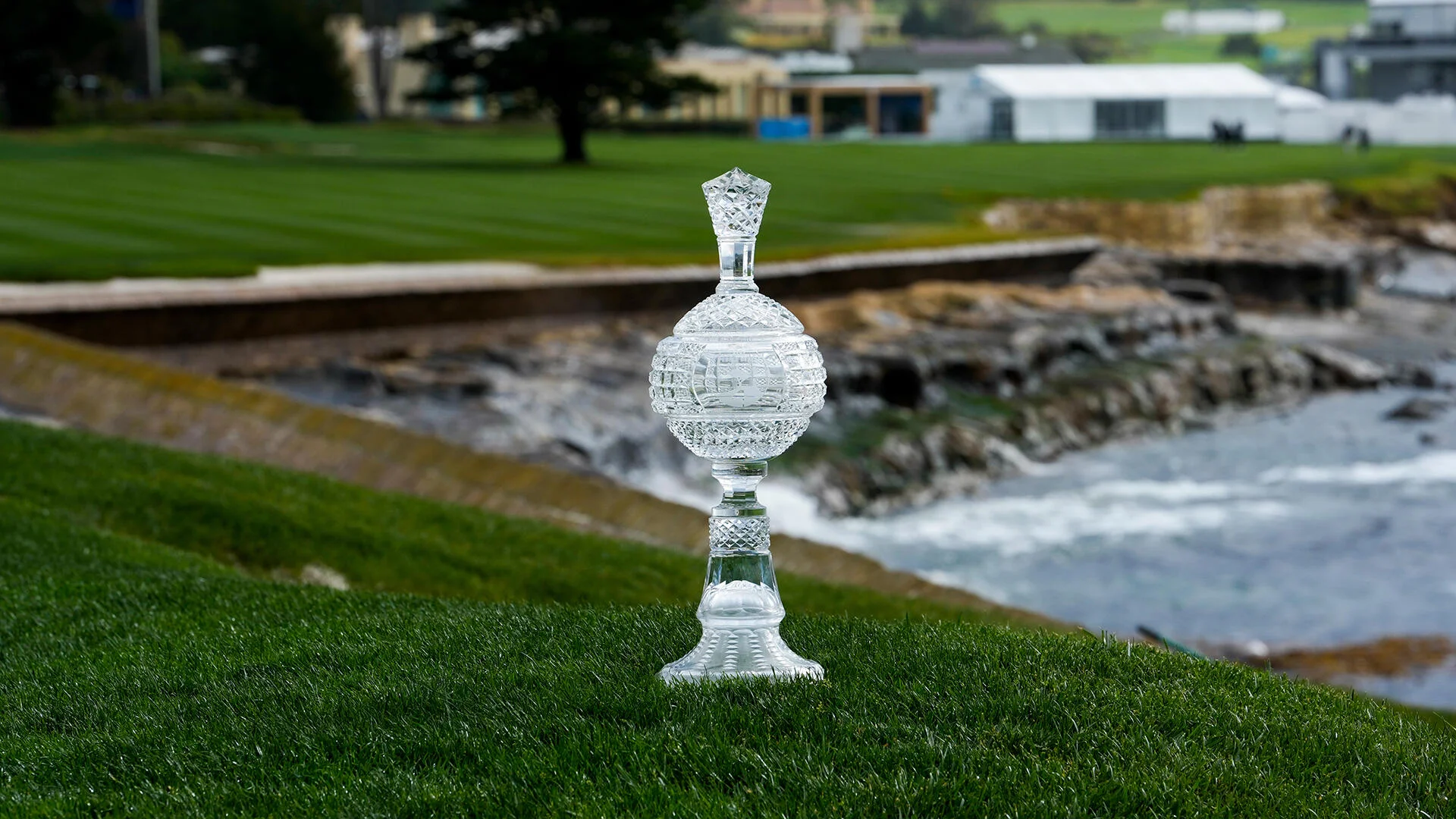

Morikawa’s Breakthrough at Pebble Signals a Tour in Healthy Flux
Collin Morikawa’s wire-to-wire victory at the AT&T Pebble Beach Pro-Am wasn’t just a feel-good story about a talented player finally breaking through after a two-year drought. It was, to me, a snapshot of a PGA Tour that’s fundamentally changed—and frankly, healthier for it.
I’ve been covering this tour for 35 years, and I’ll tell you what jumped out watching Morikawa close at 22-under: the narrative landscape of professional golf has shifted dramatically. We’re no longer watching a tour where one or two players dominate the calendar. Instead, we’re seeing what parity actually looks like when the money follows the talent and the format demands execution week after week.
The End of an Era (and the Beginning of Normalcy)
Last year, Scottie Scheffler won half of the eight signature events. That’s dominance on a scale we hadn’t seen in decades—and while it was remarkable from a competitive standpoint, it also felt a bit like watching the same movie twice. This season, though? All eight signature events went to different winners. That’s not just variance. That’s competition working exactly as it should.
What strikes me most is that this shift hasn’t diminished the quality of play or the prestige of the events. If anything, it’s created genuine suspense. When Scheffler finished T4 at Pebble Beach—still a strong result—it barely registered as news. That’s how dramatically the conversation has changed.
The Money Matters, But So Does the Field
Let’s talk about the elephant in the room: the purses. A $20 million total with $3.6 million going to the winner certainly catches attention. Here’s the payout breakdown that mattered most at Pebble Beach:
| Finishing Position | Prize Money |
|---|---|
| 1st Place (Collin Morikawa) | $3,600,000 |
| 2nd Place (Min Woo Lee, Sepp Straka) | $2,160,000 |
| Top 10 | $535,000 minimum |
| Top 20 | $252,000 minimum |
In my experience as a caddie in the ’90s, you’d see players mentally check out once they fell out of contention by Sunday. Not anymore. When every player inside the top 20 clears a quarter-million dollars, you get full fields playing full golf. That changes behavior, morale, and the overall competitive texture of an event.
But here’s what I think gets overlooked: the money alone didn’t create this parity. The field composition did. When the tour made the field smaller and more selective for signature events, they ensured that week-to-week, you’re getting elite-level competition without the filler. Morikawa didn’t just beat a field—he beat a precisely curated group of the world’s best.
The Return of Players Worth Watching
Rory McIlroy enters as the defending champion, having won three times early last season while also capturing his first Masters green jacket. He finished T14 this week. Tommy Fleetwood, fresh off his FedEx Cup victory, posted a T4. Scheffler was T4 as well. These aren’t second-tier names playing for middle-tier prize money. This is a murderer’s row of talent, and on any given week, any of them could be vulnerable.
“After a 2024 season in which Scottie Scheffler claimed half of the PGA Tour’s signature events, all eight were won by different players in 2025. Parity was the name of the game as winner’s checks worth $3.6 million and $4 million for the player invitationals were doled out to a variety of names.”
What I appreciate is that McIlroy’s presence at Pebble as the defending champ meant something—it created narrative weight. He’s not just another name in the field; he’s the guy everyone’s trying to dethrone. That matters for television, for fans, for the integrity of the event itself.
A Breakthrough That Feels Earned
Morikawa’s victory by one shot at 22-under represents exactly the kind of breakout performance you want to see from a young elite player. He won by playing better than everyone else, not by default. The field included Viktor Hovland, Ludvig Åberg, Xander Schauffele, and Rory himself. This wasn’t a charity win.
“Not only will $3.6 million of the $20 million purse be awarded to the winner, but every player inside the top 10 will also clear $500,000, and those inside the top 20 will each earn north of $250,000.”
In my three decades covering the tour, I’ve learned that the best storylines aren’t the ones handed to you—they’re the ones players earn through competition. Morikawa ending a two-year drought against this caliber of opposition? That’s a story worth celebrating because it means something again.
Looking Forward
The real question now is sustainability. Can the tour maintain this kind of parity throughout the calendar? I think the answer is yes, but only if the field strength remains consistent and the format continues to reward exceptional play. If signature events become too bloated with lower-ranked talent chasing huge purses, the whole thing falls apart.
What we’re seeing at Pebble Beach and throughout 2025 is a tour figuring out how to compete in a fragmented landscape where players have more options than ever. The answer, it turns out, isn’t to make things easier for superstars. It’s to make things harder—to ensure that winning means something because the field is genuinely elite.
Morikawa’s breakthrough? That’s not a feel-good story. That’s the sound of a tour working exactly as it should.
