

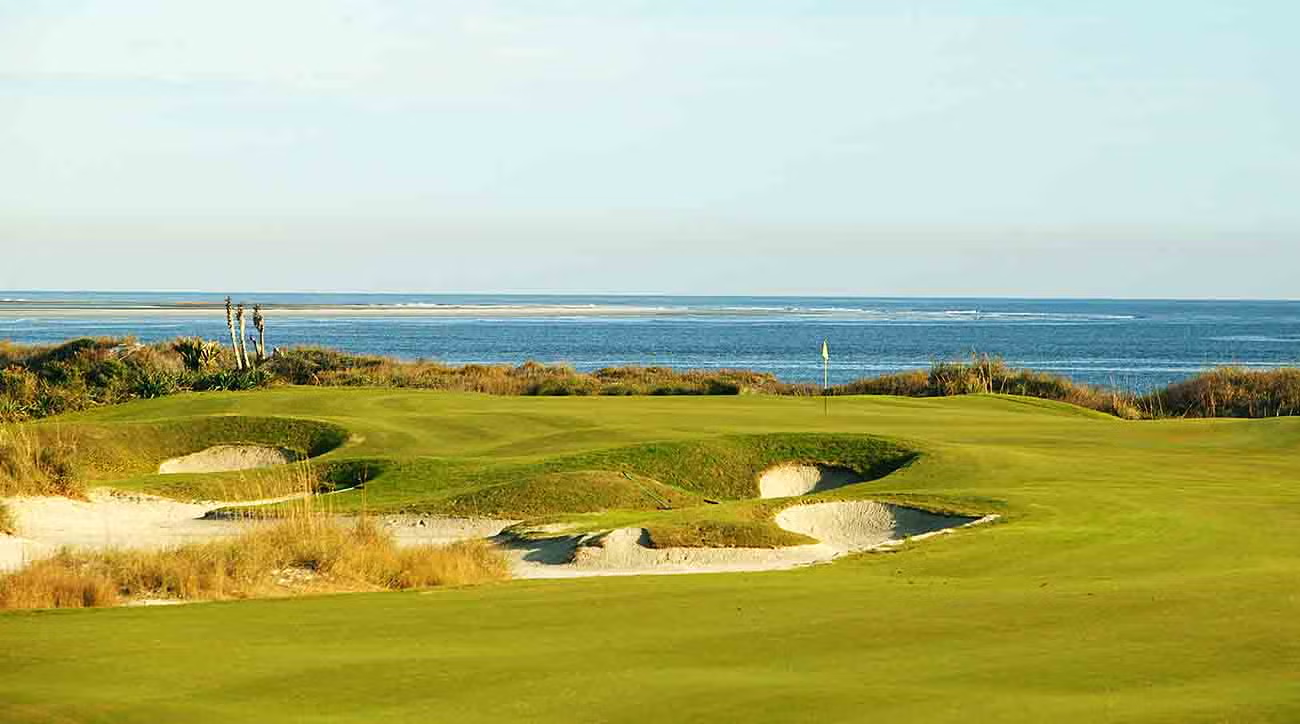

There are courses that challenge you, and then there are courses that whisper sweet nothings in one ear while planting a figurative spike mark in the other. Pete Dye, the architect often affectionately (or perhaps, ruefully) known as the “Marquis de Sod,” was a master of the latter. Few places showcase this brutal beauty quite like the Ocean Course at Kiawah Island, a veritable masterpiece of coastal golf that I’ve been fortunate enough to walk, curse, and ultimately, adore.
My first visit to Kiawah was on a blustery spring day, the kind of day where the sea spray tasted almost as salty as the tears of frustrated golfers. The course sprawls across the eastern tip of Kiawah, an almost alien landscape shaped by the Atlantic’s relentless breath. It’s a canvas of windswept dunes, gnarly sea oats, and a vast, ever-changing sky. The very air hums with anticipation, a sense that anything can happen here, and often does.
The War by the Shore’s Epicenter
The Ocean Course wasn’t just built; it was conjured into existence for a singular, high-stakes purpose: the 1991 Ryder Cup. Pete and Alice Dye, leveraging the raw, untamed beauty of the South Carolina coast, crafted a links-style behemoth from scratch. The genius of its design lies in its chameleon-like adaptability. With no prevailing breeze to dictate a fixed strategy, the Dyes imbued the course with a flexibility that allows it to play as two entirely different layouts depending on the wind direction.
“Drawing on the traditions of Scottish and Irish links, the Ocean Course unfolds along the Atlantic coast of South Carolina, at the mercy of winds that never behave the same way twice. With no prevailing breeze to design around, the Dyes built enough flexibility into the routing to play as two distinct courses depending on the conditions. On any given hole, there can be an eight-club difference from one day to the next.”
This dynamic nature is what truly sets Kiawah apart. I’ve played it multiple times, and each round has presented a unique challenge, a fresh puzzle to solve. One day, a 7-iron might be ample for a shot, the next, you’re white-knuckling a 4-iron into the same green, praying to keep it beneath the gale. It’s a testament to Dye’s understanding of how natural elements can be integrated into strategic design, turning the course itself into a living, breathing opponent.
The 18th: Dye’s Signature Torture Chamber
Pete Dye had a particular fondness for dramatic, often devastating, closing holes. Think the 17th at TPC Sawgrass, or the 18th at Whistling Straits. The Ocean Course’s 18th, a par-4 stretching nearly 490 yards for the pros, slots perfectly into this “dastardly canon.”
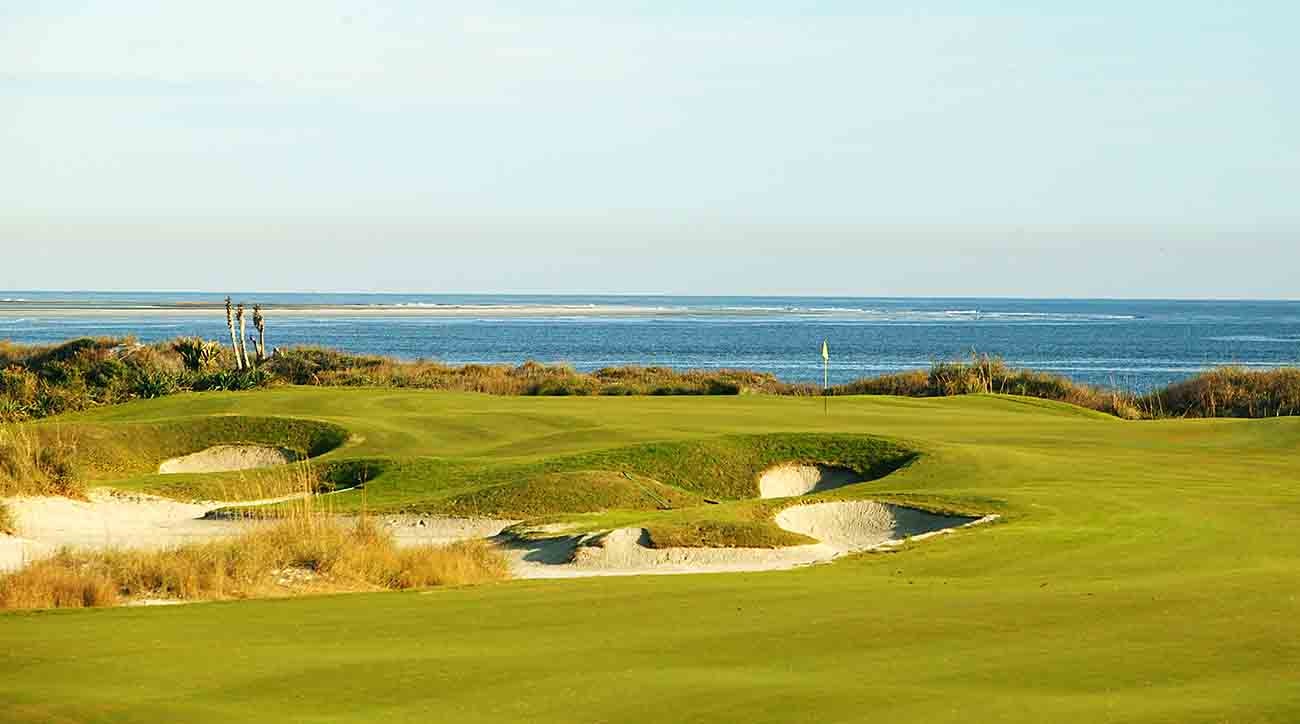
From the tee, it’s a sight that demands respect, a long, slender ribbon of fairway framed by undulating dunes. What’s striking is the deceptive simplicity from the tee deck; it appears far more intimidating than its actual width suggests. Dye played on perception here, a common tactic of his. The prescribed shot is a gentle left-to-right fade, but stray even slightly, and the sandy embrace of the dunes awaits. The green itself, nestled precariously in the dunes, is no reprieve, demanding a precise approach to find safety.
“The 18th is a bear no matter how it’s blowing. The hole stretches nearly 490 yards, it helps to hit it big. But length won’t save you from what Dye was really up to, which was messing with your mind. The fairway is a slender target hemmed in by dunes on both sides, and from the tee it appears far more menacing than it actually is.”
This hole is a classic Dye mind game. He famously had little sympathy for players who struggled with his punishing finishes, viewing them as opportunities for immortal glory, à la Ben Hogan’s iconic 1-iron at Merion. But as history shows, Kiawah’s 18th often preferred to humble rather than elevate.
“Kiawah’s 18th had other ideas in 1991. Hale Irwin snap-hooked his drive and couldn’t recover. Bernhard Langer, needing just six feet for the win, watched his putt graze the edge and stay out. Two of the era’s finest, undone on the same hole. No glory. No magazine covers. At least not the kind that either player would have wanted framed on his wall.”
That particular Ryder Cup finish epitomized Dye’s philosophy: demand the best, and watch how even the best can falter under pressure. It’s a closing chapter designed not just to test skill, but nerve, and it remains one of the most compelling finishes in golf.
Experiencing Kiawah
For those looking to experience the Ocean Course, it’s essential to plan. Kiawah Island is a sprawling resort, offering various accommodation options. The Ocean Course is a resort course, meaning it’s accessible to guests. However, be prepared for a premium experience, both in terms of the course condition and the cost. It’s a walking-only course for resort guests (caddies are mandatory and invaluable), a nod to its links heritage and a fantastic way to truly immerse yourself in the landscape.
When you journey to Kiawah Island, you’re not just playing a round of golf; you’re entering a legacy. You’re confronting the genius of Pete Dye, feeling the ocean’s raw power in every gust, and walking in the footsteps of legends who both conquered and were conquered by this exquisite stretch of coastline. It’s a golf experience that stays with you, long after the final putt drops.
