


There are golf courses, and then there are *experiences*. The Ocean Course at Kiawah Island Resort, sculpted by the legendary Pete and Alice Dye, firmly plants itself in the latter category. It’s a battlefield, a canvas, and a relentless psychological test all rolled into one impossibly picturesque stretch of South Carolina coastline. Having traversed over 200 courses worldwide, I can attest that few leave an imprint on the golfer’s soul quite like Kiawah.
The first thing that strikes you, even before your spikes touch turf, is the sheer, unadulterated exposure. This isn’t just a links-style course; it IS the links, embracing its position along the Atlantic with a raw, untamed spirit. The air itself feels different – heavy with salt, carrying the scent of marsh grass, and always, always in motion. This constant, invisible dance partner, the wind, is the course’s true defending champion.
Pete Dye’s Coastal Canvas: A Study in Strategic Savagery
Pete Dye, the “Marquis de Sod” as the pros affectionately (or perhaps exasperatedly) dubbed him, was a master of psychological warfare. His courses aren’t just beautiful; they’re designed to make you think, to question, and often, to doubt. Kiawah’s genesis is particularly fascinating. It was purpose-built, from conception to final blade of grass, to host a singular event: the 1991 Ryder Cup. This grand ambition is palpable in every design choice, every artfully placed bunker, and every undulating green.
“Drawing on the traditions of Scottish and Irish links, the Ocean Course unfolds along the Atlantic coast of South Carolina, at the mercy of winds that never behave the same way twice.”
This is where Dye’s genius truly shines. Recognizing that the prevailing breezes common to many coastal courses simply didn’t exist here, the Dyes crafted a routing with remarkable flexibility. It’s almost two distinct courses depending on the direction and ferocity of the wind. I’ve played it multiple times, and each round feels like discovering a new layout. The article aptly highlights this dynamic: “On any given hole, there can be an eight-club difference from one day to the next.” This isn’t an exaggeration; it’s a testament to how profoundly the elements dictate play.
From the moment you step onto the first tee, the course demands your full attention. The fairways appear narrower than they are, the bunkers seem deeper, and the water feels closer. Dye excelled at optical illusions, forcing golfers to second-guess their lines and commit wholeheartedly to their shots. The greens, often elevated and undulating, are framed by natural dunes and marsh, requiring precision and deft touch. They are Pete Dye greens, meaning they are rarely straightforward and always demand respect.
The Beast at the End: Kiawah’s 18th
Ah, the 18th. Dye’s affinity for “particularly penal closing holes” is perhaps best exemplified here. The finishing stretches at Whistling Straits, TPC Sawgrass, and PGA West’s Stadium Course are notorious, but Kiawah’s capper holds a special, almost mythical, place.
“The 18th at the Ocean Course at Kiawah Island belongs in that dastardly canon — a par-4 purpose-built to kick you in the knickers.”
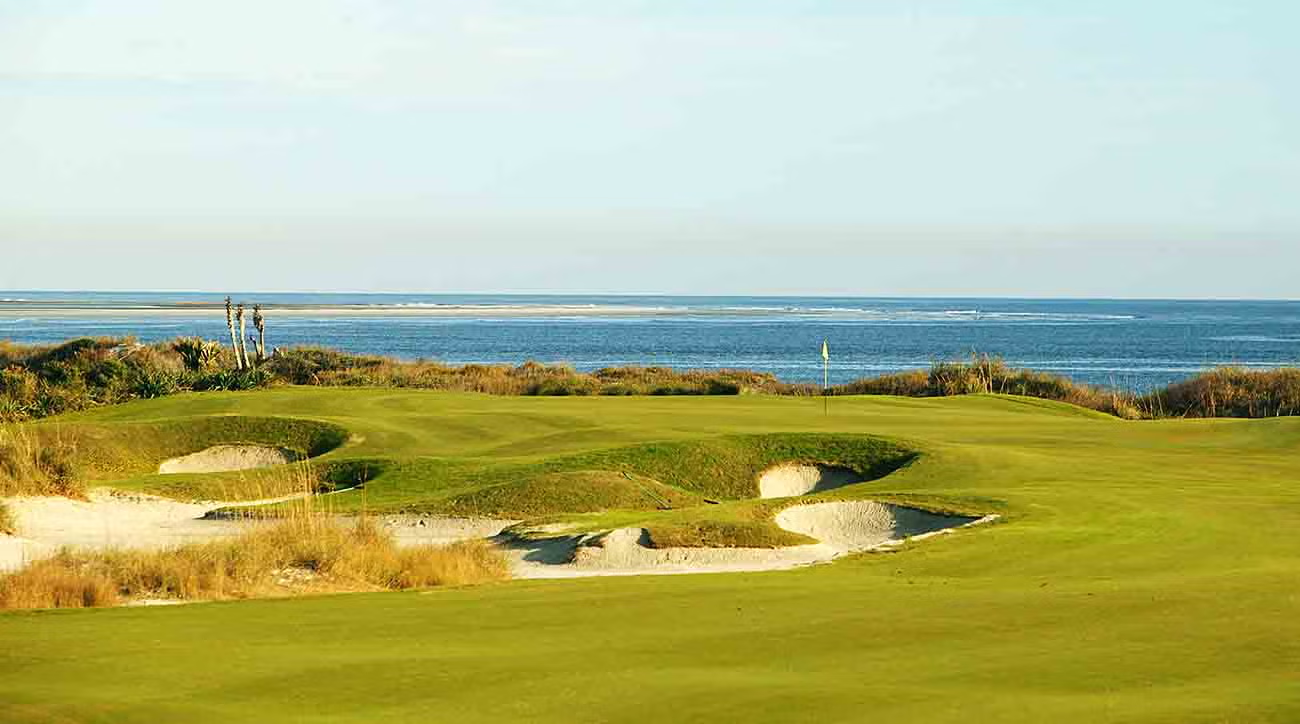
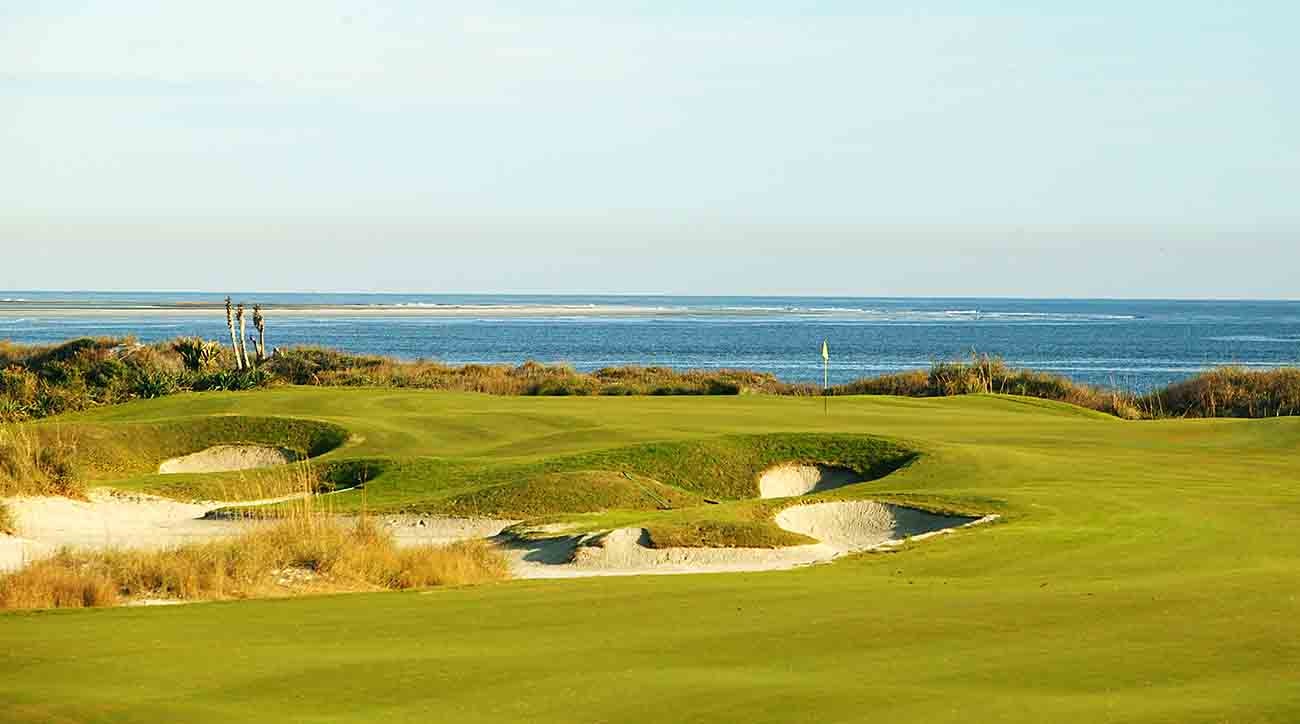
This par-4, stretching nearly 490 yards for the professionals, is a true monster. From the tee, the fairway appears impossibly slender, hemmed in by dunes and menacing shadows. It’s a classic Dye deception; it’s wider than it looks, but the psychological pressure of missing just slightly is immense. The prescribed shot is a gentle left-to-right fade, but anything offline is swallowed by sand. Even after a well-struck drive, the approach to the green, nestled precariously, is fraught with danger. The image of this hole, with the Atlantic crashing just beyond, encapsulates the entire experience.
“When players griped about his punishing finales, Dye had little sympathy. He framed such holes as opportunities — a chance at the kind of lasting fame Ben Hogan achieved with his iconic 1-iron on the 72nd hole of the 1950 U.S. Open at Merion, which earned him a place on the cover of LIFE magazine.”
Indeed, Dye saw these dramatic finishes as moments for heroism, or infamy. The 1991 Ryder Cup’s “War by the Shore” delivered both. Hale Irwin’s snap-hooked drive and Bernhard Langer’s agonizingly close miss on the putt cemented the 18th’s reputation. It’s a hole that doesn’t just decide a score; it writes legends. Or, as in the case of Langer, creates a lingering “what if” for the ages.
A Destination That Demands Attention
So, can you play this architectural marvel? Absolutely. The Ocean Course is Kiawah Island Resort’s crown jewel, and it’s open to resort guests. Located on a barrier island just south of Charleston, South Carolina, Kiawah offers more than just golf. It’s a destination wrapped in natural beauty, where wild marshlands meet pristine beaches. But for the golf architecture purist, the Ocean Course is the undeniable draw.
Before you go, understand what you’re stepping into. This is not a casual round. It’s an immersive dive into Pete Dye’s design philosophy, a battle against the elements, and a test of character. A caddy is not just recommended but almost essential, offering invaluable insight into lines, reads, and the ever-present effect of the wind. Come prepared to be humbled, challenged, and utterly captivated. You’ll leave with stories, perhaps a few lost balls, and an indelible appreciation for one of the world’s most unique and exhilarating golf courses.
