

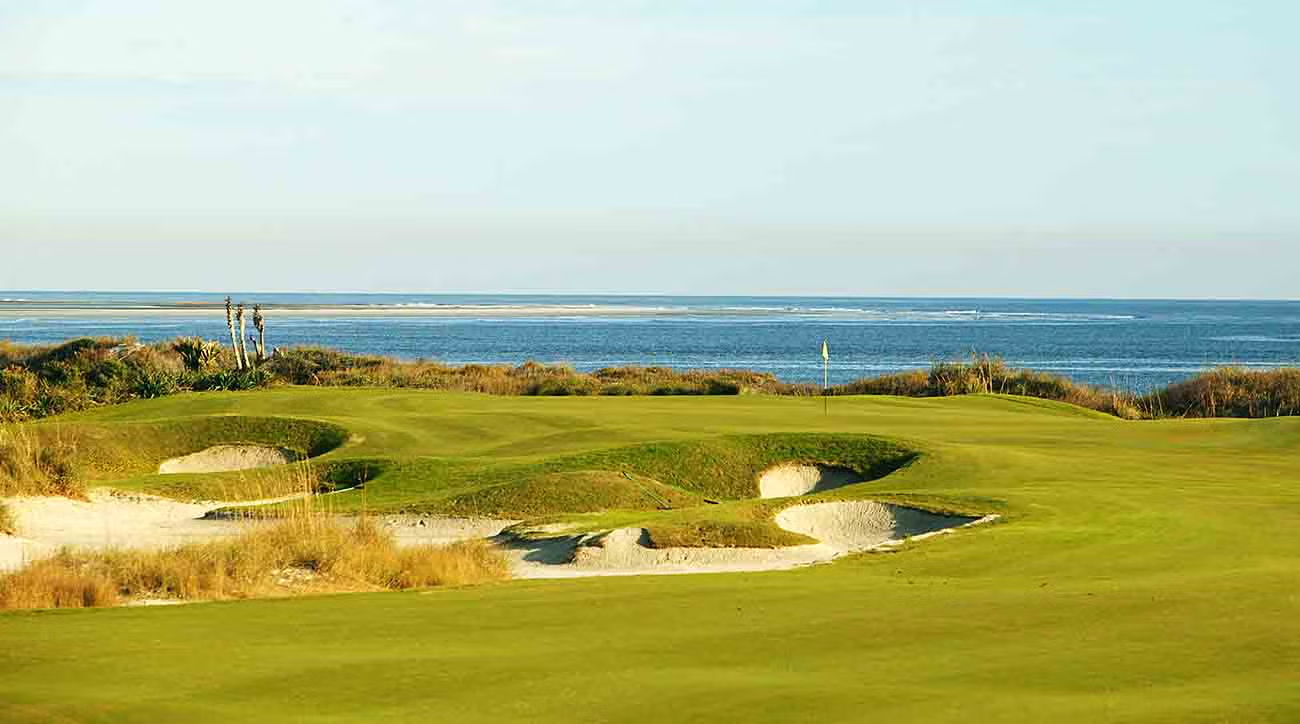

Ah, the Ocean Course at Kiawah. Just the name conjures images of wind-whipped dunes, the endless horizon of the Atlantic, and the distinct scent of salt and competitive pressure. As someone who’s wandered fairways from the heathlands of England to the desert oases of Arizona, I can tell you that few courses imprint themselves on your soul quite like Kiawah’s crown jewel. It’s not just a golf course; it’s an experience, a visceral journey designed to test every fiber of a golfer’s being.
My first visit to Kiawah, years ago, was almost pilgrimage-like. I’d read the lore, seen the Ryder Cup highlights, and knew the name Pete Dye was synonymous with architectural genius – and, let’s be honest, a certain level of devilishness. He and his incomparable wife, Alice, crafted something truly extraordinary here, a course that feels both ancient and eternally modern, a links-style masterpiece woven into the South Carolina coastline.
A Canvas of Wind and Sand
What immediately strikes you about the Ocean Course, even before you step onto the first tee, is its stark, raw beauty. There’s a wildness to it, an untamed spirit, thanks to its unique perch directly on the Atlantic. Imagine 10 holes running directly along the ocean, another eight paralleling them, all exposed to the relentless, fickle winds. This, indeed, is where the Dyes’ genius shines brightest.
The Dyes designed this course from scratch for a singular, monumental occasion: the 1991 Ryder Cup. This wasn’t some gentle parkland layout; it was purpose-built for high drama. And drama, it delivered, ushering in the era of the “War by the Shore.”
“Drawing on the traditions of Scottish and Irish links, the Ocean Course unfolds along the Atlantic coast of South Carolina, at the mercy of winds that never behave the same way twice.”
This single sentence from the source article perfectly encapsulates the course’s defining characteristic. There’s no prevailing breeze here. One day you might be hitting a pitching wedge into the 17th green, the next a 3-wood, both from the same yardage. This constant unpredictability forces a level of improvisation and mental fortitude that’s rarely found elsewhere. The Dyes, understanding this, built in a flexibility that allows the course to play as two distinct layouts depending on the daily conditions – a true testament to intelligent, forward-thinking design.
The Marquis de Sod’s Final Act: The 18th Hole
Pete Dye had a signature move, a flourish he applied to many of his designs: a brutal, often iconic, closing hole. Think of the 17th at TPC Sawgrass, or the 18th at Whistling Straits. Kiawah’s 18th fits this mold perfectly, a par-4 that serves as the ultimate psychological and physical gauntlet, a final examination of your game and your nerves.
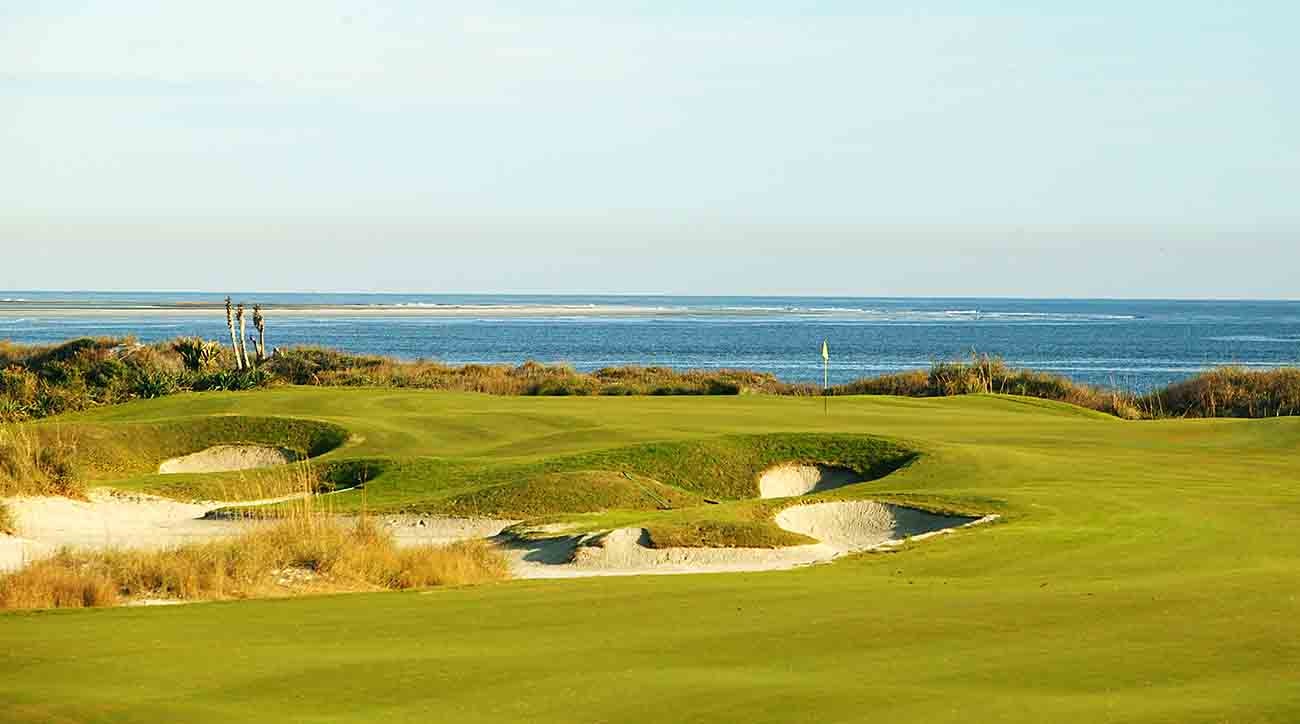
The hole itself is a beast: nearly 490 yards for the pros, often playing even longer into the wind. From the tee, it’s an optical illusion, a narrow ribbon of fairway seemingly squeezed by imposing dunes on either side. My first time staring down that tee shot, I distinctly remember my heart quickening. It feels like an impossible target, a needle to thread, but as with all Dye designs, there’s more to it than meets the eye.
“The fairway is a slender target hemmed in by dunes on both sides, and from the tee it appears far more menacing than it actually is. The prescribed shot traces a gentle left-to-right curve. Miss either way and the sand awaits.”
This is Dye at his most cunning. He understood how to play with a golfer’s psyche, making risk appear greater than it might be, or tempting a shot that isn’t truly there. Hit the “prescribed shot” – a gentle fade – and you’re in good shape. Veer off line, and you’re swallowed by the omnipresent sandy waste areas that define much of the Ocean Course’s character. The approach to the green, tucked beautifully into the dunes, demands precision, a final test before the reprieve of the clubhouse.
Pete Dye: Architect as Provocateur
Dye wasn’t just building golf holes; he was crafting narratives, presenting unique challenges that separated the truly great from the merely good. He had a particular penchant for what the source article aptly calls “exquisite torture.”
“When players griped about his punishing finales, Dye had little sympathy. He framed such holes as opportunities — a chance at the kind of lasting fame Ben Hogan achieved with his iconic 1-iron on the 72nd hole of the 1950 U.S. Open at Merion…”
He saw these tough finishers not as unfair, but as crucibles for greatness. And while Hogan’s Merion heroics are etched in history, Kiawah’s 18th delivered a different kind of drama in 1991, undoing golf legends like Hale Irwin and Bernhard Langer in the Ryder Cup’s deciding moments. It reminds us that golf, especially on a Dye course, can be a cruel mistress, offering no guarantees of glory, only the challenge itself.
Playing the Ocean Course: A Journey Worth Taking
So, can you play this majestic, maddening course? Absolutely. Kiawah Island Golf Resort is a public resort course, albeit a premium one. It’s located on Kiawah Island, South Carolina, a short drive from Charleston. Before you go, understand that this is not a course to be trifled with. It demands your full attention, every shot, every decision. The green fees reflect its championship pedigree, but for any true golf architecture enthusiast, it’s a pilgrimage well worth the investment.
Be prepared for the wind – it’s the course’s 15th club. Hire an experienced caddie; their knowledge of lines, lies, and the ever-shifting wind patterns is invaluable. Most importantly, embrace the challenge. The Ocean Course isn’t about scoring your personal best; it’s about experiencing one of golf’s most formidable and beautiful stages, a testament to the Dyes’ vision and an unforgettable encounter with the game at its most elemental.
