

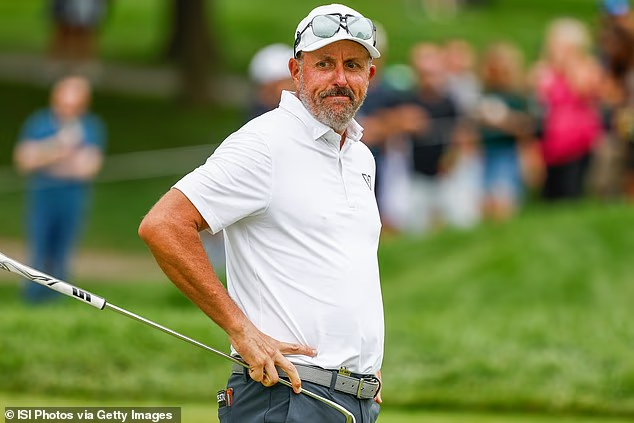

Phil’s Return: What His South Africa Comeback Really Means for Golf in 2026
After 35 years covering professional golf—including my time caddying for Tom Lehman back in the day—I’ve learned that the most important stories on tour aren’t always the ones making the biggest headlines. Sometimes they’re the ones happening in the quiet moments, in the absences that speak volumes about where our game stands.
So when I read that Phil Mickelson is finally returning to competition this week at the LIV Golf event in South Africa, my first reaction wasn’t celebration. It was curiosity—tinged with something like concern.
The Mystery of the Absence
Let’s be clear about what we know and what we don’t. Mickelson announced an indefinite hiatus back in August after the 2025 LIV finale, citing “a family health matter” that required his presence alongside his wife, Amy. The tour initially said he’d miss the first two events. Instead, he missed four: Riyadh, Adelaide, Hong Kong, and Singapore. That’s nearly seven months away from competition for a 55-year-old player who’s still hunting for that elusive Grand Slam.
“Phil returns to the lineup this week in South Africa!”
That’s the official announcement from LIV’s X account—carefully worded, conspicuously vague. No details about what kept him sidelined. No explanation of whether he’s fully resolved whatever crisis brought him away. Just the good news that he’s back.
In my experience, when organizations go that quiet about a player’s personal situation, it usually means something genuinely serious happened. And while I respect the family’s privacy completely, I also think about what this absence reveals about modern professional golf. At 55, competing at the highest level requires not just physical preparation but mental and emotional stability. Seven months away from tournament play? That’s not a vacation. That’s a withdrawal.
The Timing Question
What strikes me most is the timing of this return. Mickelson is coming back not at some random mid-season event, but right before the Masters—the tournament that’s defined his career legacy. He’s won it three times (2004, 2006, 2010) and has been trying to complete the Grand Slam for years. Augusta is his stage.
But here’s the reality check: Mickelson had a genuinely difficult 2025 by his standards. Missing the cut in three of four majors, including at Augusta itself? That’s not typical for someone with his pedigree. His highest finish in his final six LIV events was tied 23rd. These aren’t the numbers of someone ready to contend for major championships.
One LIV event in South Africa—likely his only competitive action since August—before heading to Augusta in early April? That’s an extremely aggressive return schedule for someone his age, especially after a prolonged absence. I have to wonder if Mickelson and his team have fully thought through what’s realistic here.
The Bigger Picture: LIV’s Fragility
But here’s what really concerns me, and it goes beyond just Phil’s situation. His absence came at possibly the worst time for LIV Golf itself. While Mickelson was away, two marquee names—Brooks Koepka and Patrick Reed—defected back to the PGA Tour. That’s not coincidence. That’s a signal.
Having covered golf for three and a half decades, I’ve watched the tour navigate plenty of challenges. But the current landscape feels genuinely uncertain in ways I haven’t seen before. LIV needs its stars visible and competing. Mickelson’s seven-month absence, regardless of the reason, sends a message: even the biggest names in that league are stepping back.
And now Rory McIlroy will arrive at Augusta as defending champion after completing the Grand Slam in 2025. Think about that narrative for a moment. The one accomplishment that’s eluded Mickelson his entire career—the Grand Slam—was just completed by a rival while Phil was dealing with personal matters. That’s the cruel mathematics of professional sports.
What Comes Next
I’m pulling for Phil, genuinely. He’s one of the best ambassadors golf has ever had. His creativity, his shot-making ability, his willingness to take risks—he changed how we think about the game. But I’m also realistic. A player who’s missed 34 consecutive competitive rounds doesn’t just shake off the rust in one LIV event and compete at the Masters.
What I hope happens is that Mickelson uses this South Africa event to get some tournament feel back, manages his expectations at Augusta, and finds a path forward that makes sense for where he is in his career. The Grand Slam will likely remain unfinished. But that doesn’t diminish what he’s accomplished.
The real question isn’t whether Phil can win the Masters this year. It’s whether this return signals genuine stability and purpose for LIV Golf, or whether it’s another chapter in what’s becoming an increasingly complicated narrative for the Saudi-backed tour.
Either way, we’ll find out soon enough.
