


Ah, TPC Sawgrass. The very name conjures images of gladiatorial golf, of strategic genius, and, let’s be honest, of balls finding watery graves. As a student of golf architecture, I’ve walked countless fairways, from the windswept dunes of the Open Championship rota to the pine-lined perfection of Augusta National. But few places command both reverence and a healthy dose of fear quite like Pete Dye’s masterpiece in Ponte Vedra Beach, Florida. It’s a course where every shot demands thought, where risk and reward are painted in stark, vibrant colors.
My first time stepping onto the Stadium Course, I felt an almost electric hum in the air. The Florida humidity hung heavy, mingling with the scent of salt marsh and perfectly manicured turf. Dye, in his inimitable way, carved this course out of flat, uninspiring swampland, proving once again his genius for creating compelling golf where none should exist. He elevated, mounded, and sculpted, transforming a featureless canvas into a theatrical stage for the game.
The Dye-abolical Brilliance of Strategy
What truly sets Sawgrass apart, beyond its iconic 17th island green, is its unflinching commitment to strategic design. Dye’s philosophy here is less about brute force and more about psychological warfare. He presents options, tempts the aggressive, and punishes the indecisive. Fairways pinch, bunkers stare menacingly from landing areas, and water, ever-present, gnashes at the edges of greens. It’s a chess match, and Dye is always a few moves ahead.
Take the par-5 11th, for example. A classic Dye split-fairway design, forcing a choice off the tee. Or the diabolical par-4 18th, a dogleg left with water marching relentlessly down the entire left side, demanding precision and courage under pressure. These are not holes designed to simply be played; they are holes designed to be experienced, to be battled. They provoke, they challenge, and ultimately, they reveal the character of the golfer.
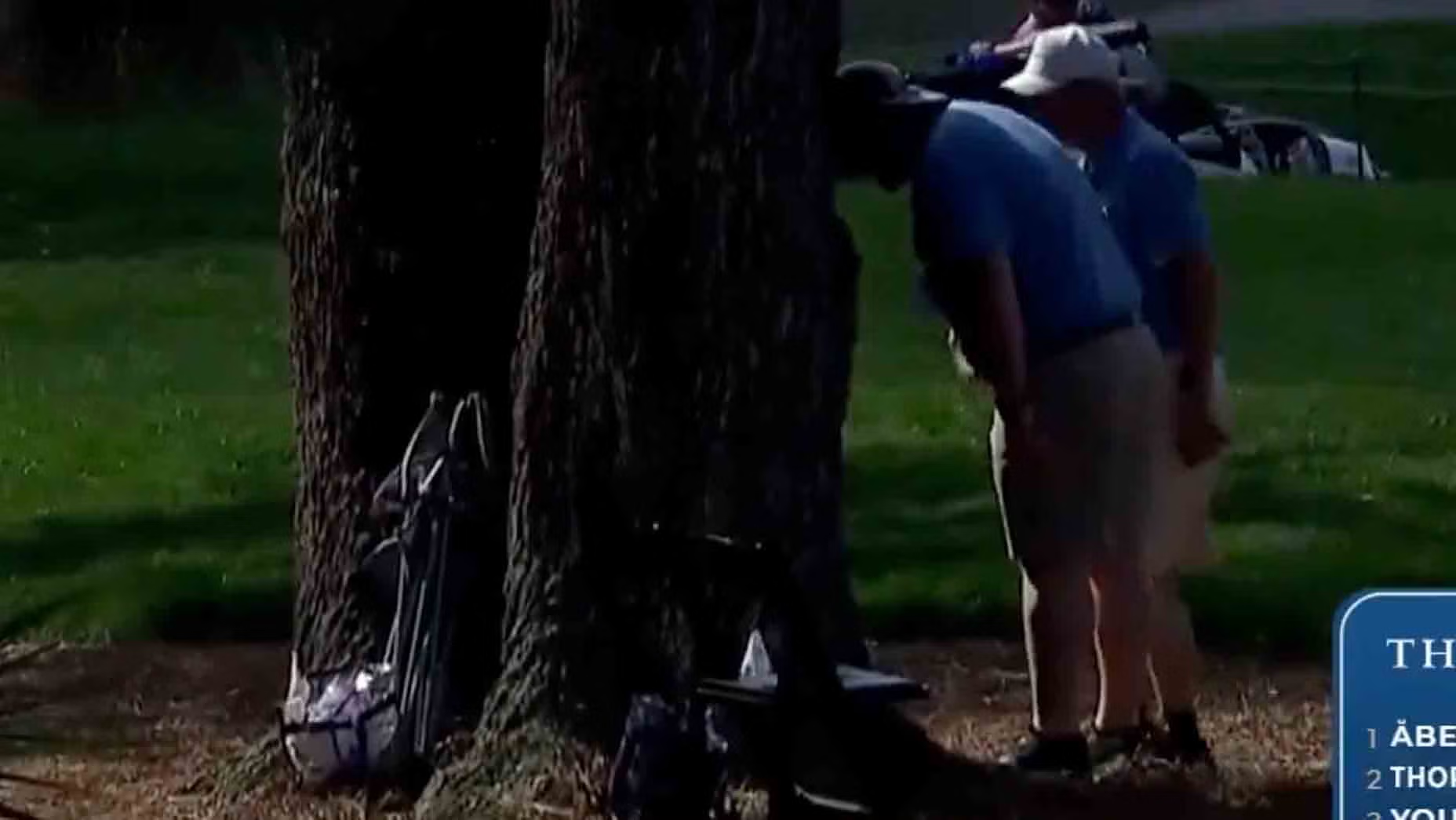
But sometimes, even the most meticulously designed course throws up a curveball that’s so bizarre, so utterly unique, it transcends mere architectural analysis and veers into the realm of the absurd. Which brings me to the recent Players Championship and Kevin Roy’s rather, shall we say, ‘arboreal’ encounter on the 13th hole. While the 13th might not be the most famous hole at Sawgrass, it perfectly encapsulates the wild, unpredictable nature of golf.
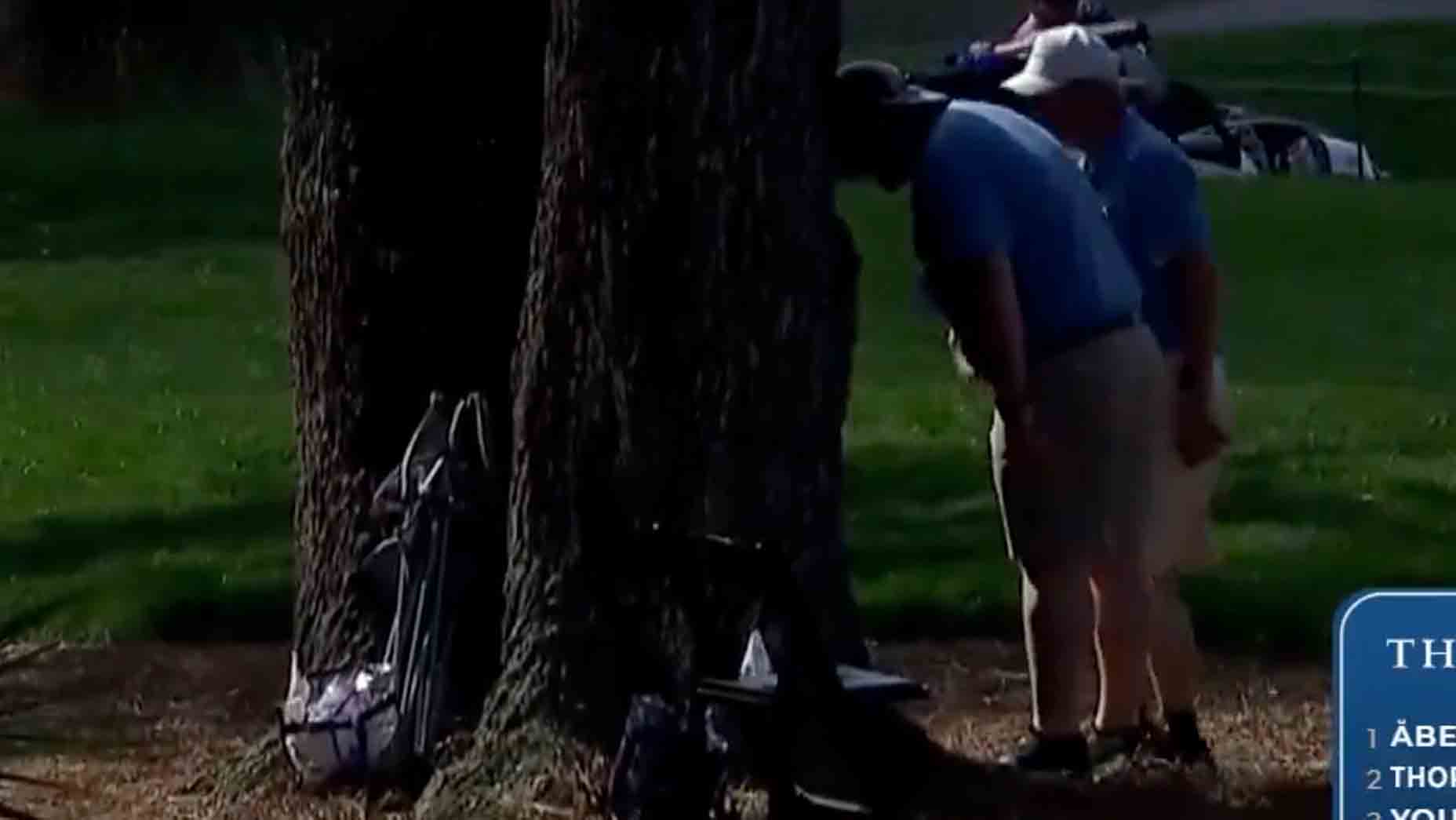
Picture it: the final round, the pressure building, and a tee shot that drifts right. Not into the rough, not into a bunker, but into a tree. Specifically, into a small hole within a tree trunk. Now, I’ve seen balls find their way into unlikelier spots – perched precariously on a fence post, nestled deep in the roots of an ancient oak – but a tree trunk cavity? That’s a new one. Even the seasoned rules official was stumped:
“Roy had asked her: “Have you ever seen this?” — and she said simply: “Never.””
It’s moments like these that remind us golf, even at its highest echelons, retains a charmingly chaotic element. The rules of golf, famously intricate, are constantly put to the test by the whims of fate and the physics of a rapidly moving dimpled sphere. And the volunteers, those unsung heroes of every professional tournament, even saw it coming:
“The volunteers on the right side of TPC Sawgrass’ 13th hole? When it happened, they said they saw it coming. “I called it,” one said. “I called it!””
The incident highlights an interesting nuance in the Rules of Golf regarding abnormal course conditions, specifically animal holes. As the article points out with a rather unfortunate anecdote, the key phrase is “in the ground.”
“An animal hole that qualifies as an abnormal course condition — from which you get free relief — is defined as “any hole dug in the ground by an animal, except for holes dug by animals that are also defined as loose impediments (such as worms or insects).” Those three little words, in the ground, did him in.”
So, unfortunately for Roy, a hole in a tree is just a hole in a tree, not an animal burrow in the ground. The result: a one-stroke penalty for an unplayable lie, and a story for the ages.
Playing Sawgrass: An Experience for the Ages
For those of us who appreciate the art of golf course design, TPC Sawgrass is more than just a tournament venue; it’s a living museum of strategic architecture. Located just south of Jacksonville, it is part of the TPC (Tournament Players Club) network, meaning it is publicly accessible – a rare treat for a course of its caliber and fame. Be warned, though, playing here requires a substantial green fee and typically includes a forecaddie, who is invaluable for navigating the intricacies of Dye’s design and helping locate any errant shots. The practice facilities are immaculate, and the clubhouse itself is a monument to the game.
When you stand on the 17th tee, heart hammering, with that infamous island green staring back at you, you feel the weight of history, the challenge of Dye’s vision, and the sheer joy of playing one of golf’s most iconic holes. It’s a moment that transcends the score, etching itself into your memory. It might demand your best game, test your nerves to the limit, and perhaps even swallow a ball or two (or, as Kevin Roy proved, a tree might swallow it for you), but TPC Sawgrass promises an unforgettable ride through the mind of a design legend.
