

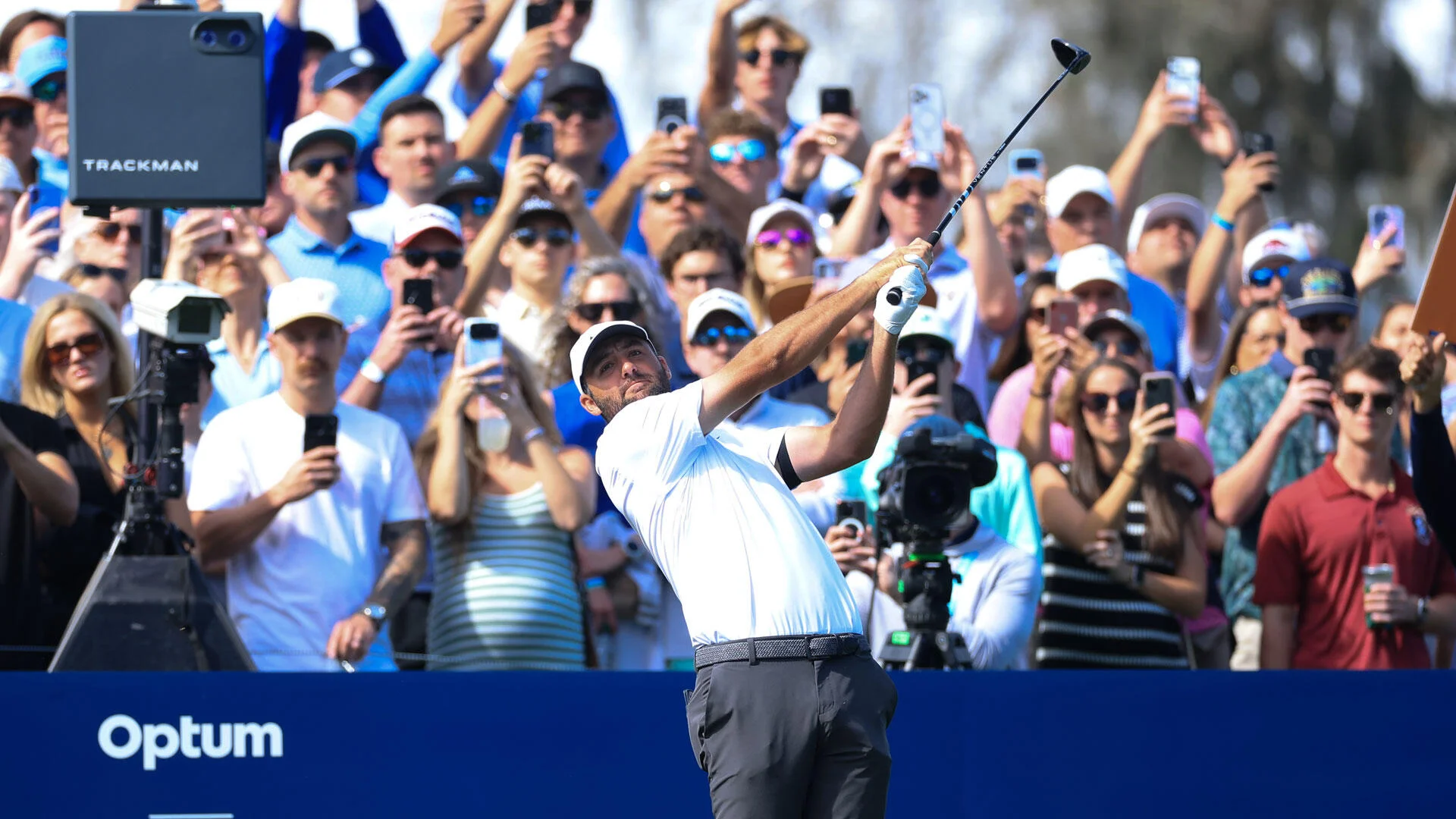

The Scheffler Grind: Why Saturday’s 67 Matters More Than You Think
There’s an old saying in caddie circles that separates the champions from the also-rans: "The guys who win majors know how to make birdies when they’re playing poorly." Scottie Scheffler just gave us a masterclass in that particular art form at TPC Sawgrass on Saturday.
Now, before you dismiss this as just another round where the world’s best player got hot for 18 holes—which happens fairly regularly, let’s be honest—let me tell you what I actually saw in that 67. After three decades covering this tour, I’ve learned to read between the scorecard, and what Scheffler demonstrated wasn’t simply stellar golf. It was the kind of grinding mentality that separates players destined for multiple majors from those who’ll be perpetual bridesmaids.
The Fairway Resurrection
Here’s the stat that jumped off the page for me: Scheffler hit just 14 fairways combined over his first two rounds. That’s abysmal by tour standards—borderline alarming for someone of his caliber. But on Saturday? Eleven of 14. That’s not a coincidence or a simple course management correction. That’s a player who identified a fundamental flaw, made an adjustment, and executed under pressure.
“I was a little sharper today than I was the first two days,” Scheffler said. “I felt like I was swinging it better each day of the tournament. Today hit a few more fairways and was able to give myself a few more looks for birdie.”
What strikes me about that statement—and maybe this only resonates if you’ve spent time in the trenches like I have—is the humility embedded in it. He’s not making excuses. He’s not blaming the course setup or wind conditions. He’s acknowledging that he wasn’t sharp, then simply went about his business fixing it. In my three decades around professional golf, I’ve noticed that’s often the dividing line. The good players blame external factors. The great ones own their misses and problem-solve.
The mechanics of his Saturday were compelling too. By hitting more fairways, Scheffler played from the short grass and got his "front foot" into the greens—golf terminology that means he’s in position to be aggressive. Despite hitting only nine greens in regulation (which would normally be concerning), his misses were proximity misses. That’s playable. That’s manageable. That’s championship golf.
The Birdie Efficiency Problem (And Why It Matters)
Now, here’s where I think the narrative needs some texture. Yes, Saturday was a gem—five birdies, bogey-free, climb of 30+ spots on the leaderboard. But Scheffler remains 3-under on the par-5s for the week, which is… let’s call it pedestrian. For context, Friday’s 36-hole leader Ludvig Åberg played those same par-5s in 6-under fashion on Friday alone.
That’s the gap between being in contention and winning. On a course like TPC Sawgrass with its five par-5s, that’s real estate. That’s winning percentage points. In my experience, the difference between a Scheffler who finishes top-20 and a Scheffler who wins comes down to these secondary opportunities. Rory, Tiger, Adam Scott—they all mastered the art of taking advantage when courses give you a birdie hole.
“The shot on 17 was really nice,” Scheffler said. “That was kind of a tweener for me, where I had to ride the wind a little bit. So it was nice for that one to come out nice and straight with a tiny little draw on it. That one was pretty close to exactly what I was wanting to do.”
This tells me something too—the fact that he’s working on precise shot shape (that "tiny little draw" on the par-3) suggests his technical work is dialed in. He’s not swinging it wild; he’s calibrating. Misses on holes 9 and 16 (both par-5s where he couldn’t reach in two after fairway misses) represent the only real tactical hiccups in his round. Those aren’t character flaws; they’re diagnostic information.
The Mental Model That Actually Matters
Here’s what really caught my eye, though—and this is where I think the story goes deeper than Saturday’s scorecard:
“I think with the way I hit it the first couple days, to kind of have the attitude that I did and the fight that I did… when I look at tournaments, I’m not thinking about winning, I’m thinking about approaching things the right way,” Scheffler said. “I did my best to stay committed and I did a good job I think of keeping the right attitude and keeping my head on straight in order to grind out a couple rounds that were difficult.”
That’s not just motivational poster material. That’s a professional golfer describing the exact mental framework that separates sustained excellence from flash-in-the-pan brilliance. Having caddied for Tom Lehman through the ’90s, I saw firsthand how the guys who won repeatedly weren’t necessarily the most talented—they were the ones who could reframe adversity as process.
Scheffler’s saying he’s not fixated on winning The Players Championship this week. He’s focused on approaching things correctly. That mindset, applied consistently, is how you collect major championships (he’s already got four). It’s how you win tournaments you weren’t supposed to win and stay competitive when things go sideways.
The Bigger Picture
So what does Saturday matter in the grand scheme? Scheffler likely won’t win this particular event—he’s too far back, and the field is too deep. But he’s building momentum heading into a "big tournament contested next month" (his words), and more importantly, he’s calibrating his game in real-time against elite competition. That’s the laboratory where champions are forged.
The fairway accuracy improvement, the mental resilience through two difficult rounds, the scrambling ability when things went sideways on holes 4 and 11—these aren’t flashy headlines. But they’re the stuff that builds dynasties. After 35 years covering this game, I can tell you that Saturday at TPC Sawgrass, Scheffler showed exactly why he remains the player everyone else is trying to catch.
