

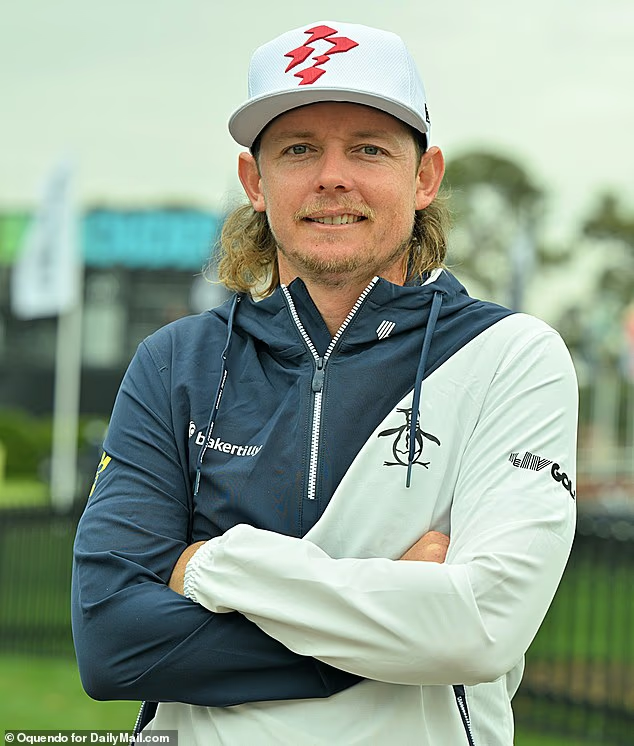

Cameron Smith’s Adelaide Declaration: What LIV Golf’s Confidence Really Means for Professional Golf
In my 35 years covering professional golf—including a stretch as Tom Lehman’s caddie back in the ’90s—I’ve learned to listen carefully when major champions speak with conviction about the sport’s future. So when Cameron Smith tells you he’s confident LIV Golf will be thriving two decades from now, it’s worth paying attention. Not because he’s necessarily a fortune teller, but because his confidence reflects something real happening beneath the surface of professional golf’s ongoing restructuring.
Smith made those remarks ahead of the LIV Adelaide tournament at The Grange this week, and they came at an interesting moment—right as Brooks Koepka and Patrick Reed have made headlines by returning to the PGA Tour. On the surface, you might think departures like these suggest LIV is losing its grip. But I think that’s a surface-level read of a much more complex situation.
When Stars Return, It Doesn’t Mean the League Is Failing
Here’s what I’ve learned watching golf’s power structure shift over decades: sometimes the most telling sign of a league’s staying power isn’t that nobody leaves. It’s that people feel comfortable choosing what works best for their individual circumstances, knowing the league itself isn’t going anywhere. Koepka and Reed’s returns to the PGA Tour don’t invalidate LIV Golf’s existence—they actually suggest the opposite. These aren’t desperate men fleeing a sinking ship. They’re established players making calculated career decisions.
What strikes me most about Smith’s position is his equanimity. He’s not bitter about departures or defensive about LIV’s model. Instead, he’s making a straightforward business argument: “For me it’s a great concept. I can’t see it going away and I can’t see it not working.” That’s the language of someone who’s committed because the fundamentals work, not because he’s trapped.
The Young Guard Is Arriving—And That Matters
What really caught my attention in Smith’s comments was a single detail that often gets overlooked in the defection narratives: LIV has been securing “young stars, notably Aussie Elvis Smylie, who won on debut in Riyadh and leading US college golfer Michael La Sasso.” In my experience, the long-term viability of any sports league hinges on whether you’re attracting—or retaining—talent at the entry level. You can lose established names and survive. You cannot lose young talent and thrive.
Smylie’s immediate success on debut is precisely the kind of storyline that matters for LIV’s narrative arc. One win doesn’t make a career, but it demonstrates that the league can develop and showcase emerging talent in a way that generates confidence among the next generation of golfers. That’s how you build toward Smith’s “20 years” projection.
The Celebrity Angle: More Than Just Fun and Games
I’ll admit, when I first heard about LIV’s pro-am events featuring Australian sporting icons like Steve Smith, Nathan Cleary, Ryan Papenhuyzen, and James Tedesco, my initial thought was charitable: it’s good entertainment, good for the game’s profile, gets golf in front of sports fans who might not otherwise care. And it is those things.
But there’s something subtly strategic happening here too. These aren’t random celebrities. These are A-list athletes from hugely popular sports—cricket, rugby league, Australian football. Having them participate in LIV events legitimizes the circuit within broader sporting culture. Cleary’s comment is telling: “These are once in a lifetime sort of opportunities. Being able to be a part of this is something I’ve really enjoyed and I am grateful for the opportunity.” That’s genuine enthusiasm from someone who could do almost anything with his time. It moves LIV Golf from “that Saudi league” into genuine sporting event status.
The Adelaide Factor: Geography as Strategy
I should note that LIV specifically chose to stage this event in Adelaide, Smith’s home region. That’s not incidental. It’s the kind of targeted scheduling that suggests a league thinking about regional strongholds and player equity. Having Smith play in front of a home crowd, with local sporting celebrities participating, creates a gravitational pull for Australian interest in professional golf. Over time, that matters.
A Balanced View of What Comes Next
Do I think LIV Golf will absolutely still be operating in 20 years? I’m less certain than Smith. Professional sports landscapes shift constantly, and a league built primarily on one nation’s sovereign wealth fund faces structural questions that tournaments don’t. But I think Smith is fundamentally right about one thing: LIV Golf isn’t going away anytime soon, and dismissing it as a temporary distraction looks increasingly foolish.
What I’m watching for now is whether LIV can answer two critical questions: (1) Can they genuinely develop young talent into stars, or just acquire established names? (2) Can they build sustainable media value that justifies their investment beyond novelty? The Smylie momentum and the celebrity pro-am integration suggest they’re thinking about both.
After three decades in this sport, I’ve learned that prophets usually miss as often as they hit. But confident, settled players backing their choice—that’s a real indicator. Smith’s comments deserve to be taken seriously, even if you remain skeptical about the league’s long-term trajectory.
