


Hisatsune’s Pebble Moment: When Youth, Confidence, and Perfect Conditions Align
I’ve been covering professional golf for thirty-five years, and I’ve learned that certain tournaments reveal themselves in interesting ways. The AT&T Pebble Beach Pro-Am always does this—the rotation between three courses, the celebrity amateurs, the unpredictable February weather. But what happened on Thursday in the opening round tells a story that goes well beyond one young man shooting 10-under par, impressive as that 62 truly is.
Ryo Hisatsune is 23 years old and has played exactly two weeks on the PGA Tour before walking onto the practice range at Pebble Beach. He was runner-up at Torrey Pines last week and finished tenth at Phoenix, playing alongside his hero Hideki Matsuyama. Now he’s leading a signature event in his tournament debut here. If that progression doesn’t strike you as remarkable, you haven’t spent enough time watching young golfers navigate the mental and physical demands of this tour.
Experience Stacking Up Fast
What strikes me most isn’t the 62 itself—though make no mistake, that’s a spectacular round. It’s that Hisatsune is doing something I rarely see from 23-year-olds fresh off the international circuit: he’s actually learning and improving in real-time under pressure. Being in final groups, feeling the weight of competition, missing narrow opportunities—these are the things that either build a player or break him. For Hisatsune, they seem to be building something.
His short game work on these poa annua greens deserves particular mention. The kid rolled in putts from 42, 31, 17, 16, 13, and 12 feet. That’s not luck—that’s a player who understands green speed and commit to his reads. Having caddied for Tom Lehman back in the day, I saw firsthand how crucial it is for young players to develop that kind of touch early. Lehman’s success came partly because he had the courage to be aggressive with the flatstick, and Hisatsune showed that same fearlessness on Thursday.
But here’s the honest assessment: his ball-striking needs to tighten up over the next fifty-four holes. A bogey-free round is wonderful, but it’s often a sign that a player is getting away with imprecise iron play. As one of my old mentors used to say, “Pretty putting can hide ugly irons for a day. It can’t hide them for four days.”
The Scoring Was Historic, but Let’s Talk Context
Pebble Beach played nearly four strokes under par in Round 1, while Spyglass Hill ran about two strokes tougher. These are ideal conditions—probably the best scoring weather of the whole week. Sam Burns, who sits one shot back at 9-under, put it perfectly:
“Anytime you can go bogey-free, regardless of where you’re playing, is always a good thing, and especially to do it around here. It was nice. I made a significant amount of putts and feel like I was hitting it pretty nice. It was a good combination for today.”
Burns is being gracious, but accurate. When conditions are this benign and greens are this receptive, everyone’s going low. The real tournament starts when the wind picks up or the pins move into those impossible Friday afternoon positions. That’s when Hisatsune’s tournament debut becomes a genuine test rather than a clinic.
Where’s Scottie? And Why Rory Might Still Own This Thing
For the second consecutive week, Scottie Scheffler finds himself ten strokes off the pace after eighteen holes. This isn’t panic time—Scheffler has more than enough golf ahead to climb back into contention. But it’s worth examining what’s happening with the world’s number one player.
Thursday’s round wasn’t one bad hour like Phoenix; it was a slow bleed. He lost approximately 2.5 strokes on approach work and ranked 73rd out of 80 golfers in that category. For Scheffler, who typically controls the ball like few others, that’s the real worry. Missing par putts from inside three feet is a symptom, not the disease. The disease is the iron play, and that doesn’t fix itself overnight.
Now, Rory McIlroy opened with a 68 despite two double bogeys. Yes, he struggled on the greens. But he still managed to beat the scoring average at Spyglass Hill. In my experience covering this tour, that’s the mark of a champion—playing ugly and still getting the job done. McIlroy left strokes out there on Thursday and still positioned himself to make a run. That’s the kind of mental toughness that wins tournaments in February.
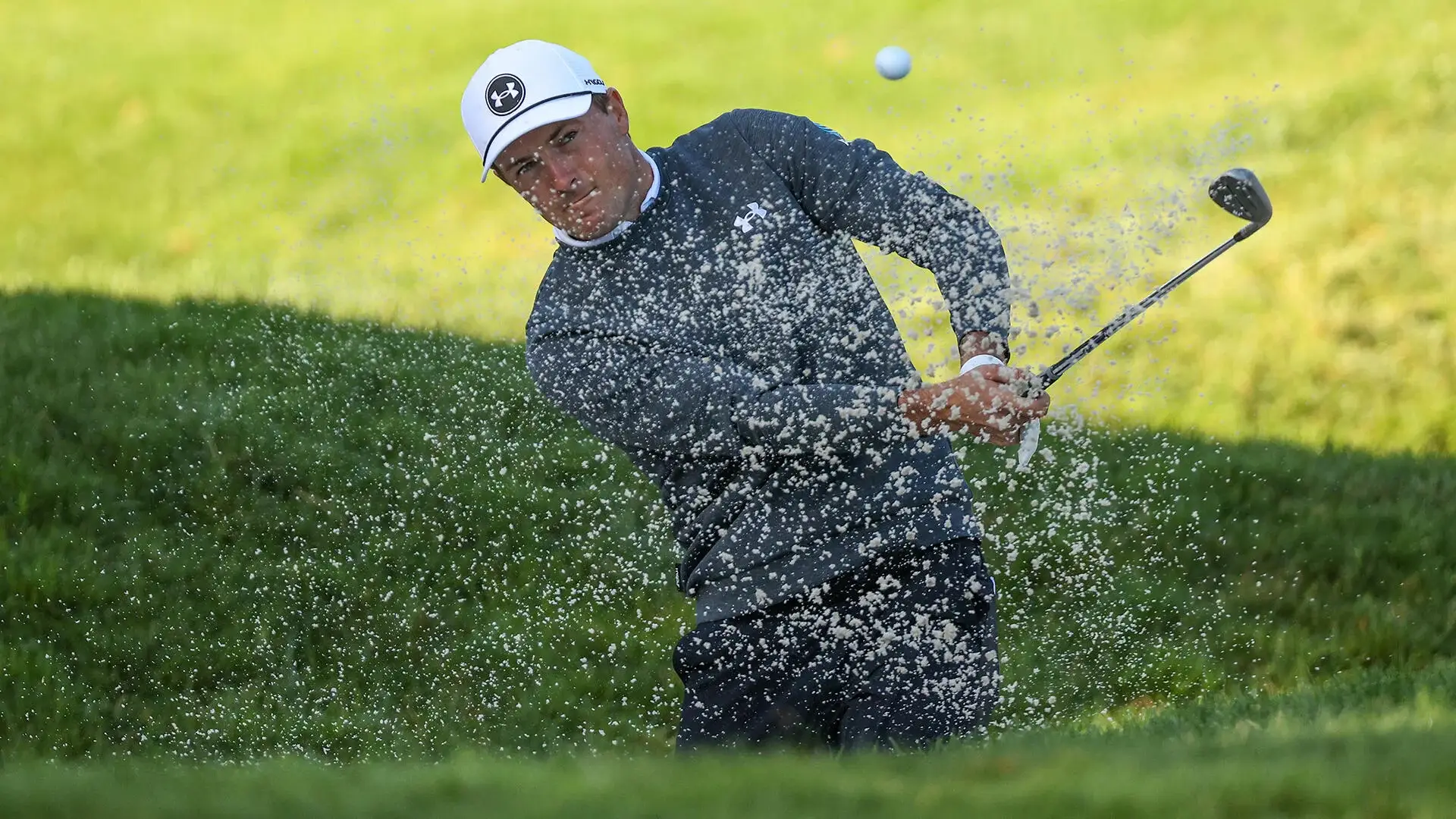
And then there’s Jordan Spieth, who shot 66 without dropping a shot on Spyglass. That bogey-free round included holing out for eagle on the par-4 ninth and solid short-game work the entire day. Spieth himself acknowledged his approach play wasn’t sharp: “I actually didn’t hit many greens for how kind of well I thought I was swinging the club.” But listen to what he did next:
“Obviously, holing a wedge shot was probably the highlight of the day. But I just really plotted my way around. When I missed, I missed in the right spot.”
That’s recovery golf. That’s experience. That’s the kind of thing that separates the pretenders from the real contenders when the pressure increases.
What’s Really Happening Here
Hisatsune’s lead is impressive and legitimate. But the leaderboard is crowded with exactly the kind of talent you’d expect to see: Burns, Bradley, Gotterup (already a two-time winner this season), Finau, and several others within striking distance. This isn’t a runaway situation for the young Japanese player.
In my judgment, we’re looking at a tournament that’s genuinely wide open. The kid with the hot hand and the putter is leading, sure. But I’d be watching McIlroy’s ability to avoid greens-side mistakes and keep himself in position. And I’d be watching whether Scheffler’s iron play tightens up by Friday afternoon at Pebble.
For now, though, Hisatsune deserves every bit of credit for his performance. Some players arrive on tour and fade. Others arrive and build momentum through early adversity. You’re watching the latter unfold in real-time this week at Pebble Beach.
