

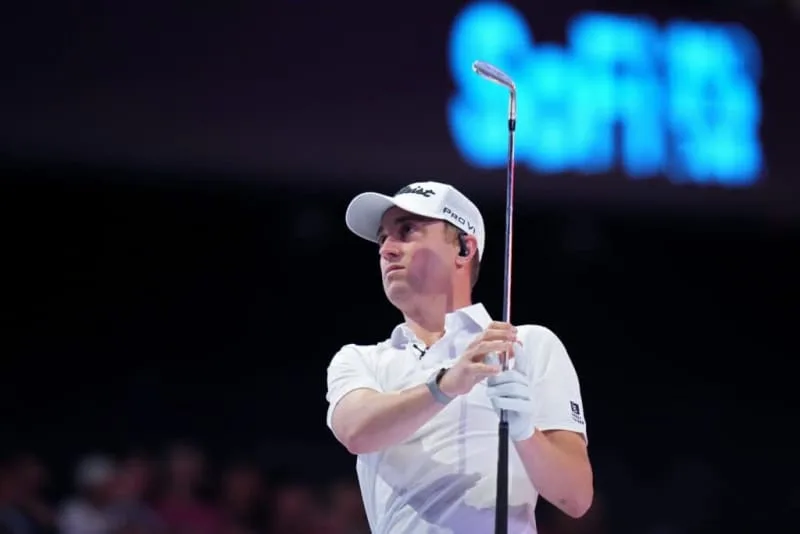

Justin Thomas’ Return Is More Than Just Good News – It’s a Litmus Test for Tour Depth
There’s a particular energy that surrounds a player’s comeback from injury, especially when that player is Justin Thomas. Having watched him navigate the professional circuit for the better part of two decades now – and having caddied alongside some of the greats during his era – I can tell you that what we’re witnessing isn’t merely the return of a talented golfer. It’s a barometer for where professional golf stands right now.
Thomas’ announcement at TGL that he’ll make his PGA Tour return at the Arnold Palmer Invitational on March 5 feels significant for reasons that go beyond the obvious. Yes, we’re getting back a former PGA Champion and multiple tour winner. Yes, his short game and iron play are the stuff of tour legend. But what really strikes me is the conversation his injury and recovery have sparked about depth, durability, and what it takes to compete at the highest levels in 2025.
The 2025 Context: A Year of Promise and Pain
Let’s be honest about Thomas’ season before the injury forced his hand. A win at the RBC Heritage and three second-place finishes showed flashes of the talent we know exists. But missing the cut at both the US Open and PGA Championship? That’s not typical JT. That’s a player fighting through something, whether physical or mental. The back injury that eventually sent him to the sidelines explains a lot of what we saw – or rather, what we didn’t see – in those major championships.
What’s encouraging is how the tour community has received his return. When Rory McIlroy talked about Thomas getting back to action, there was genuine warmth in his words. And I don’t think that’s just professional courtesy.
“Yeah, it’s great. Obviously, he’s been out for a little while, but it looks like his rehab has went really well. Looks like he’s going to tee it up next week at Bay Hill for the first time. Great to have him back out here. Obviously, he’s been one of the best players over the last decade.”
McIlroy’s comments reflect something I’ve observed across 35 years of covering this game: elite players genuinely respect other elite players, and they understand the fragility of careers at this level. When a guy like Thomas – someone McIlroy has competed against and alongside for years – goes down, it matters to the whole ecosystem.
What His Teammates Are Really Saying
Billy Horschel’s take on Thomas’ return deserves more attention than a casual read might suggest. Horschel has been around long enough to know the difference between talent and durability, between flash and consistency. His comment that
“JT is one of the biggest stars in the game of golf. I’ve said it for many years; I think his talent when he’s on, he can compete with anyone. His short game, his ability to hit iron shots, I think he’s an unbelievable talent.”
isn’t just locker room chatter. It’s an acknowledgment of a fundamental truth about professional golf: when Thomas is healthy and sharp, the tournament gets tighter. Competition gets fiercer. The field raises its game because you have to.
What also caught my attention was Horschel’s broader observation about his Atlanta Drive GC team dealing with injuries throughout the season. He joked about needing to “wrap up Chris Gotterup in bubble wrap,” but there’s real concern underneath that humor. The physical toll of professional golf is something we don’t talk about enough. Tours are longer, schedules are more compact, and the intensity of competition – especially with the injection of LIV players and the overall elevation of the field – means bodies are being tested like never before.
The TGL Evidence and What It Tells Us
Here’s where I think experience matters. I’ve seen plenty of players come back from injury and look decent in exhibition or secondary events, only to struggle when real stakes return. The fact that Thomas played well in TGL is encouraging – it suggests his mechanics are intact and his confidence is reasonably high. But TGL is a different beast than the PGA Tour. The format is compressed, the fields are smaller, the pressure is different.
What will really tell us if Thomas is back isn’t how he plays at Bay Hill on March 5. It’s how he performs at The Players Championship two weeks later, and then at Augusta in April. Those are the tournaments where we’ll see if the rehab actually took, if he can sustain competitive golf over 72 holes against world-class fields, if the mental side of returning from injury has been properly addressed.
In my experience, that’s where comebacks live or die.
The Bigger Picture
Thomas’ return matters because the PGA Tour needs its stars healthy and competing. The product improves when top-tier talent is out there battling. It’s not cynical to say that – it’s just the economics and reality of professional sports. When your tenth-best player is unavailable, tenth place gets deeper, and everyone’s paychecks suffer slightly as a result.
But more than that, Thomas represents something important about resilience and the modern professional athlete’s commitment to the game. He didn’t rush back. He worked his rehab properly. And now, by all accounts, he’s genuinely ready to compete again rather than just showing up.
The game is better with Justin Thomas in the field. The tour is deeper with him healthy. And if his Bay Hill return goes according to plan, we might just be looking at one of those redemptive narratives that reminds us why we love following professional golf in the first place – a talented player working through adversity and coming out the other side ready to compete.
That’s a story worth following closely over the next few weeks.
