


Tiger’s Masters Door Isn’t Just Cracked Open—It’s a Signal to Golf’s Future
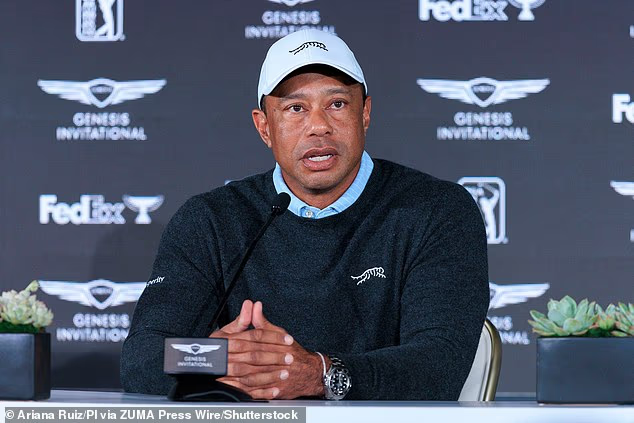
Look, I’ve been around this game long enough to know that when Tiger Woods says “No” to a simple yes-or-no question, he’s actually saying something profound. And last Tuesday, when asked if a Masters appearance this April was off the table, that single word carried more weight than most 500-word press releases.
In my 35 years covering professional golf—including my time as Tom Lehman’s caddie back in the ’90s—I’ve learned to read between the lines of what players say about their bodies and their futures. The carefully measured language Woods used in his recent comments isn’t just recovery talk. It’s a man genuinely grappling with something deeper: the question of legacy versus longevity, and whether returning to Augusta makes sense at 50 years old.
The Real Story Behind the Headlines
The sensational angle here is easy: “Tiger Hints at Masters Return!” But that misses what’s actually happening. Woods has had seven back surgeries. Seven. That’s not a number you casually recover from, and anyone who’s covered orthopedic injuries in golf knows that each procedure compounds the challenge. Add in a torn Achilles from last March, and you’re looking at an athlete managing cumulative damage that would sideline most of us permanently.
What strikes me most is Woods’ honesty about the difficulty:
“The disc replacement has been one thing. I’ve had a fused back and now a disc replacement, so it’s challenging.”
That’s not bravado. That’s a guy being realistic. And coming from Tiger—a competitor who’s historically played through pain that would make most players quit—it means something. He’s not promising a triumphant return. He’s saying he’s trying.
Why Augusta Matters More Than Just Golf
But here’s what really intrigues me as someone who’s walked those azalea-lined fairways fifteen times for major tournaments: A Masters appearance at age 50, regardless of the outcome, would be historic. Not for the winning—let’s be real, that ship has sailed—but for what it represents about the sport’s greatest player refusing to simply fade away.
The Masters is the only major without a cut after 36 holes. It’s played on the same course every year. And critically, starting in 2025, it’s been contested in a format where players can ride in a cart if needed. Woods specifically acknowledged this evolution, noting something many people overlooked:
“Now I entered a new decade, so that number is starting to sink in and has us thinking about the opportunity to be able to play in a cart. That’s something that, as I said, I won’t do out here on this tour because I don’t believe in it. But on the Champions Tour, that’s certainly that opportunity.”
What I read there is Woods being thoughtful about his options. He’s not ruling out golf entirely. He’s being strategic. He’s considering how his body, his age, and the evolving structure of professional golf intersect.
The Ryder Cup Question Nobody’s Asking
There’s also this intriguing detail about the U.S. Ryder Cup captaincy for 2027 in Ireland. Woods said they’ve asked for his input, and he’s still deciding. In my experience, when Tiger says he’s thinking something through “hours upon hours every day,” he’s serious. This isn’t throwaway language.
Here’s what fascinates me: Could Tiger be positioning himself as either a player or a leader at future major competitions? A Masters appearance followed by captaincy in 2027 would be a graceful way to remain central to golf’s biggest moments without demanding his body perform at its peak. That’s strategic thinking from someone who’s learned that winning at 50 is different than winning at 35.
The Bigger Picture for Professional Golf
Let’s also acknowledge what’s changed in golf while Woods has been recovering. Rory McIlroy won the Masters last year with his first green jacket—a storyline that would’ve been overshadowed by a Tiger return just five years ago. The PGA Tour, LIV Golf, and the broader golf landscape have shifted seismically. Woods’ future involvement matters not just for nostalgia but for how he shapes professional golf’s next chapter.
Woods himself acknowledged this uncertainty:
“I’m trying to figure out what we’re trying to do with our tour. That’s been driving me hours upon hours every day.”
That’s not just about golf. That’s about a legend trying to find his place in a sport he helped revolutionize but that’s now evolving without him.
Managing Expectations—Wisely
One thing I appreciate is that Woods isn’t promising a fairy tale. He’s being measured: “My body has been through a lot. Each and every day I keep trying, I keep progressing, trying to get it to a level that I can play at the highest level.” That’s not the language of someone expecting miracles. It’s the language of someone respecting his own limitations.
Will we see Tiger at Augusta this April? Maybe. Will it be memorable if he shows up? Absolutely. But the real story isn’t whether he plays or shoots 65. It’s that even at 50, after seven back surgeries and a torn Achilles, Tiger Woods is still wrestling with how to remain part of golf’s biggest moments. That’s the kind of competitor he’s always been—always trying, always thinking three moves ahead.
That single “No” to the question about Augusta being off the table? It might be the most Tiger thing he’s said in years.
