


Tiger’s Loaded Plate: Why the Ryder Cup Captaincy Decision Matters More Than You Think
Let me be straight with you: I’ve been around professional golf long enough to know when a deadline—soft or otherwise—actually means something. And this one matters, not because the PGA of America is suddenly getting impatient, but because it tells us everything we need to know about where Tiger Woods stands in 2026, and frankly, where the entire sport is headed.
On the surface, this looks like a simple story. Tiger’s being asked to decide by April whether he wants to captain the U.S. Ryder Cup team at Adare Manor in Ireland next year. He turned down the job before the last Ryder Cup. Now they’re asking again, but this time with a timeline. Simple enough, right?
Not even close.
The Real Story Behind the Deadline
In my 35 years covering this tour—and having caddied for Tom Lehman back in the day—I’ve learned that deadlines in professional golf are rarely about deadlines. They’re about leverage, about understanding what someone’s really prioritizing, and about the organizational scramble that happens when a top candidate keeps you guessing.
Here’s what strikes me: The PGA of America had to wait an unusually long time before announcing Keegan Bradley as captain for Bethpage Black. That wasn’t just an administrative quirk. That was Tiger saying no, and the tour brass having to regroup and find a Plan B. Now they’re back asking again because, well, Tiger Woods is still the biggest draw, the most credible voice, and frankly, the guy who might actually turn things around for Team USA.
But Tiger’s got problems—and I don’t mean that critically. The man’s 50 years old, recovering from his seventh back surgery in October, dealing with a torn Achilles from last March, and he’s still one of the most in-demand figures in golf. That’s not a complaint; that’s just reality.
The Boardroom Has Become Tiger’s Real Tournament
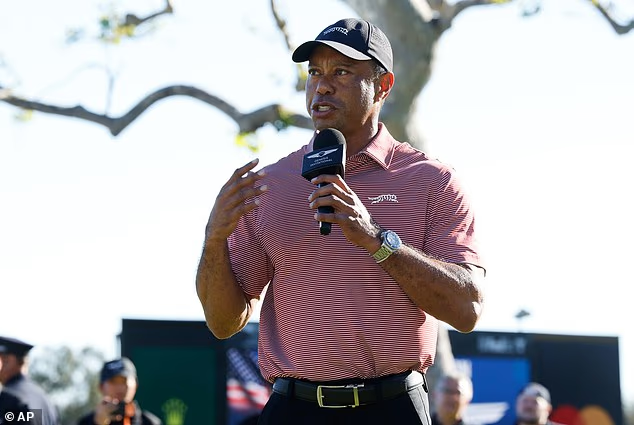
Here’s where the analysis gets interesting. Tiger didn’t mince words at Riviera last week about his time commitment:
“I thought I spent a lot of hours practicing in my prime. It doesn’t even compare to what we’ve done in the boardroom.”
That’s not a throwaway comment. That’s Tiger telling us something crucial. As chairman of the Future Competition Committee, he’s elbow-deep in one of the most complicated overhauls the PGA Tour has ever attempted. We’re talking about restructuring tournaments, navigating the LIV situation, managing player interests, TV deals—the works. The schedule redesign alone could occupy a full-time executive for a year.
A Ryder Cup captaincy is a time-consuming job. It’s not just a ceremonial role where you show up and look dignified. You’re building a team, managing personalities, making strategic decisions, and dealing with unprecedented media scrutiny when you’re competing on foreign soil. Add that to what Tiger’s already carrying, and you can see why even the greatest competitor in modern golf might pause.
Is a Playing Return Even Possible?
Then there’s the Augusta tease. Woods told CBS broadcasters at Genesis Invitational:
“There is [a possibility I could play at Augusta National]. I know I’ll be there… Trev and I are going to be part of a great dinner. I know a lot of people that are playing.”
And when pressed about playing elsewhere first:
“I don’t know. Whether it’s regular tour, senior tour, or member-guest, I don’t know!”
Look, I’ve covered 15 Masters. I’ve seen comebacks and I’ve seen false hope. But I’ve also learned never to count out Tiger Woods entirely. The fact that he’s even talking about possibility suggests his physical situation might be improving. A seventh back surgery is serious. A torn Achilles is serious. But the man’s got an incomparable will to compete.
That said, here’s my honest take: If Tiger’s seriously considering playing golf again in the near term, committing to a 12-month Ryder Cup captaincy role might be the wrong move. These two things don’t coexist easily.
What This Deadline Really Means
The PGA of America set this April deadline because they need clarity. They need to know if they’re planning with Tiger or without him. From an organizational standpoint, that’s completely rational. From Tiger’s perspective, it’s forcing a choice between two massive commitments.
In my experience, when someone at Tiger’s level keeps saying “I don’t know,” they usually mean they’re leaning toward no—they’re just being polite about it. The boardroom work is real and demanding. A possible playing comeback is real and demanding. Adding a captaincy to that equation seems unlikely.
What I find genuinely encouraging, though, is that the conversation even exists. The fact that there’s serious consideration of Tiger returning to play golf—even casually, even at a member-guest—suggests we haven’t seen the last of him competing. That’s worth something.
The Ryder Cup will happen with or without him. But watching how Tiger navigates this decision tells us everything we need to know about his priorities right now. And my gut tells me the boardroom wins this battle.
