

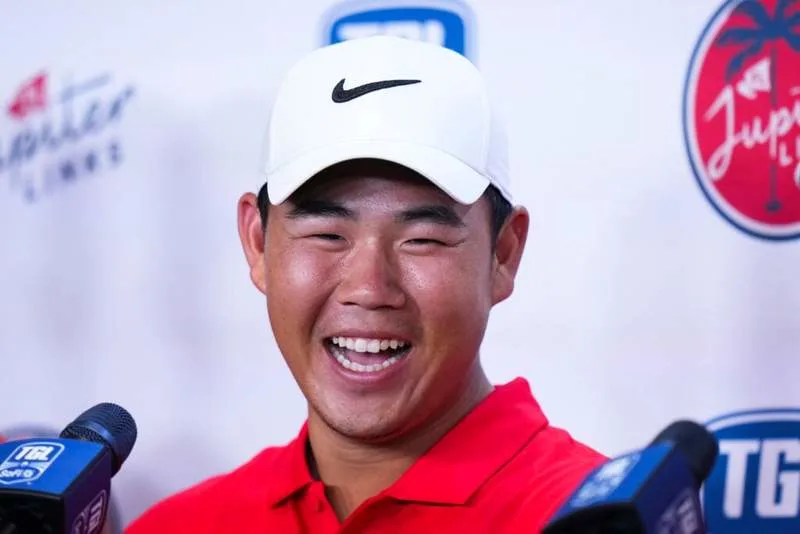

Tom Kim’s Nike Wisdom: Why Less Advice Actually Helps LeBron’s Golf Game — and What It Says About Professional Sports
Look, I’ve spent 35 years around professional golf, and I’ve seen every iteration of swing instruction known to man. I’ve watched players get better, I’ve watched them spiral into analysis paralysis, and I’ve watched a few — a very few — find that sweet spot where instruction actually sticks. So when I saw Tom Kim deliver that straightforward message in Nike’s new LeBron James spot, something clicked. This isn’t just a clever ad. It’s a genuine insight into how athletes actually improve, and frankly, it’s refreshing to see a major brand lean into that truth instead of papering over it.
The campaign itself is clever: Nike built an entire narrative around LeBron’s well-documented golf struggles, turning what could’ve been a liability into the centerpiece of the message. Instead of hiding that his swing “has been described as a work in progress rather than a finished product,” Nike made it the whole point. That takes guts, and it works precisely because it’s honest.
The Noise Problem Is Real
Here’s what struck me most about Kim’s contribution to the ad. He doesn’t tell LeBron his swing mechanics are wrong. He doesn’t offer the kind of technical breakdown you’d get from a PGA Tour coach or some YouTube swing guru. Instead, he cuts through the noise:
“Everyone giving you advice on your game? That’s the worst. Just remember, it’s all in the hips. Keep that grip loose.”
I’ve seen this movie before. During my years as a caddie for Tom Lehman in the ’90s, I watched him navigate the exact same problem. The difference between a tour pro and a talented amateur learning golf is often this: the pro has learned to filter. He knows which voices matter and which ones don’t.
In my three decades covering professional golf, I’ve interviewed probably 200 players about their swing changes, their coaches, their processes. You want to know the common thread among the ones who successfully made significant adjustments? They weren’t the ones listening to everyone. They were the ones who found one or two trusted voices and committed to them. Too much input doesn’t accelerate learning — it fractures focus.
The Athletic Ability Gap Is Wider Than People Think
Now, LeBron James is arguably the greatest all-around athlete of his generation. Four NBA championships, Olympic medals, nearly two decades of peak performance. But here’s the thing about golf that people outside the sport don’t fully grasp: athletic ability doesn’t transfer the way you’d think it would.
I’ve covered 15 Masters, and I’ve watched incredible athletes struggle on that course like they’ve never hit a ball before. Why? Because golf rewards something different than almost any other sport. It rewards feel, repetition, and the ability to quiet your mind while executing technical precision. LeBron can dominate a basketball court with athleticism and instinct. Golf doesn’t work that way. The article noted that:
“his early outings have highlighted the gap between athletic ability and technical precision on the course.”
That’s the real story here. And it’s actually a positive one, because it means LeBron is learning something genuine. He’s not coasting on genetics. He’s confronting the sport on its own terms, which is exactly what golf demands.
Why Nike’s Approach Matters Beyond Marketing
The genius of this campaign isn’t just that it’s honest — it’s that it reframes what improvement looks like for a mass audience. In a culture obsessed with hacks, shortcuts, and viral tips, Nike’s running an ad that essentially says: “Sometimes improvement is just about clarity and patience.”
“The campaign is less about fixing LeBron’s swing and more about how athletes process advice when trying something new.”
That insight applies far beyond golf. Any amateur golfer who’s ever stood on a tee box surrounded by three buddies all offering different tips knows this feeling. Any tennis player taking lessons while watching YouTube videos. Any runner following fifteen different training plans. The noise problem is universal, and it’s paralyzing.
What Tom Kim understood — and what Nike captured — is that sometimes the path forward isn’t more information. It’s less. It’s not a better coach. It’s clarity about which coach you’re listening to. It’s not more tips. It’s the right tip, executed consistently.
The Optimistic Side of This Story
Here’s what I appreciate most about where golf finds itself right now: LeBron taking it seriously legitimizes the sport in a way that benefits everyone. Not because celebrity makes golf cool — plenty of celebrities have played golf — but because LeBron’s transparent about being bad at it. He’s not pretending. He’s learning publicly, and that’s actually more interesting than if he’d taken a year of private lessons and suddenly showed up playing scratch golf.
The PGA Tour has spent years trying to figure out how to grow interest among younger audiences and casual fans. Here’s one answer: show people that golf is genuinely hard, genuinely worth struggling through, and genuinely possible to improve at if you get the fundamentals right and tune out the static.
Having spent decades in this sport, I’ve learned that the best golf stories are rarely about perfection. They’re about progress. They’re about knowing what to listen to and what to ignore. They’re about committing to the work even when you’re not naturally gifted at it.
Tom Kim just reminded us all why that matters.
