

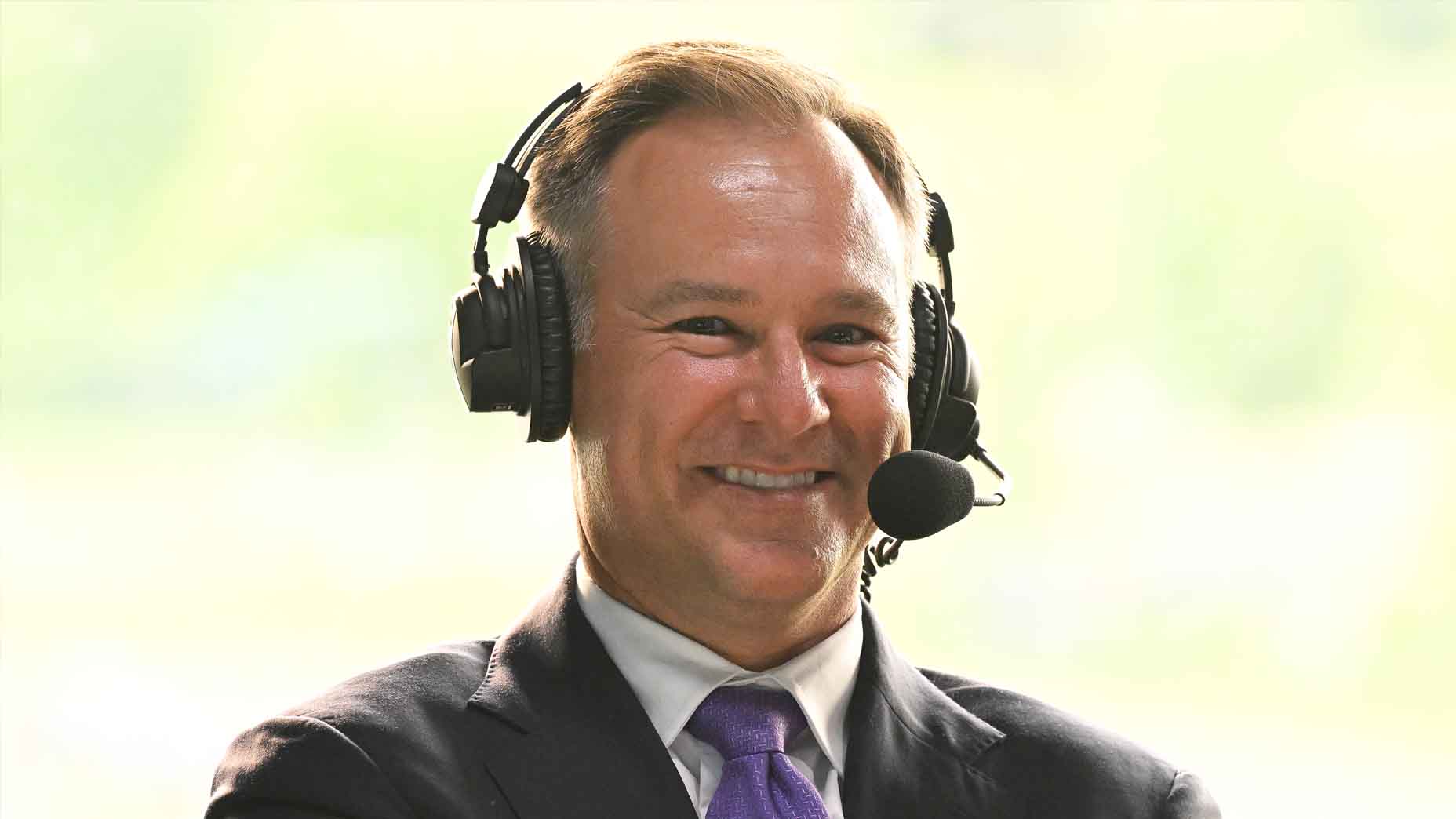

Trevor Immelman: The Catalyst for Change in Men’s Professional Golf
In the rapidly evolving landscape of men’s professional golf, Trevor Immelman stands out, not just as a former player but as a pivotal figure in the sport’s governance. Currently serving as CBS’s lead golf analyst, he is also the chairman of the Official World Golf Ranking (OWGR). Immelman finds himself at the crossroads of traditional golf and the emerging LIV Golf league, a breakaway organization that has garnered both attention and controversy. His unique position enables him to bridge the gap between these disparate factions in professional golf, which is crucial for shaping the future of the sport.
As the chairman of the OWGR, Immelman’s responsibilities extend beyond mere oversight. He’s directly involved in negotiating with LIV Golf, particularly its CEO Scott O’Neil, regarding the league’s pursuit of OWGR accreditation. Currently, players participating in LIV events do not accumulate points for the world rankings, but this could be subject to change. As the new LIV season approaches in February, Immelman is optimistic about achieving a solution that would allow LIV players to receive OWGR points.
Immelman recently expressed his belief that there is a "chance" LIV Golf could achieve OWGR accreditation by the beginning of its fifth season. This optimism is significant given that LIV previously submitted a proposal for world-ranking points in July of 2022, which was declined in October 2023. Peter Dawson, chair of the OWGR board, made it clear at the time that the denial was not politically motivated but rather based on technical standards. He emphasized that the quality of LIV players was not in question; the concerns lay within the league’s operational structure.
In March 2024, LIV’s then-CEO Greg Norman withdrew the league’s application for points, but the new leadership swiftly re-engaged with the OWGR. A new application was submitted on June 30, and Immelman has since maintained ongoing discussions with LIV. The modifications being made by LIV include the addition of new qualifying routes and the transition from a 54-hole format to 72 holes by 2026. Although some commentators speculate that these changes are attempts to meet OWGR standards, Immelman has clarified that the number of holes played is not a significant sticking point in the accreditation process.
The concept of meritocracy has been central to the OWGR’s philosophy, and Immelman reiterated this during recent press engagements. He highlighted that the OWGR evaluates different tours based on their competitive structures and the pathways they offer players to earn their spots. This means that LIV’s closed-shop format has presented challenges in securing OWGR points. With only limited spots available through promotional events, the closed nature of LIV Golf has been a major barrier to achieving legitimacy in the rankings system.
In discussions about future changes, Immelman noted that LIV Golf may consider evolving its league structure further, including potential increases in field sizes. The collaborative efforts between LIV officials and the OWGR board are essential for finding common ground that benefits both parties. Immelman’s role as chairman is described as that of a facilitator, gathering insights from various stakeholders to guide the board’s decision-making process.
The importance of obtaining OWGR points cannot be overstated for LIV Golf and its players. These points are pivotal for entry into major championships, which in turn influences player participation and the league’s reputation. As LIV Golf prepares for its upcoming season in Riyadh from February 4-7, the stakes couldn’t be higher. The results of ongoing negotiations could reshape how golf is played and perceived at a global level.
Immelman’s leadership has included thoughtful balancing of differing views from board members, which encompasses executives from the four major championships, the PGA Tour, and the DP World Tour. The absence of a requirement for a unanimous vote on LIV’s application offers a glimmer of hope for the breakaway league as it looks for validation through OWGR points. Unlike the prior year’s situation, where key figures recused themselves, this year marks a more open approach.
Reflecting on his role, Immelman stated, "I see myself as a bit more of a point guard," articulating how he actively gathers information and relays it to the board for informed decisions. His diligent efforts to find a workable solution underline his commitment to the sport’s growth and stability. The complexities of the current golf landscape are challenging, but Immelman’s expertise and proactive approach could lead to a more unified future for professional golf.
As the golfing community watches these developments closely, Immelman’s collaborative spirit and dedication to fostering open dialogue may prove integral in paving the way for a new era in professional golf. The evolving relationship between the OWGR and LIV Golf is not just about rankings but also about the future sustainability and integrity of the sport. The coming months are poised to be critical in determining how these alliances evolve and how they will shape the professional golf scene moving forward.
In conclusion, Trevor Immelman’s pivotal role in navigating the complexities of modern-day golf governance cannot be understated. His blend of experience and vision positions him uniquely to drive change and foster collaboration, ensuring that professional golf continues to thrive amid new challenges and opportunities. As LIV Golf gears up for another exciting season, all eyes will be on Immelman and his efforts to facilitate a meaningful dialogue between traditional and emerging pathways in the world of golf.
