


Gary Woodland’s Brave Stand: Why His PTSD Disclosure Changes Everything for Professional Golf
I’ve been covering this tour for thirty-five years. I’ve watched players battle injuries, addiction, the yips, and the crushing weight of expectations. But I’ve rarely seen anything quite like what Gary Woodland just did—and I think it matters more than most people realize.
Woodland didn’t just reveal his struggle with PTSD. He fundamentally challenged the macho culture that’s defined professional golf since I first started cadging bags in the late ’80s. And in doing so, he’s handed the tour a mirror it desperately needed.
The Tumor Nobody Talks About
Let’s start with the medical facts, because they’re staggering. In September 2023, Woodland underwent a craniotomy—they cut a baseball-sized hole in his skull to remove a brain tumor from his amygdala. That’s not some abstract medical term. That’s the part of your brain that processes fear and anxiety. For a competitive golfer, that’s like removing the engine from a race car and expecting it to run the same.
The surgery was successful. But here’s what I think gets lost in the relief of "they got it all": success in surgery and success in recovery are entirely different animals.
The PTSD Nobody Expected
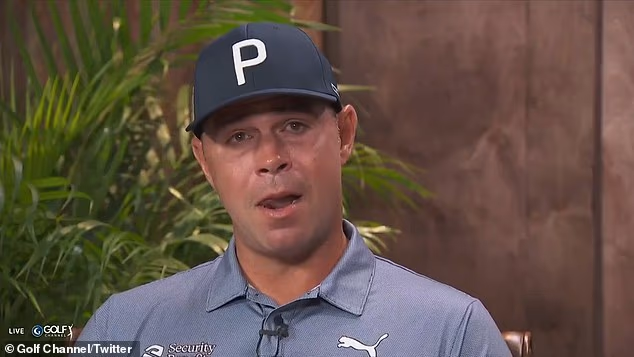
What strikes me most about Woodland’s candid Golf Channel interview is the specificity of his breakdown. A walking scorer approached from behind, and suddenly he couldn’t hit a golf shot. His eyesight blurred. His hands wouldn’t work. This isn’t weakness—this is neurology.
"I was hyper-vigilant. A walking scorer startled me, got close to me from behind. I pulled my caddie and said, ‘You can’t let anybody get behind me.’ Next thing you know, I couldn’t remember what I was doing. My eyesight started to get blurry."
Having spent decades around the ropes, I’ve seen plenty of players choke under pressure. But this is different. Woodland wasn’t battling nerves or self-doubt. He was battling his own nervous system—one that had been literally rewired by trauma and surgery.
What really got me, though, was his honesty about what came next:
"I went into every bathroom to cry the rest of the day. When I got done, I got in my car and got out of there. There are days when it’s tough – crying in the scoring trailer, running to my car just to hide it. I don’t want to live that way anymore."
That sentence—"I don’t want to live that way anymore"—is the real headline here.
The Culture Shift We Need
In my experience, professional golfers have historically treated mental health the way they treat equipment troubles: something you fix in private and never discuss publicly. You don’t talk about the panic attacks or the crushing anxiety. You especially don’t talk about needing help.
I worked as caddie for Tom Lehman in the ’90s. Tom was one of the toughest competitors I ever knew. But even he once told me he’d never seen a player admit to struggling with their mind the way modern athletes in other sports have started doing. Golf has always been different—maybe stubbornly so.
Woodland is changing that calculus. At 41 years old, a major champion who has nothing left to prove, he’s chosen vulnerability over the facade. That’s not easy in a sport built on stoicism.
What This Means for the Tour
Here’s where my three decades of perspective matters: The PGA Tour’s response to Woodland’s disclosure has been notably responsive. They’ve worked with him to implement security protocols. They’re taking this seriously. That’s progress.
But I also think there’s a deeper message here about player welfare that goes beyond security details. Woodland had to physically alter his tournament experience to cope with PTSD symptoms. That raises questions about what the tour demands from its players—not just physically, but mentally.
The 2024 Players Championship—one of golf’s marquee events—happens just three days after Woodland’s emotional interview. The timing is significant. He’s choosing to compete anyway, choosing to fight for his dream even as his brain fights against him.
"I hope somebody that’s struggling sees me out here still fighting and battling and trying to live my dreams. I’ve talked to veterans, and one thing I’ve heard from multiple people is you can’t do this on your own, no matter how strong you think you are."
The Courage We’re Missing
What I think gets overlooked in the immediate reaction to Woodland’s story is how radical his choice actually is. His doctors recommended he avoid high-stress environments. By any reasonable medical standard, he shouldn’t be playing competitive golf right now. Yet he is—not out of stubbornness, but out of purpose.
Woodland won the US Open at Pebble Beach in 2019 by three strokes. He wrote a letter to his three children before brain surgery, not knowing if he’d survive. He’s navigated a medical crisis that would have sidelined most athletes permanently. And now, instead of quietly retreating, he’s stepping into the spotlight to talk about the mental toll.
That’s not just courage. That’s leadership.
The tour doesn’t need more young phenom stories or more drama about who’s chasing LIV contracts. What it needs—what the entire sports world needs—is more athletes willing to say: "I’m struggling, I’m getting help, and I’m still here fighting."
Gary Woodland just did exactly that. And that changes things.
