



There are courses you play, and then there are courses you experience. Places where the very dirt beneath your spikes tells a story, where the contours of the land whisper of genius, and where every shot feels like a conversation with history. For too long, Yale University Golf Course has been one of those conversations interrupted, a masterpiece dimmed by the passage of time and the relentless embrace of nature. But as the New England spring breathes new life into the ancient elms and dogwoods, so too has a legend been reborn. And let me tell you, fellow Duffer, this isn’t just a reopening – it’s a revelation.
For architectural purists like myself, Yale has always held a special, almost mythical, place. Conceived by the founding fathers of American golf design, Charles Blair Macdonald and Seth Raynor, it’s a living museum of template holes, a veritable textbook of classic strategy. Yet, for years, the truth was harder to stomach than a three-putt bogey. This once-magnificent course, regularly featured on GOLF’s Top 100 Courses in the World, became, as the source eloquently puts it, something of a tarnished gem.
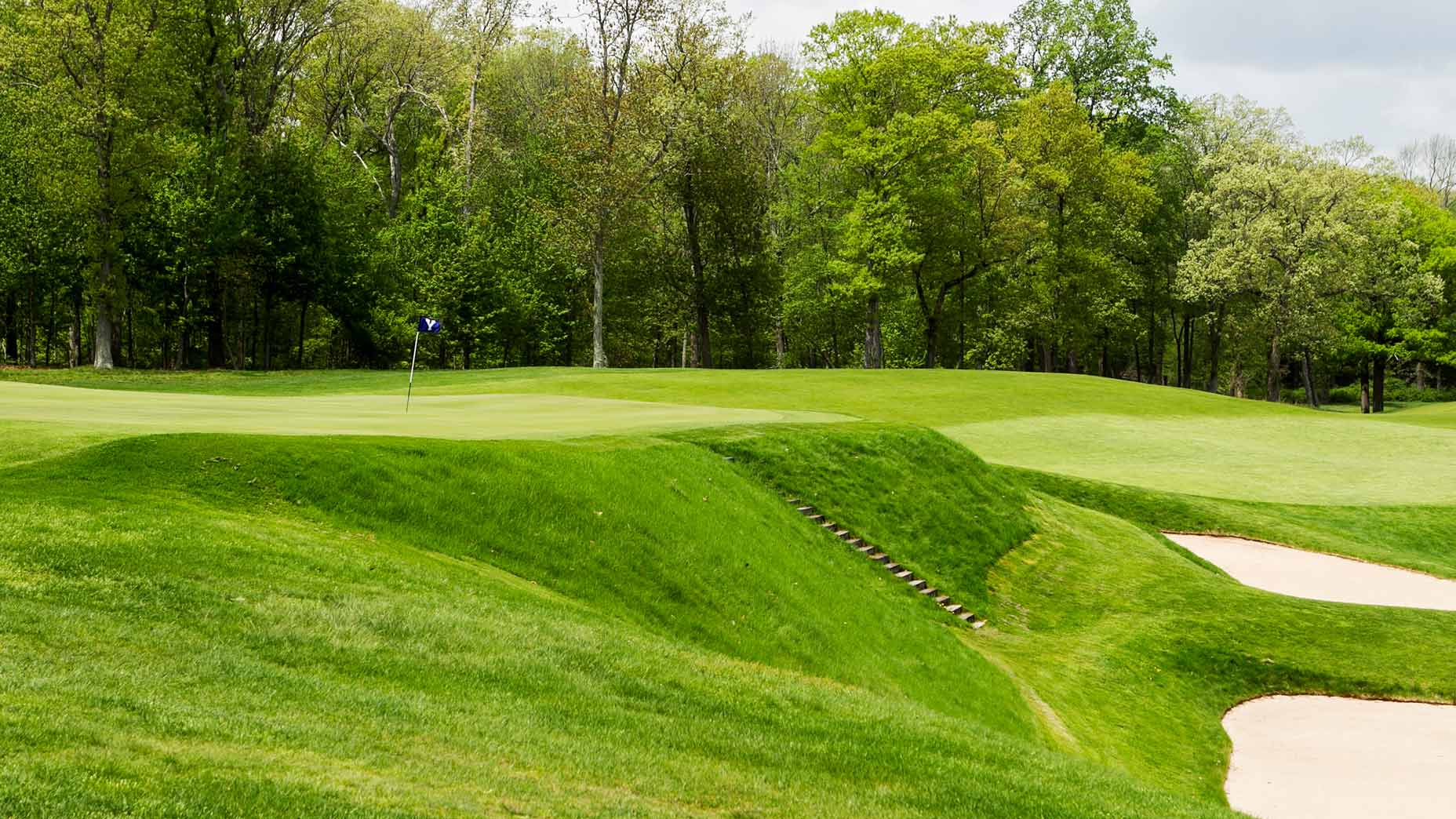
I’ve walked countless courses across this globe, from the windswept links of the Auld Sod to the desert grandeur of the American Southwest, but few possess the sheer, audacious scale of Yale. It’s an expansive canvas, rolling and dramatic, carved from the Connecticut landscape with an artistic vision that was ahead of its time. Imagine standing on a tee, the air crisp with the scent of pine and freshly cut grass, surveying a fairway that seems to ripple like a green velvet cloth, framed by towering hardwoods. The recent restoration by Gil Hanse and Jim Wagner hasn’t just cleaned up the canvas; it has meticulously repainted the original strokes of genius, bringing back the vibrant colors and nuanced shadows that had faded.
The Art of Template Golf Rediscovered
What truly sets Yale apart, what makes it a pilgrim’s destination for design enthusiasts, are the Macdonald and Raynor template holes. These aren’t just names; they are strategic challenges, architectural philosophies embodied in turf and sand. And the Hanse-Wagner team, known for their unwavering commitment to historical accuracy, has breathed new life into every one of them.
“The Hanse-Wagner restoration was meant to be a faithful one, returning features that had been softened, muted or simply overgrown.”
Take, for instance, the Double Punch Bowl green on the par-5 3rd. For years, its true, audacious form had been obscured, its contours smoothed and its drama muted. Now, rebuilt to its original specifications, it’s a testament to Raynor’s audacious green construction. You don’t just putt on a Punch Bowl; you navigate it, using its slopes to funnel your ball towards the cup, a thrilling dance between gravity and green reading. This isn’t a green designed for ease; it’s designed for intelligence, for thoughtful execution, for the sheer joy of a well-played shot rewarded.
And let’s not forget the rare inverted bunkers on the 6th hole – those maddening, yet brilliant, hazards that once again punctuate the landscape with their strategic menace. These aren’t your typical sandy pits; they’re an integral part of the course’s tactical puzzle, demanding precision and respect. Then there are the course’s memorable double fairways, notably on Nos. 3 and 18. These strategic options, presenting different angles of attack and varying levels of risk and reward, are a hallmark of classic design, and their diligent restoration means that every tee shot now offers a genuine choice – a mental chess match before the club even touches the ball.
Beyond the Blueprints: A Course Transformed
Beyond the meticulous renewal of individual features, the overall transformation of Yale is profound. For too long, tree encroachment had narrowed the playing corridors, suffocating the grand scale and strategic intent. The extensive tree work “has reopened sightlines,” allowing the golfer to appreciate the vastness of the property and the genius of its original routing. The course now breathes again, its vistas expansive, its challenges clearer.
And for the modern game, the team hasn’t shied away from appropriate updates. New championship tees now push the course beyond 7,000 yards, ensuring that even the longest hitters will find their mettle tested. This isn’t about simply chasing distance; it’s about restoring the strategic integrity of a course built in an era of shorter clubs, ensuring its intellectual challenge remains vibrant in today’s power game. Crucially, and perhaps most impactfully for the everyday golfer, the conditioning woes are a thing of the past. For the first time in its century-long history, the greens have been rebuilt to USGA specifications, and a new irrigation system ensures consistent, pristine playing conditions. This speaks volumes about the commitment to not just restore the look, but the playability, of this historic track.
“Yale University Golf Course… a landmark design by Charles Blair Macdonald and Seth Raynor that was once a steady presence on GOLF’s ranking of Top 100 Courses in the World before conditioning issues bumped it off the list, is set to reopen following a sweeping restoration by Gil Hanse and Jim Wagner.”
The reopening on April 28th coincides with the course’s centennial – a perfectly poetic timing for such a grand return. This isn’t just a golf course; it’s a piece of living history, a testament to the timeless principles of great golf architecture. To walk these fairways is to commune with the legends of the game, to experience a chapter of golf’s rich past, beautifully updated for its vibrant future. Rates will be $150 for Yale students and faculty, $250 for university affiliates, and $350 for golfers with no school affiliation, with reservations allowing 10-day advance bookings for outside play. It’s a steep price, perhaps, but for access to a design of this caliber, for the chance to play a true masterpiece brought back to its original glory, it’s an investment in a golf experience you won’t soon forget.
So, clear your calendar, Duffer. New Haven beckons. The lessons of Macdonald and Raynor are once again being taught on the verdant campus of Yale, and trust me, this is one class you won’t want to cut.
