

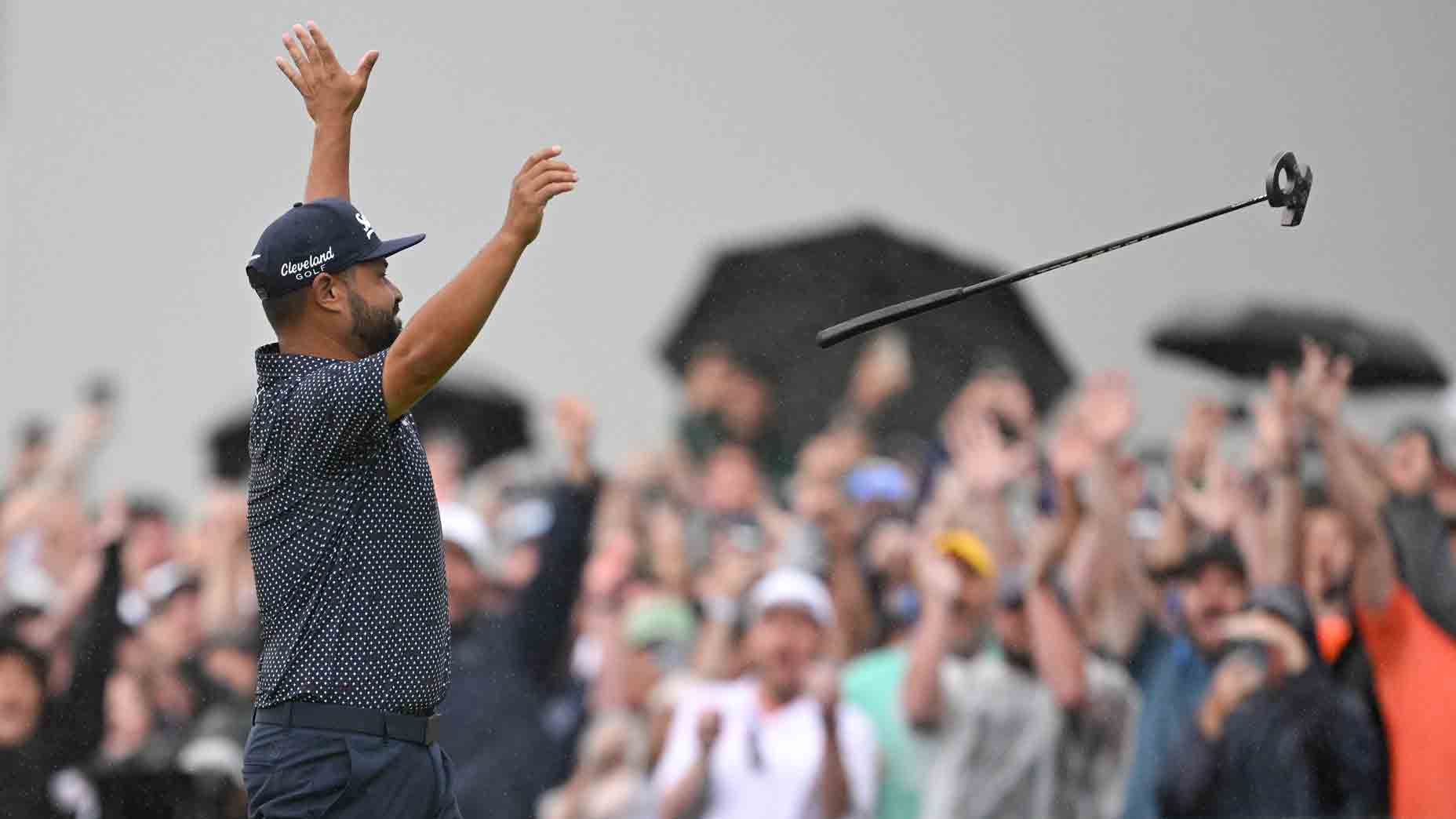

When Champions Won’t Let Go: What Spaun and McIlroy’s Club Snubs Tell Us About Modern Golf
In 35 years covering this tour, I’ve learned that the small moments often reveal the biggest truths about a player’s character and the evolution of professional golf. So when J.J. Spaun politely refused to hand over the putter that won him the 2025 U.S. Open at Oakmont, and Rory McIlroy’s business manager donated his Masters 7-iron without telling him, I realized we’re witnessing something worth examining — a fundamental shift in how today’s champions view their most precious equipment.
Having caddied for Tom Lehman back in the ’90s, I remember a different era entirely. Players were almost reverential about the USGA’s request for memorabilia. It felt like an honor, a validation that your moment mattered enough to live forever in their vault. Now? These guys are treating their clubs like irreplaceable teammates, not museum pieces. And honestly, I think that says something important about the modern game.
The 64-Footer That Changed Everything
Let’s start with Spaun’s refusal. When the USGA asked for the L.A.B. Golf DF3 putter — the one he used to drain that impossible 64-footer in walk-off fashion — his response was refreshingly honest:
“I said, ‘Unfortunately, I can’t,'” Spaun said. “That thing is not ready to be retired, especially after that putt.”
This isn’t arrogance. This is a professional golfer understanding something fundamental: that putter is still working. That putter is still winning tournaments. Why retire a winner?
In my experience, this reflects how modern players — especially those who’ve fought hard for their first major — view the tools of their trade. Spaun wasn’t ungracious. He donated his driver instead, a club that was already approaching the end of its useful life. That’s a smart compromise. But the fact that he needed to make it at all shows how differently this generation thinks about their equipment compared to champions of my era.
I covered the Masters when champions would practically gift-wrap their winning clubs for Augusta National. There was something almost sacred about the gesture. Now, players are thinking like business owners, not just competitors. And in a world where equipment sponsorships matter and a putter can be the difference between a $10 million year and a $20 million year, can you blame them?
The McIlroy Surprise: When Your Team Makes Decisions for You
But here’s where it gets really interesting. While Spaun made a deliberate choice, McIlroy didn’t even know his 7-iron had been donated. His business manager, Sean O’Flaherty, simply handed it over without asking. McIlroy’s response at Pebble Beach last week revealed both grace under pressure and a hint of mild irritation:
“I didn’t realize this, but I flew back the day after on the Monday and I basically didn’t see my golf clubs since like post the playoff, and I saw that my 7-iron was missing,” McIlroy said. “I was like, that’s a pretty important club. Sean had already given it to the club, he just didn’t tell me. That’s fine, I’ll get a new 7-iron.”
This illustrates something I’ve observed more and more on tour — the increasing distance between players and the business infrastructure surrounding them. McIlroy won the Masters. That 7-iron hit the shot he’ll remember forever. But he was already wheels-up before he even knew it was gone. That’s the modern tour in a nutshell: victory lap managed by committee.
To O’Flaherty’s credit, he was probably thinking strategically about brand goodwill and legacy. Donating to Augusta National is a PR home run. But the fact that McIlroy needed to recover gracefully from his own equipment being donated without his consent? That’s worth noting.
What This Really Means for the Game
Over 15 Masters I’ve covered and countless tournaments before that, I’ve watched champion mentality shift. In the ’90s and 2000s, winning a major meant certain things: dignity, sacrifice, and yes, a willingness to let the historical record honor you by displaying your tools.
Today’s champions — and I don’t say this critically — are more pragmatic. They understand that a putter or iron that just won you a major tournament is literally an asset. It’s not sentimentality; it’s logic. Why retire the very tool that proved it works?
What strikes me, though, is that even in this more transactional approach, there’s still grace. Spaun didn’t refuse outright. He offered an alternative. McIlroy didn’t publicly complain about O’Flaherty’s overstep; he laughed it off. These are still competitors who understand they’re stewards of the game’s history, even if they’re stewarding it on their own terms.
The USGA will survive not getting Spaun’s putter. Augusta National will be fine without McIlroy’s 7-iron in its archives. But golf’s tradition of honoring champions through their equipment? That’s evolving. Whether that’s good or bad probably depends on whether you’re a preservationist or a pragmatist.
I’m somewhere in the middle. I understand why these guys want to keep their winning clubs in the bag — they’re still performing. But I’d be lying if I said I didn’t feel a small twinge of something watching champions wrestle with the decision to let go of their history.
The game moves forward either way.
