

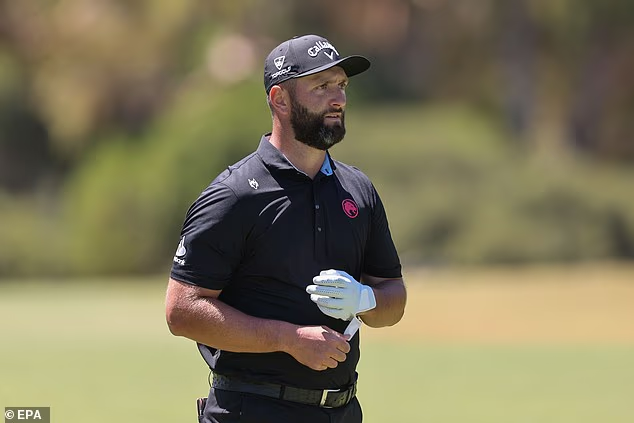

Rahm’s Stubborn Stand: Why One Man’s Defiance Could Reshape Golf’s Power Dynamic
I’ve been covering professional golf since the late 1980s, and I’ve learned that the most consequential decisions in this sport often have nothing to do with what happens between the ropes. Jon Rahm’s decision to reject the DP World Tour’s settlement offer—while eight of his fellow LIV rebels accepted it—is one of those moments that reveals far more about where golf is headed than any tournament result could.
On the surface, Rahm’s move looks stubborn, even self-destructive. Eight players, including his former ally Tyrrell Hatton, have taken the deal and cleared a path toward maintaining their DP World Tour membership and, critically, their eligibility for the 2027 Ryder Cup. Rahm, facing estimated fines around £2.5 million, has chosen instead to pursue an appeal through an independent body—a gamble that could cost him one of the sport’s most prestigious competitions.
But here’s what I think is really happening: Rahm is playing chess while everyone else is playing checkers.
The Precedent Problem
In my three decades around this game, I’ve learned that tours are obsessed with one thing above all else: precedent. The DP World Tour’s statement makes this crystal clear. Notice the language they used: “The releases apply for the 2026 season only and they are not precedent-setting.” This is tour-speak for “we’re bending, but we’re not breaking the rules permanently.”
What strikes me about Rahm’s position is this: by refusing to settle, he’s essentially calling the DP World Tour’s bluff. If an independent appeals body sides with him—and there’s legitimate legal argument that the fines were excessive and potentially unenforceable—he doesn’t just save his Ryder Cup eligibility. He potentially establishes actual, binding precedent that protects every LIV player going forward.
“Tour insiders view it as an extremely generous offer, especially as LIV promised to cover all outstanding fines up until the start of this year.”
Yes, LIV is covering the fines, which changes the calculus entirely. That’s not Rahm being stubborn with his own money—that’s strategic positioning with someone else’s resources behind him.
The Tyrrell Hatton Divergence
I find Hatton’s decision equally telling, though for different reasons. Hatton and Rahm were aligned in their opposition to the DP World Tour’s sanctions. They were teammates in the trenches. Yet Hatton has decided that the certainty of the settlement outweighs the uncertainty of an appeal. That’s a philosophical split worth examining.
Having caddied in professional golf during the ’90s, I’ve seen players take different approaches to high-stakes standoffs. Some prefer guaranteed outcomes; others prefer to fight for principle. There’s no universal “right” choice, but Hatton’s decision suggests that not every LIV player sees this as a battle worth extending indefinitely. That matters.
What This Means for the Ryder Cup
Here’s the scenario that keeps tour insiders awake at night: if Rahm’s appeal succeeds, he stays eligible for 2027. If it fails and he refuses to pay, he loses his DP World Tour membership and becomes ineligible. There’s no middle ground, and that’s why the DP World Tour is probably hoping he takes the deal.
The eight players who accepted the terms represent a significant portion of the LIV contingent that would potentially compete for Europe:
- Tyrrell Hatton
- Laurie Canter
- Thomas Detry
- Tom McKibbin
- Adrian Meronk
- Victor Perez
- David Puig
- Elvis Smylie
They’ve essentially taken the path of least resistance. In my experience, that’s usually the smart play—but only if you’re not trying to move the needle on a larger structural issue.
The LIV Factor We’re Not Discussing
What really interests me about this standoff is what it reveals about LIV Golf’s willingness to fund player disputes with the traditional tours. LIV covering the fines isn’t just generous; it’s strategic. Every LIV player watching this drama unfold is seeing whether the Saudi-backed tour will actually back them in a long fight. Rahm’s gamble is, in effect, a test of LIV’s commitment.
“If Rahm loses and still refuses to pay up, with his fines estimated to be in the region of £2.5million, he will be forced to give up his DPWT membership and therefore become ineligible for the 2027 Ryder Cup.”
That’s a massive consequence, which is why this isn’t reckless—it’s calculated risk management on behalf of a player with institutional backing.
Where Golf Goes From Here
The positive side of this story—and there absolutely is one—is that the DP World Tour is finally showing flexibility. A year ago, this settlement wouldn’t have been offered. The fact that eight players accepted conditional terms, agreed to play additional DP World Tour events, and are now moving forward suggests the tour recognizes the unsustainability of indefinite conflict.
Rahm’s appeal could actually accelerate this process. If an independent body rules in his favor, it forces a genuine restructuring of how the tours relate to players who compete on multiple circuits. If it rules against him, it validates the DP World Tour’s authority and the eight players who accepted the deal look prescient.
Either way, the old guard-versus-rebels dynamic that’s defined golf for the past two years appears to be shifting toward something more negotiated, more flexible, and ultimately more sustainable for the game. Rahm’s refusal to settle quietly is part of that transition, even if it feels contrarian right now.
Having spent 35 years watching this sport’s power structures evolve, I’d say: pay attention to what an independent appeals body decides. That ruling will matter far more than any tournament result this season.
