

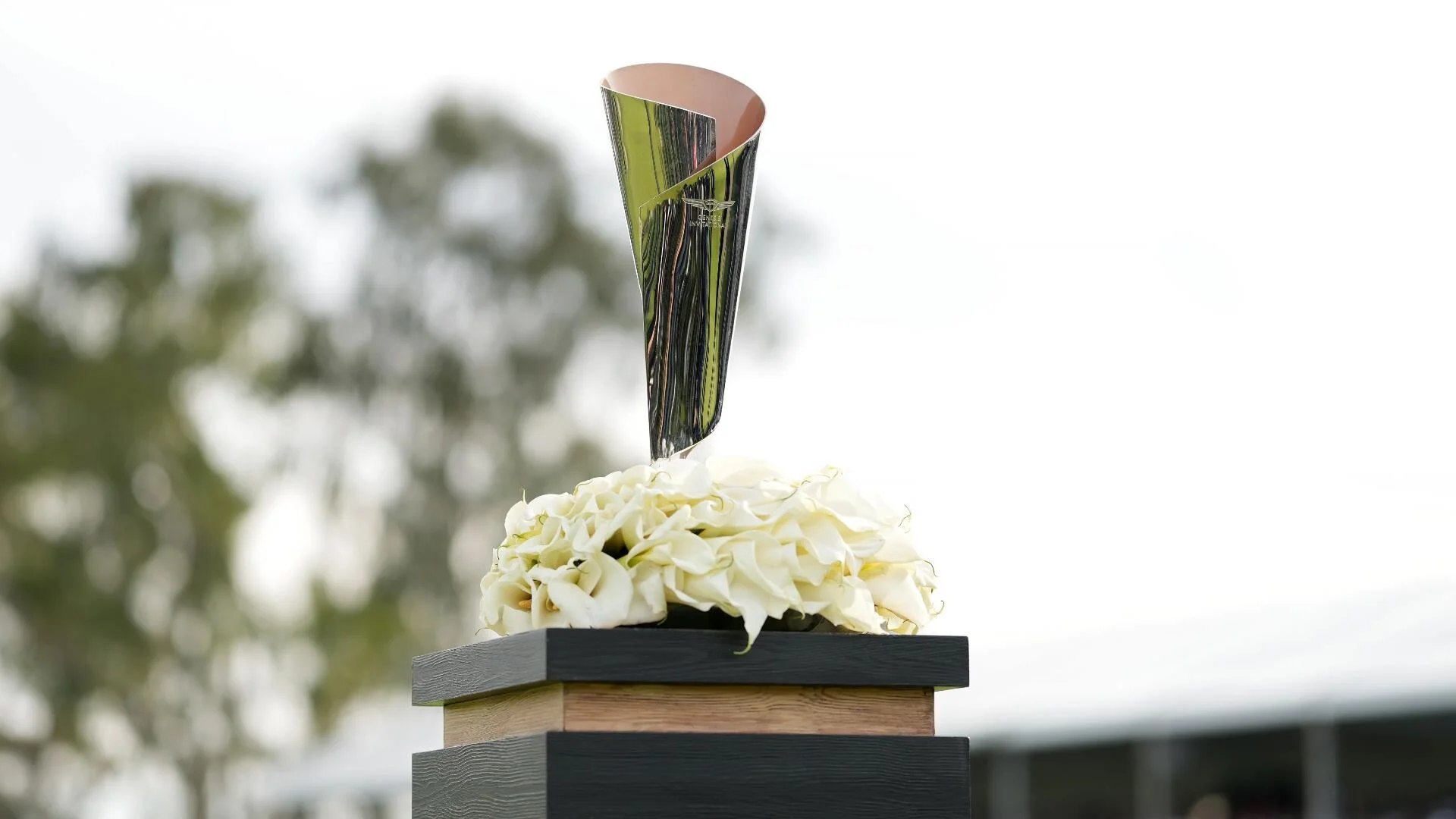

A New Era of Parity: What Jacob Bridgeman’s Genesis Win Says About the 2026 PGA Tour
Jacob Bridgeman’s maiden PGA Tour victory at the Genesis Invitational this week marks something I haven’t seen in my 35 years covering professional golf: a genuinely unpredictable tour landscape where the best player in the world can barely make the cut and a first-time winner can emerge from a star-studded leaderboard to claim $4 million.
Let me be clear—this is a *good* thing, even if it makes handicapping tournaments considerably trickier for those of us in the press box.
The Scheffler Exception, Not the Rule
In my three decades following the PGA Tour, I’ve covered eras dominated by individual titans: the Nicklaus years, the Tiger dominance of the 2000s, even Scottie Scheffler’s remarkable 2024 campaign. But what struck me most about this week at Riviera wasn’t Bridgeman’s stellar play—it was Scottie’s relative invisibility.
“Scheffler was the heavy favorite coming into Riviera, as is the case every week on the PGA Tour, but after barely making the cut, he shot 66-65 over the weekend to finish T12.”
That sentence right there tells you everything about the shifting dynamics of modern professional golf. The world’s best player scraped through the weekend cut by his fingernails. In 2024, that wouldn’t have been physically possible.
I had a caddie friend who worked a few events last year tell me that Scottie’s dominance felt almost suffocating—there was a resignation in the field before play even began. This year? The energy is different. Players believe they can win. And frankly, they’re right.
The Signature Event Revolution
Here’s what really fascinates me about the 2026 season so far: “The Genesis Invitational marked the 10th straight signature event won by a different player. That’s a significant departure from 2024 when Scottie Scheffler won four of the eight events on the calendar.”
This isn’t random noise. This is structural change. The PGA Tour’s signature event format—50-player fields, elevated purses, reduced fields—was designed to give more competitive balance, and it’s working exactly as intended. With eight fewer players in the field this week, every stroke carries more weight, every decision more consequence.
Having caddied for Tom Lehman back in the ’90s, I remember tournaments where depth of field could occasionally mask a hot player. But with 50-man fields and $20 million purses, there’s nowhere to hide. Bridgeman didn’t win because the field was weak. He won because he out-executed some of the best players on earth over 72 holes.
The Money Follows the Competition
One thing that deserves mention: the prize structure itself reflects this new reality. Bridgeman takes home $4 million for winning—$400,000 more than the 2024 Genesis champion would have earned under older purse structures. But notice the distribution down the leaderboard:
| Finishing Position | Prize Money |
|---|---|
| 1st Place | $4,000,000 — Jacob Bridgeman |
| 2nd Place | $2,200,000 — Rory McIlroy, Kurt Kitayama |
| 3rd Place | $1,400,000 |
| 4th Place | $1,000,000 — Adam Scott |
| 5th Place | $840,000 — Aldrich Potgieter |
| 10th Place | $556,000 |
| 20th Place | $269,000 |
| 30th Place | $140,000 |
| 50th Place | $52,000 — Sepp Straka, Brian Harman |
Even 50th place is worth $52,000. That’s transformational money for any player, and it means field depth matters. You can’t mail in a tournament when making the field guarantees five figures.
McIlroy’s Statement of Intent
What strikes me about “Rory McIlroy entered the final round six shots back of Bridgeman but ultimately finished one stroke shy of the lead in a tie for second with Kurt Kitayama” is how it demonstrates the compressed margins we’re seeing. McIlroy made up six shots over 18 holes against a leading player who had all the momentum. That’s championship-caliber golf, and he came up just short.
In past years, a six-shot deficit entering Sunday felt insurmountable. Not anymore. The skill level across this tour is genuinely remarkable.
The Bigger Picture
What we’re witnessing isn’t chaos—it’s evolution. The PGA Tour’s restructuring has worked. Purses are up, competition is fierce, and winning a signature event now legitimately means you’ve outplayed an international field of elite talent in one of the sport’s premier venues. Bridgeman’s maiden victory carries weight precisely because the field was so strong.
In my experience, tours are healthiest when multiple voices can emerge as winners. Scheffler remains the best player in the world—that T12 doesn’t change that. But he’s no longer the only story, and that’s exactly how it should be. The Genesis Invitational delivered compelling theater, and Riviera got the kind of narrative it deserves: an underdog’s triumph on one of golf’s most storied stages.
