

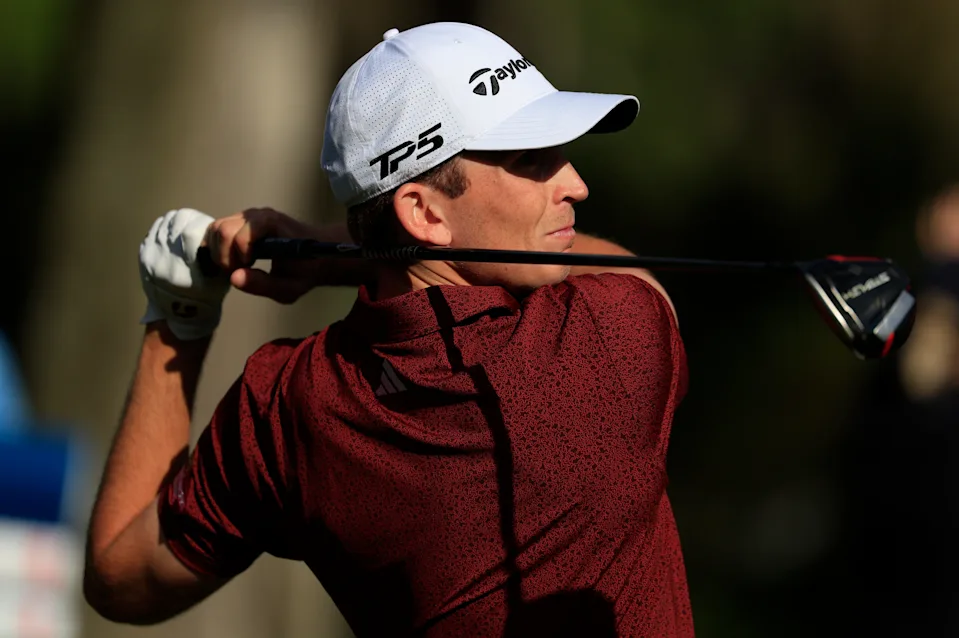

Jacob Bridgeman’s one-shot victory over Rory McIlroy at the Genesis Invitational last February was the kind of breakthrough win that Tour players dream about—the kind that gets you into conversations, opens doors, and puts your name in the same sentence as the game’s elite. But what struck me most wasn’t the victory itself. It was what happened in the press room afterward.
When Bridgeman sat down to discuss his triumph at Riviera, he didn’t just receive the standard congratulations from fellow competitors or Tour brass. Instead, he got video messages from two fellow Clemson Tigers—NFL quarterback Trevor Lawrence and football coach Dabo Swinney—waiting to greet him at his moment of peak accomplishment. Lawrence’s message was particularly telling:
“Congratulations on a big win at the Genesis. I’ve been watching all day today, as much as I could. I’ve been following you … it’s been a lot of fun watching you all weekend. You’re playing awesome.”
In 35 years covering professional golf, I’ve seen plenty of crossover moments between sports. But there’s something genuinely refreshing about watching high-level athletes in different disciplines—especially ones who came up together at the same university—genuinely celebrate one another’s success. That’s not manufactured. That’s real.
When Campus Legends Meet Again
Here’s what fascinates me about this story: Bridgeman and Lawrence are both 26 years old with birthdays exactly two months apart. They were both ACC Players of the Year in their respective sports at Clemson (Bridgeman in 2022, Lawrence in 2020). Both hold or share records for victories for the Tigers—Bridgeman tied with five career golf tournament victories and Lawrence posting an absurd 34 victories with a .944 winning percentage as a starting quarterback.
They occupied the same campus ecosystem at the same time, yet operated in completely different stratospheres of fame. Lawrence was already a national phenomenon before he even set foot in Clemson. Bridgeman was building something quieter but no less impressive on the golf course.
In his response, Bridgeman was refreshingly honest about the dynamic:
“Trevor and I were the same age at Clemson, but he was so famous before he even got to school that he couldn’t really hang out with anybody. I met him a few times, talked to him. He’s a super nice guy.”
That’s the reality of college athletics in the modern era. The mega-sport athletes operate at a different altitude. But what I find encouraging is that when success finally arrives for peers you knew coming up, there’s genuine warmth in the acknowledgment.
The PGA Tour Needs This Energy
Let me be direct: the Tour has spent the last few years dealing with seismic shifts—LIV Golf, player-versus-player feuds, questions about relevance. What often gets lost in all that noise is the simple fact that golf thrives when players have genuine connections to each other and to the broader sports landscape.
Trevor Lawrence watching Jacob Bridgeman’s Genesis Invitational victory “all day today, as much as I could” tells you something important. It tells you that a star NFL quarterback isn’t just casually aware that his college peer made the PGA Tour and won a prestigious event. He’s actively invested. He’s invested enough to drop what he’s doing and follow the action in real time.
That’s the kind of cross-sport visibility the Tour should be cultivating more aggressively. Not forced partnerships or artificial celebrity appearances, but genuine relationships between world-class athletes who respect each other’s grind.
A Victory That Means More Than the Scorecard
Bridgeman’s Genesis Invitational win was significant for obvious reasons—it came over McIlroy and Kitiyama, two of the planet’s best players, in a one-shot decision. But in the context of this story, it means something slightly different. It represents validation. It represents a player who can compete with and beat the absolute elite, not just in theory but in practice, on one of the Tour’s signature stages.
And having someone like Lawrence bear witness to that moment—not as a casual observer but as someone who understands what it takes to excel at the highest level—adds genuine weight to the accomplishment.
In my experience caddying for Tom Lehman and watching three decades of Tour golf play out, I’ve learned that the relationships between players matter more than most fans realize. It’s easy to focus on rankings and purses and social media drama. But the quiet moments—the texts, the video messages, the genuine “I saw you play great today” comments—those are what sustain the community and remind everyone why they’re grinding in the first place.
Bridgeman’s characterization of Lawrence as “a super nice guy” and his gratitude that Lawrence “was watching” tells you everything you need to know about an athlete who hasn’t let success go to his head. He appreciates the support. He recognizes the significance of having someone at Lawrence’s level pay attention.
That kind of mutual respect between peers—whether they’re playing football or golf, whether they’re household names or building their own legacies—is exactly what professional sports need right now. The PGA Tour would be wise to lean into these organic connections rather than manufacture them.
