


The Bryson Problem: When Tour Genius Meets Business Reality
I’ve been covering professional golf for 35 years, and I’ve learned that the most interesting stories rarely happen on the course. They happen in equipment trailers, boardrooms, and—more often than not—in the messy space between a brilliant player’s vision and a manufacturer’s bottom line. The split between Bryson DeChambeau and LA Golf is one of those stories, and it tells us something important about the limits of even the most talented minds in this game.
Let me be direct: Bryson is a generational talent. His analytical approach to the game, his willingness to challenge conventional wisdom, and his engineering curiosity have changed how elite players think about equipment. But there’s a pattern here that’s impossible to ignore. This isn’t his first equipment breakup, and the reasons why matter more than the fact that it happened.
The Collaboration That Couldn’t Last
When DeChambeau and LA Golf first joined forces in 2018, founder Reed Dickens had a specific vision. He saw in Bryson a kindred spirit—someone whose technical mindset aligned perfectly with the company’s mission to bring “technically advanced shafts used by the pros directly to golfers.” They even built something together: a custom putter shaft designed specifically for DeChambeau’s needs. That’s the kind of collaboration that gets golf industry people excited.
But here’s where it gets interesting. According to reporting from Golf.com, DeChambeau eventually wanted majority control—a 51 percent stake—and when Dickens declined, the partnership dissolved. Dickens’s response was colorful and telling:
“I think the guy doesn’t realize that he’s dealing with a redneck. And I say, ‘There’s no path for that.’ They played chicken with me, and now we’re going to graciously part ways.”
I’ve covered enough negotiations in this business to recognize what that really means: two strong-willed people who couldn’t find middle ground. And I think both sides have a legitimate point.
The Cobra Parallel
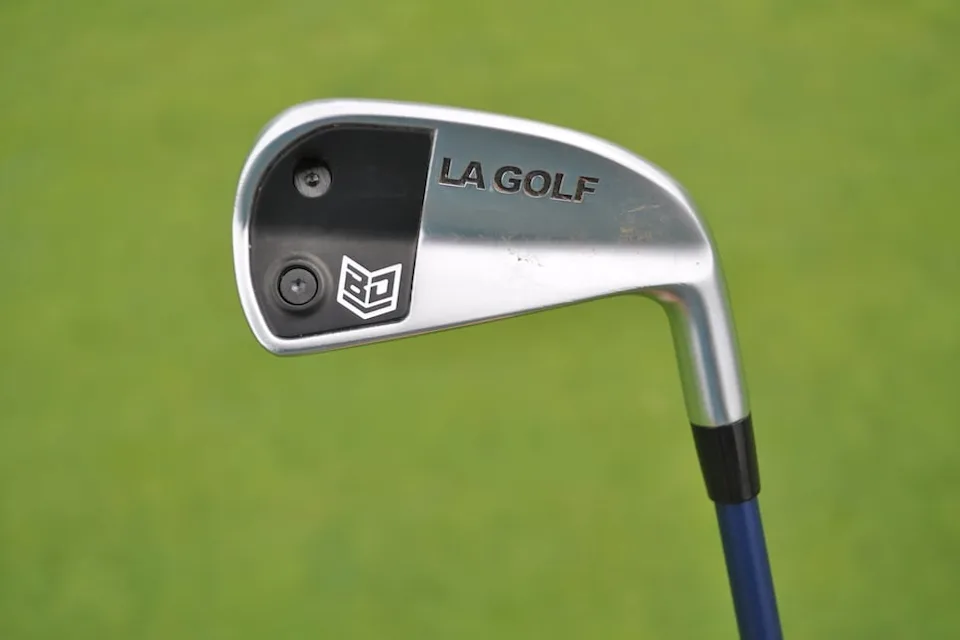
Having spent time around the tour, I’ve watched DeChambeau’s relationship with Cobra Golf follow a remarkably similar arc. Years of intensive collaboration on specialized equipment—including a highly publicized driver project—followed by a very public critique and departure. The Face ID driver is a perfect example. DeChambeau’s specific feedback on bulge and roll design was extraordinarily detailed and—I’d argue—extraordinarily expensive for LA Golf to execute.
Here’s what strikes me as the core issue: Tour-level equipment development at that level of customization is a fundamentally different business than consumer equipment. When you’re engineering a driver specifically for a 190 mph swing speed with a particular ball flight, you’re doing aerospace-level work. It’s expensive. It demands resources. And the marketplace for that work is vanishingly small.
As the source article notes, even when Cobra developed single-length irons for DeChambeau, the broader market appeal was limited. In my experience covering equipment launches, that’s the breaking point. Companies can indulge one ambassador’s vision for a while, but eventually, the R&D spend has to justify itself across the entire product line.
LA Golf’s Bigger Picture
What makes this split particularly interesting is the timing. LA Golf isn’t just losing an ambassador—it’s fundamentally reshaping its entire business model.
The company is pivoting to a direct-to-consumer (DTC) approach, moving away from its traditional role as a premium shaft supplier to other manufacturers. Chief Design Officer Jeff Meyer confirmed the shift, noting that the company will soon launch complete club sets across all 14 clubs.
“It’s been Reed’s vision for years to own the relationship with a customer, and DTC is the only way to do that. Now that we are going to have a full bag of fully assembled golf clubs, it doesn’t make sense for us to sell shafts to support other brands’ heads.”
That’s a significant strategic pivot—one that actually makes the DeChambeau split make more sense. When you’re moving from a B2B shaft supplier to a B2C full-bag company, you don’t necessarily need a tour player demanding custom everything. You need products that resonate with the 5-million golfers buying clubs this year, not the one guy pushing the envelope at 190 mph.
The Bigger Pattern
In my three decades covering this tour, I’ve noticed something: the players who push equipment innovation the hardest often struggle with the realities of mass-market manufacturing. It’s not a character flaw. It’s just a mismatch between two different operating systems.
Bryson’s mind works at the level of variables, optimization, and incremental improvements. He sees equipment as a puzzle to solve. That’s brilliant. But manufacturers have to balance innovation with scalability, cost, and consumer demand. Those aren’t abstract concepts—they’re actual constraints that limit what’s possible.
I think what’s happening here is actually healthy, even if it looks messy from the outside. DeChambeau and LA Golf discovered they wanted different things. That’s not a failure of the partnership—that’s clarity. The alternative would be a slow deterioration of both the business relationship and the product quality.
For LA Golf, this pivot to DTC and full-bag offerings is genuinely intriguing. It’s a bet that consumer golfers want what high-end manufacturers have been offering: direct relationships, transparent product development, and no middleman. Whether that works depends entirely on execution and product quality. But it’s a legitimate strategy.
For DeChambeau, this raises the longer-term question: Is he better served finding partners who want to push the absolute limits of equipment design, or should he be thinking about how his analytical approach can serve a broader market? Those are two very different questions, and I’m not sure he’s had to choose between them until now.
