

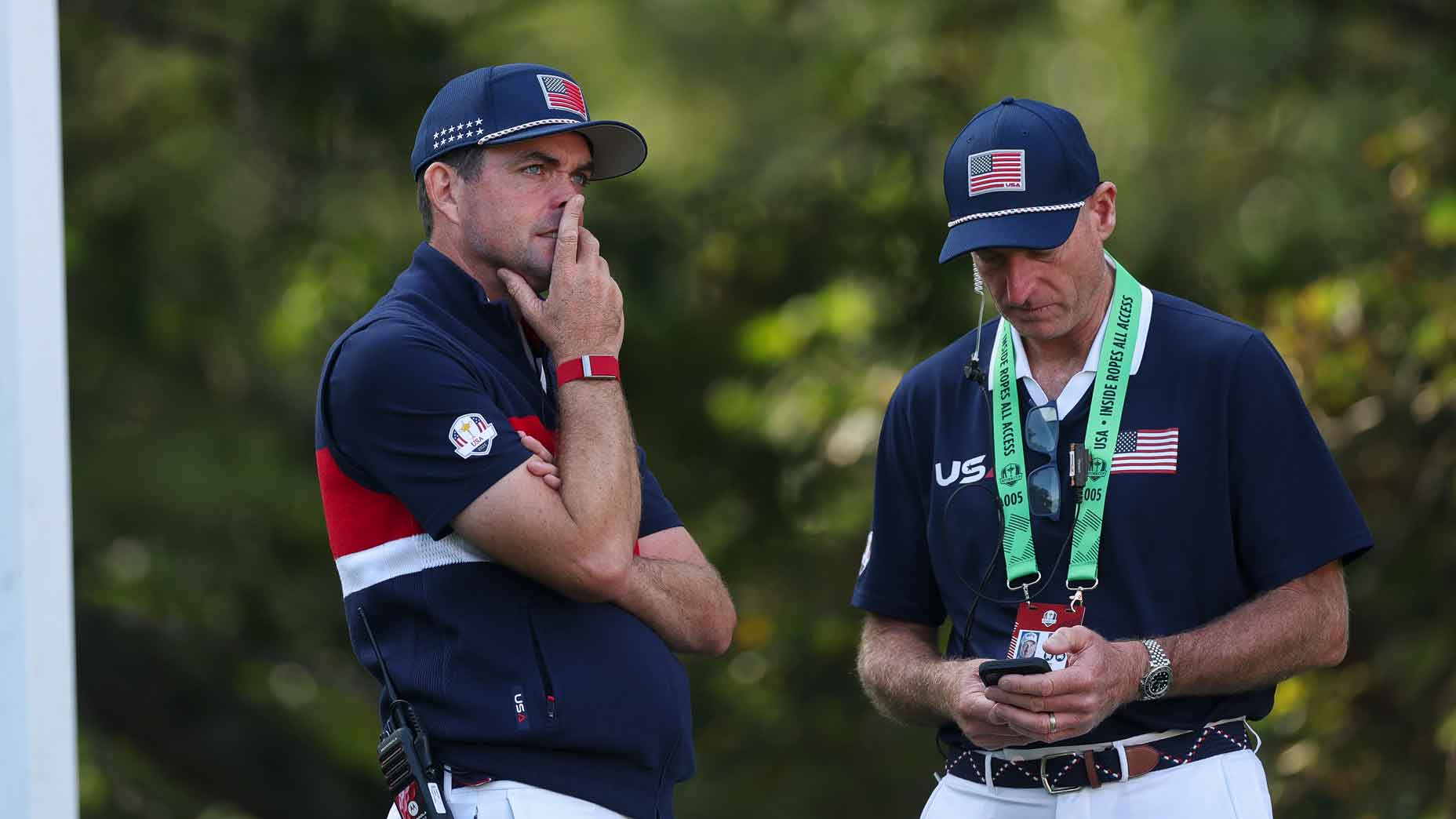

Jim Furyk’s TV Audition Signals a Shift in Golf Broadcasting’s Unwritten Rules
In my 35 years covering professional golf, I’ve watched the sport’s television landscape evolve in ways both predictable and peculiar. But one thing has remained remarkably consistent: the gatekeeping around lead analyst positions. Until very recently, there was essentially one credential that mattered—a major championship on your resume.
So when Jim Furyk stepped into the lead analyst chair for Golf Channel’s coverage of the Arnold Palmer Invitational and Players Championship, it wasn’t just another personnel shuffle. It was a quiet acknowledgment that the old rules are being rewritten.
The Unspoken Law of Major Championship Pedigree
Let me be direct about what strikes me most about this moment: For decades, golf broadcasting operated under an invisible but ironclad principle. Your credentials for sitting in that top chair weren’t just about articulate commentary or broadcast training. They were about having won a major championship. Full stop.
Think about it. Nick Faldo, Greg Norman, Feherty, Nantz’s analyst partners—they all carried that major championship credential like a membership card to an exclusive club. It wasn’t written down anywhere, but everyone understood it. The major championship victory was your passport to legitimacy, your proof that you’d been tested under the brightest lights in professional golf.
Kevin Kisner broke that seal when he took over NBC’s lead chair at the end of 2024. And now Furyk, a U.S. Open champion from 2003, is getting his audition. But here’s what fascinates me: Furyk’s 2003 Olympia Fields victory isn’t really the story here. It’s almost a technicality that allows him through the door.
Experience Over Just Pedigree
What really matters about Jim Furyk isn’t that he won a major 22 years ago. It’s that he’s been living and breathing competitive golf for more than three decades. He’s competed in an era of technological revolution in the sport, watched the game’s strategy evolve fundamentally, and—most importantly—remained relevant well into his 50s on the Champions Tour.
In my experience caddying for Tom Lehman in the ’90s, I learned that longevity in professional golf teaches you things that even major championship success can’t. You see trends. You understand what separates good players from great ones in ways that transcend individual moments of glory. Furyk’s five top-5 finishes at the Players Championship, including two runner-up finishes, tell me he understands that course—and by extension, modern professional golf—at a molecular level.
That’s the kind of working knowledge that translates beautifully to broadcast analysis.
“It’s probably on a trial basis, see how much I like it, get a feel for it,” Furyk told the Associated Press’ Doug Ferguson. “With any new endeavor, it’s a learning process. There’s a feel and flow for how the show is done. I’m focused on doing the best job for two weeks.”
I appreciate Furyk’s honesty here. He’s not pretending to be a broadcast veteran, and that actually works in his favor. Tour insiders know something that casual viewers sometimes miss: a broadcaster who’s humble about learning the craft often ends up being more effective than someone who arrives with false confidence about something they’ve never done before.
The Kevin Kisner Blueprint
What the source article gets right is identifying the Kisner precedent as potentially instructive for Furyk’s path forward. Kisner started as a full-time PGA Tour player, moved into part-time broadcast work, and eventually landed the top chair. It’s a template that suggests the broadcast industry is becoming more flexible about how analysts develop their craft.
But I’d push back slightly on one thing: Kisner’s path isn’t necessarily Furyk’s path. Kisner took the job while still actively competing on the PGA Tour, which gave him current, real-time perspective. Furyk is taking the job from the Champions Tour, a different vantage point entirely. He’s looking back at the main tour rather than competing on it. That’s actually a more traditional analyst position—the voice of experience from someone who’s done the work and moved into the next phase of their golf life.
Broadcasting Is Finally Catching Up to Reality
Here’s what I think this moment really represents: Golf television is finally acknowledging that credibility comes from multiple sources, not just one. Yes, major championship victories matter. They always will. But so does longevity, current involvement in professional golf, and genuine understanding of how the modern game works.
The business of golf broadcasting has been unnecessarily restrictive. We’ve missed opportunities to put knowledgeable voices on air because they didn’t have a major championship. Meanwhile, some major championship winners have struggled as analysts because winning a tournament once doesn’t necessarily teach you how to explain what you’re seeing in real time.
“While Furyk might ultimately choose not to pursue a pathway to a lead analyst role with any of golf’s major networks, the major championship pedigree provides him with a potential pathway to a lead analyst chair that, until NBC’s Kevin Kisner, had only ever been occupied by major championship winners.”
This observation deserves emphasis: For decades, that pathway was essentially closed to everyone except major championship winners. The fact that it’s now opening up—even slightly—represents a meaningful shift in how the industry thinks about expertise.
The Trial Period That Matters
Furyk is explicit that this is a trial. Two events. Two weeks. See how it feels. In my experience, these trial periods rarely feel neutral. Either he clicks with the format and the producers want more, or he doesn’t and everyone moves on. But either way, the door that opened with Kisner is staying open. Someone else is walking through it now.
That’s progress for professional golf broadcasting, and it’s worth noting as we watch how this audition unfolds.
