

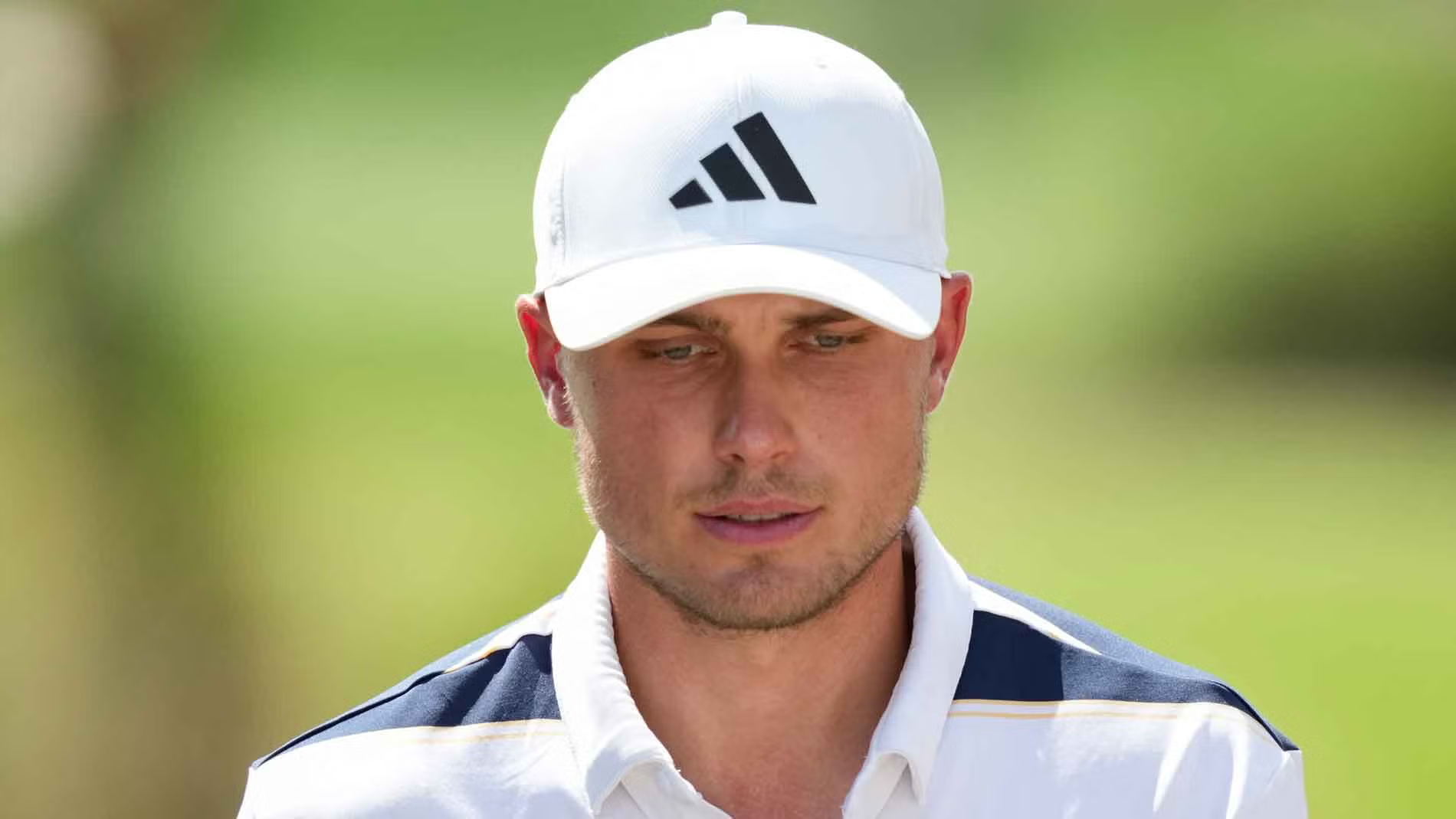

Ludvig Åberg’s Players Week: When Proximity and Timing Collide
After 35 years watching the best players in the world navigate Ponte Vedra Beach, I’ve learned that The Players Championship rewards three things above all else: course knowledge, mental discipline, and the intangible quality I call “readiness.” This week, Ludvig Åberg has all three working in his favor—and that’s worth paying attention to.
The 26-year-old Swede finished third at Bay Hill on Sunday, closing with a 67 that didn’t quite get him into the Daniel Berger-Akshay Bhatia playoff but left him at 12-under par and, more importantly, positioned him perfectly for what comes next. Some might see three shots out as a near-miss. I see it differently. I see a guy who lives 20 minutes from TPC Sawgrass, who knows every sprinkler head and green contour, and who just played 72 holes in brutal conditions while staying mentally sharp.
The Home Course Advantage We Don’t Always Acknowledge
Here’s what casual fans don’t fully appreciate about having a home game on the PGA Tour: it’s not just about sleeping in your own bed. It’s about the accumulated small knowledge—the wind patterns at different times of day, which greens hold or reject certain shots, where the course superintendent has been making drainage adjustments. Åberg knows TPC Sawgrass like I know my favorite 19th hole.
What strikes me most is the positioning of his caddie situation. Joe Skovron, the same man who caddied for Rickie Fowler when Fowler won The Players in 2015, now carries Åberg’s bag. This isn’t random equipment shuffling. Skovron knows this course intimately, knows what it takes to win here, and knows how to manage the mental chess match that Sawgrass demands. Having walked with Tom Lehman for years and having seen countless caddie-player relationships succeed or fail, I can tell you this partnership carries real weight.
“It’s a course where it’s obvious what you have to do but you still have to pull it off. You have to hit the right shots at the right time. I love the finish: 16, 17, 18. You have to step up and hit golf shots all the way in.”
That’s Åberg speaking, and it reveals something important: he understands the philosophical nature of the course. This isn’t a kid who thinks he can out-power Sawgrass. He respects it. He knows the brutality of the island par-3s, the unforgiving nature of the finishing stretch, and the penalty for complacency.
The Swedish Pipeline and What It Means
In my experience covering international golf, there’s something about Swedish golfers that tends toward precision and quiet confidence. We’ve seen it before: Jesper Parnevik brought personality and flair; Annika Sorenstam brought relentless accuracy; Henrik Stenson brought power combined with elegance. Åberg seems to be synthesizing the best of that lineage.
The source material puts it well, noting that Åberg “might split the difference” between Parnevik’s artistry and Sorenstam’s precision, while possessing “more greenside finesse” than Henrik Stenson’s raw power. I’d add this: he’s doing something the previous generation of Swedes couldn’t always manage—he’s building consistency without losing personality.
“Sometimes I can’t find a word in English and sometimes I can’t find a word in Swedish. It’s a little bit tricky.”
That kind of self-aware humor, that willingness to acknowledge the absurdity of straddling two cultures, suggests a mental flexibility that serves elite athletes well. It means he’s not locked into rigid thinking patterns. It means he can adapt.
The Tiger Factor: Why That Moment Matters
I want to spend a moment on something that might seem like a sidebar but absolutely isn’t. At a TGL event last year, Tiger Woods stopped mid-walk, folded his arms across his chest, and watched Åberg warm up in silence. The article describes this as “not something he does often,” and that’s the understatement of the year. Having covered Tiger for decades, I can tell you that these moments of silent acknowledgment are rarer than birdies at Sawgrass.
“I remember that. It was a nervous, stressful moment.”
Åberg’s response is telling. He didn’t dismiss it as no big deal. He felt the weight of it. And here’s what matters: in professional golf, that nervous energy is the price of entry for genuine contention. It means he understands the stakes. It means he’s not sleepwalking through his career.
The fact that Tiger later presented him with the Genesis Invitational trophy is significant precisely because it represents the implicit passing of institutional respect. These are the moments that build historical momentum.
Three Players Appearances: The Arc of Learning
Åberg’s Players resume reads like a learning curve: T8 as a rookie in 2024, missed cut last year, and now coming in with a full year of experience and fresh confidence from a third-place finish. This is exactly the trajectory you want to see. He’s not panicking after the miss; he’s learning from it.
Looking at the historical winners at Sawgrass—from Calvin Peete and Lee Janzen to Fred Couples, Davis Love, and Scottie Scheffler—there’s not really a single profile. But the ones who won multiple times all shared one quality: they understood that Sawgrass is as much about what you don’t do as what you do. It’s about respecting the course’s power to humiliate.
The Real Story
What I’m watching this week isn’t just whether Åberg wins The Players. It’s whether he’s crossed over from “promising young talent” to “genuine tour contender.” That third-place finish at Bay Hill, combined with his proximity to TPC, his caddie situation, and his obvious comfort at the course, suggests we might be watching a turning point.
In 35 years, I’ve learned that timing in golf isn’t just about the calendar. Sometimes it’s about when a player’s game, his confidence, his circumstances, and his venue all align. That alignment often precedes breakthrough performances.
I’ll be watching closely. Something tells me Ludvig will be too.
