

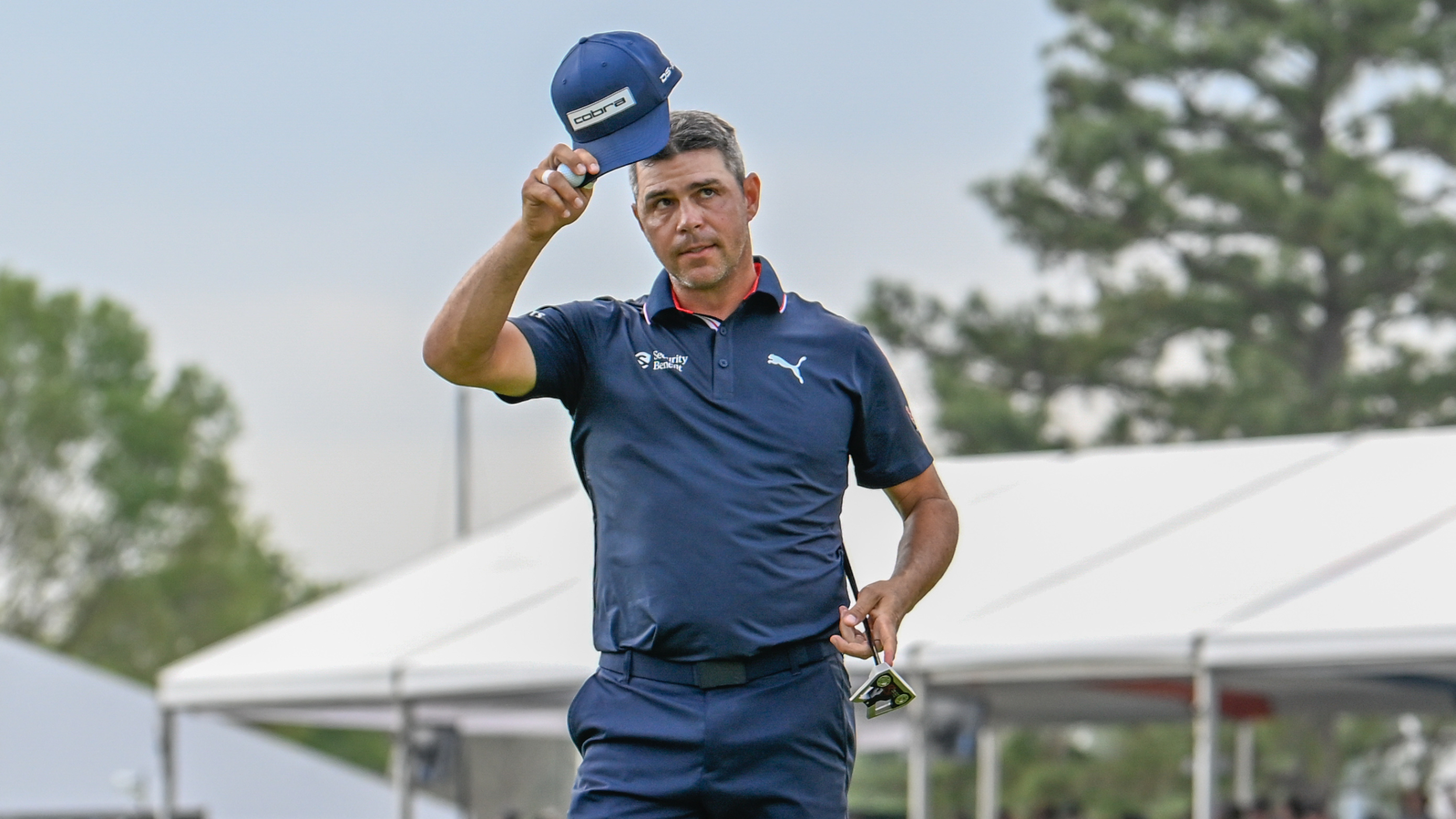

Gary Woodland’s Courage Goes Beyond the Course: Why His PTSD Revelation Matters to Professional Golf
In 35 years covering this game, I’ve watched players battle everything from the yips to divorce on the back nine. But I’ve never seen someone demonstrate the kind of raw honesty Gary Woodland just did when he sat down with Rex Hoggard on the Golf Channel.
The 2019 US Open champion didn’t sugarcoat it. He didn’t offer the polished athlete-speak we’re accustomed to hearing. Instead, Woodland looked directly into the camera and said something that probably made half the tour uncomfortable, and that’s exactly why it needed to be said.
The Surgery That Changed Everything
Let’s back up. In September 2023, Woodland underwent brain surgery to remove a benign tumor—the kind of news that stops your life cold, regardless of your handicap. The tumor was located in the part of his brain controlling fear and anxiety, which sounds clinical until you realize what that actually means: his nervous system was literally compromised.
When he returned to competition at the 2024 Sony Open in Hawaii, the narrative was clean and inspirational. Professional golfer beats the odds, returns to the tour. We love those stories. They’re tidy. They wrap up nicely.
Except Woodland’s story didn’t wrap up. It got messier, which is the most honest part of it all.
The Invisible Battle
Here’s what struck me most about Woodland’s interview: he performed T2 at the 2025 Texas Children’s Houston Open—a genuinely strong finish—yet he was battling PTSD the entire time. To outsiders, he looked fine. To people who know the game at the highest level, the performances suggested recovery was on track.
Meanwhile, internally, Woodland was drowning.
“I still battled symptoms the whole time and a year ago now, I was diagnosed with PTSD, and it’s been hard. It’s a battle that I didn’t understand when we started.”
In my three decades around professional golf, I’ve seen the tour culture evolve significantly. We’re better about mental health conversations than we were in the ’90s when I was caddying for Tom Lehman, but we’re still not great. There’s this unspoken expectation that athletes compartmentalize pain, that they separate the physical from the psychological, that they simply “tough it out.”
Woodland’s admission demolishes that myth.
A Moment That Crystallized Everything
The most revealing moment came at the 2025 Procore Championship, when Woodland’s nervous system essentially short-circuited on the golf course—the one place where he’s supposed to be in complete control.
“I was hypervigilant. A walking scorer startled me, got close to me from behind. I pulled my caddie and said, ‘You can’t let anybody get behind me.’ Next thing you know, I couldn’t remember what I was doing. My eyesight started to get blurry and a hole later I said, ‘Butch, I can’t handle it and I just started balling in the middle of the fairway.'”
Think about that. A man who won the US Open—one of golf’s four majors—couldn’t handle a walking scorer approaching from behind without his entire nervous system misfiring. That’s PTSD. That’s not weakness or lack of mental toughness. That’s neurology.
What I respect most is that Woodland didn’t hide it. He didn’t finish the round pretending everything was fine. He acknowledged his caddie Brennan Little, he acknowledged his limits, and he eventually removed himself from the situation. That took more courage than shooting 65.
The Tour’s Responsibility—and Its Response
What really matters here is what happened next. Woodland didn’t just process this privately. He engaged the PGA Tour’s infrastructure, and the Tour responded.
“I want to let it out, I want to let it go, because I am getting better. From that day, we were able to talk to the Tour at the end of the year, we’ve been in contact with the security. They’ve put protocols in place where I feel safe now… but it’s been a journey.”
This is crucial. The PGA Tour created protocols. They worked with security. They treated Woodland’s condition as legitimate and worthy of institutional support. The Tour even honored him with the Courage Award in February 2025 for his professional comeback—though I’d argue his real courage is this confession.
Having seen how the tour operated decades ago, I can tell you this represents genuine progress. Not perfect progress, but real improvement.
What This Means for Professional Golf
Woodland’s openness does something important for the broader culture. When a major champion says he felt like he was “dying” and “living a lie” while appearing to recover successfully, it gives permission to other players to stop pretending.
The tour has incredible athletes competing under extraordinary pressure, often carrying invisible wounds. Some are physical, some are psychological, many are both. If Woodland’s willingness to be vulnerable encourages even one other competitor to seek help rather than suffer silently, that’s a win for professional golf.
The path forward isn’t about forcing players to disclose their struggles publicly. It’s about creating a culture where they can acknowledge reality without feeling like they’re letting anyone down—their sponsors, their fans, their families, or themselves.
Gary Woodland just took a huge step in that direction. That matters more than any tournament score.
