


Brooks Koepka’s Island-Green Demons: Why the 17th at TPC Sawgrass Matters More Than You Think
There’s a moment every caddie learns to recognize—that split-second when a player’s demeanor shifts walking onto a specific hole. After 35 years around this tour, I’ve seen it countless times. A guy who just made birdie three holes back suddenly gets tight shoulders. His breathing changes. The swagger evaporates.
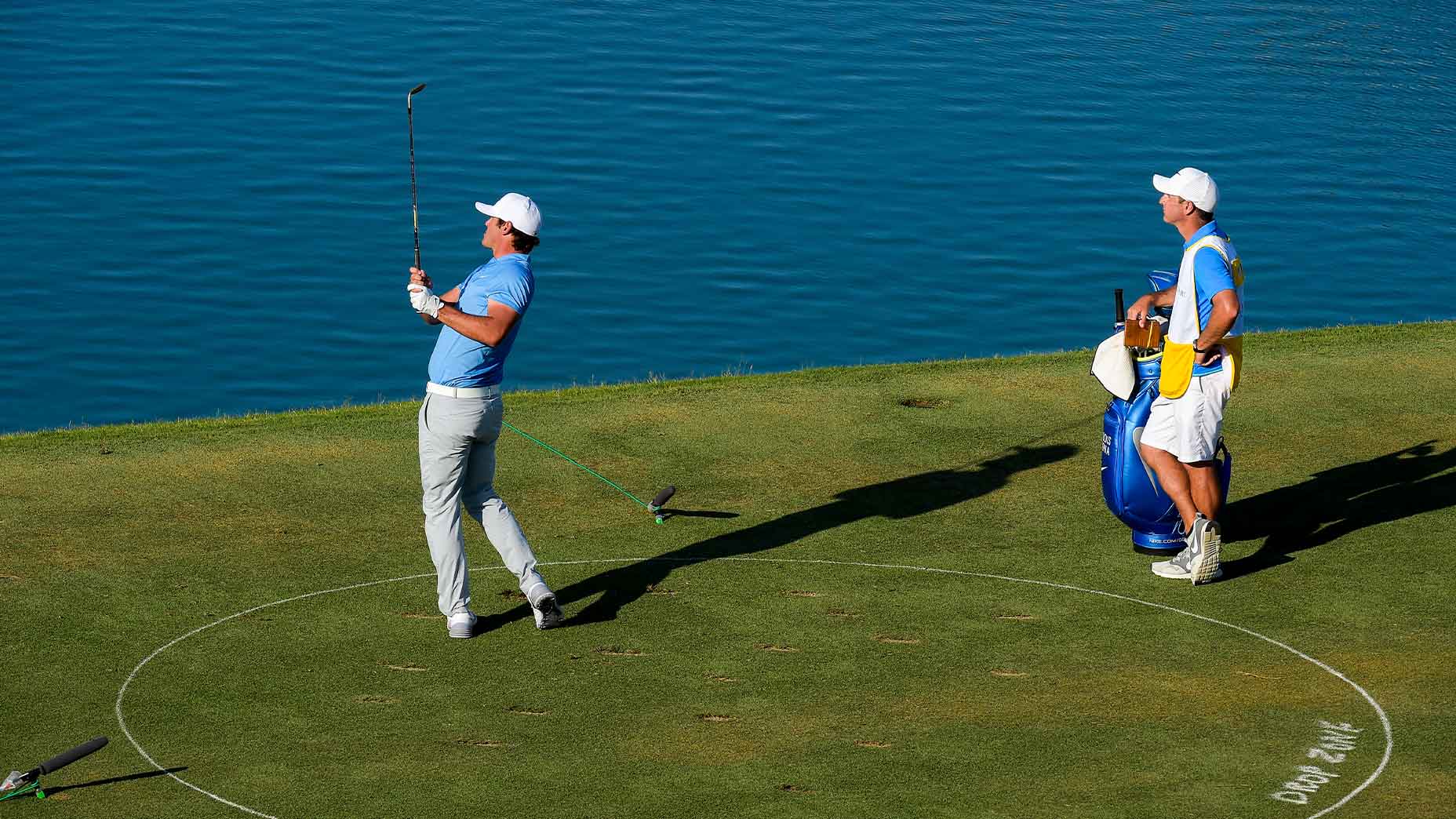
For Brooks Koepka at TPC Sawgrass, that moment arrives the instant he reaches the 17th tee.
Now, before you dismiss this as just another golfer having a rough patch on a tough hole, hear me out. What we’re watching with Koepka and the island green isn’t merely statistical underperformance—it’s a window into something deeper about pressure, precision, and the mental architecture that separates the elite from everyone else.
The Numbers Don’t Lie
Let’s start with what ShotLink has documented: Koepka has played the 17th nearly a full stroke over par for his career. Nine water balls in nine tries. Two double bogeys. That’s not a bad run; that’s a pattern. For a five-time major champion—arguably the best big-game hunter in modern golf—these aren’t the numbers you’d expect.
What strikes me most isn’t the raw data, though. It’s that Koepka himself seems almost bemused by it, which tells you something about his psychological relationship with the hole. When asked about his biggest challenge at the Players, he didn’t hesitate:
“The 17th hole. I don’t know if there’s stats on it, but I guarantee there are. One year I made an 8 and a 7. Yeah, that wasn’t very good. But that 17th hole has gotten me over the years. I’ve played good rounds here; that’s just kind of the one bugaboo that always gets me.”
Notice something there? He’s smiling about it. He’s deflecting with humor. That’s the universal language of someone who’s made peace with a nemesis, or at least is pretending to.
Context Is Everything
Here’s what the casual fan might miss: conditions matter enormously on island greens, and Koepka himself acknowledged one particularly brutal day in 2022 when the wind was howling at 35 mph. He hit 5-iron on a par-3 that typically demands something closer to 8 or 9. The ball cleared the green. Disaster followed.
In my three decades covering the tour, I’ve learned that one or two catastrophic days can skew a player’s historical record on a specific hole, especially in small sample sizes. But even accounting for that anomaly, Koepka’s relationship with the 17th remains problematic in ways that deserve examination.
The real question isn’t whether the 17th has gotten to him—his friends apparently make sure he never forgets it. The question is why a player of his caliber, someone who thrives under pressure in majors, seems to struggle with the mental reset required between shots on this particular par-3.
The Par-3 Pattern
Interestingly, Koepka pointed to something I hadn’t fully considered until now: his issues aren’t limited to island greens. He brought up the 12th at Augusta National, another notorious par-3 that’s humbled plenty of great players. When a generational talent starts identifying specific par-3s as problem areas—two of them, no less—you’re looking at something systemic.
“Between 17 and 12 at Augusta, it seems to be the par-3s.”
Is this a mechanical issue? A visualization problem? Simple bad luck compressed into two holes? I suspect it’s more psychological. Par-3s demand a different kind of confidence than other shots. There’s nowhere to hide. No layup strategy. No chance to grind your way around a problem. You’re either committed or you’re not.
The Optimistic Read
Here’s where I want to be careful not to oversell the narrative. Koepka hit the green at the 17th yesterday, and as he said himself, he was genuinely pumped about it. That matters. That’s not the response of a broken player; that’s the response of someone who understands the hole’s difficulty and takes pride in executing properly.
Moreover, let’s not forget that Koepka remains one of the tour’s most formidable competitors in big moments. Five majors don’t lie. His overall record at the Players—despite the 17th headaches—has been respectable. One hole, no matter how treacherous, shouldn’t define a career.
“No, I don’t think about it. It doesn’t haunt me.”
I believe him. Or at least, I believe he’s genuinely trying to believe it. The fact that he can laugh about it, that his friends give him grief about it, suggests he’s processing the frustration in a healthy way rather than letting it fester.
What This Reveals About the Game
The 17th at TPC Sawgrass has always been a nightmare factory. That’s by design. Pete Dye built it to extract a price, and it does. But Koepka’s particular struggles with this hole remind us that golf at the highest level isn’t just about technical ability—it’s about managing the mental weight of precision under duress.
Every elite player has a hole somewhere that gets under their skin. Mine was watching Lehman struggle with certain wind conditions at particular venues. You can’t eliminate these quirks; you can only develop strategies to minimize their impact.
For Koepka moving forward, the goal shouldn’t be to conquer the 17th—that’s too romantic. The goal should be consistency. Hit the green. Make par. Move on. No drama, no heroics, no 5-irons in hurricane-force winds.
That’s how the best players eventually break these curses.
