

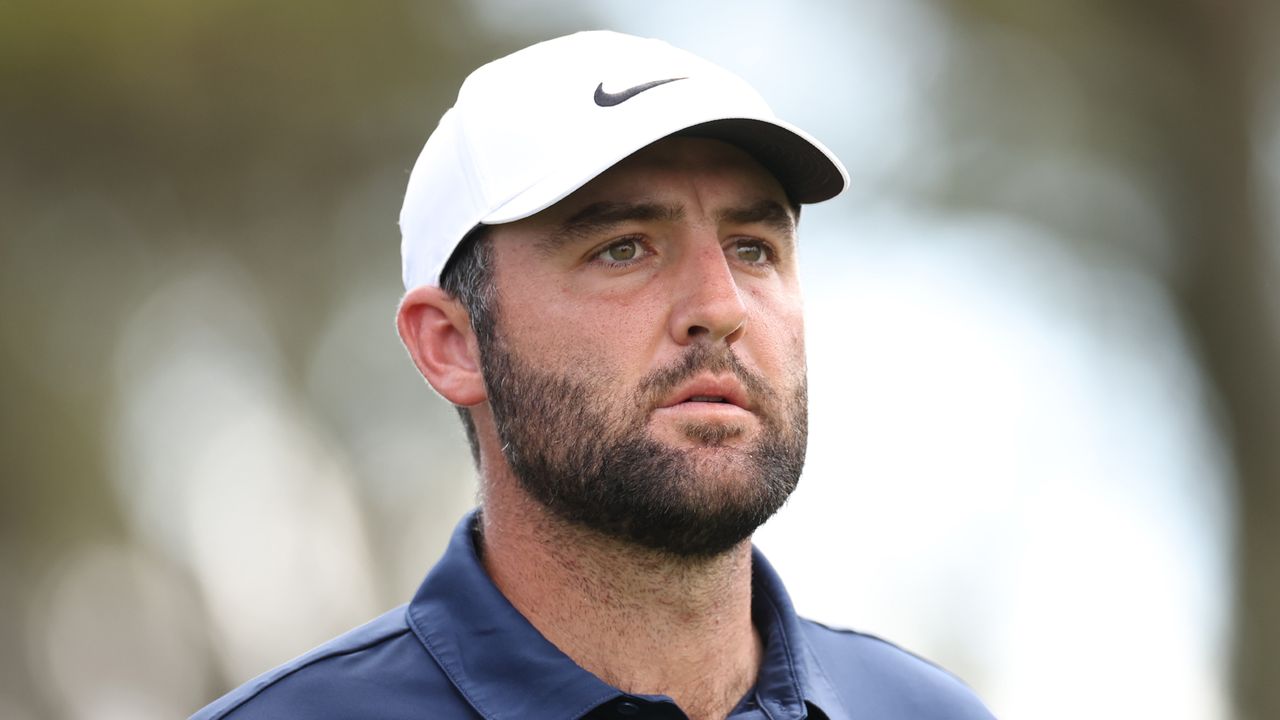

Scheffler’s Houston Exit: When the Game Takes a Backseat to Life’s Real Championships
Look, I’ve been around this tour long enough to know that withdrawals happen for all sorts of reasons—some legitimate, some less so. But every now and then, you get one that actually makes you smile a little bit, even if it means losing the world’s best player from a tournament field.
Scottie Scheffler’s withdrawal from the Texas Children’s Houston Open this week falls squarely into that category.
“Scottie Scheffler has withdrawn from the Houston Open. Though the PGA Tour didn’t provide a reason, have confirmed that it’s not injury-related but rather the Schefflers are set to welcome their second child.”
The facts are straightforward enough: the world No. 1 and his wife Meredith are expecting their second child imminently, and Scheffler made the decision to be home rather than chase birdies at Memorial Park. Fair enough. But what interests me—what actually strikes me after 35 years of covering this game—is what this moment says about where professional golf is headed, and about Scheffler’s character.
A Welcome Departure from Tour Dogma
In my three decades following the PGA Tour, I’ve watched the culture shift considerably. During the late ’80s and ’90s, when I was caddying for Tom Lehman and later covering the beat, there was this unspoken code: you played hurt, you played tired, you played through personal circumstances. Missing a tournament for a family moment? That was almost sacrilege. You’d hear the whispers—questions about commitment, about hunger, about whether a player truly wanted to compete at the highest level.
I think we’ve finally grown beyond that nonsense.
Scheffler’s decision here isn’t an indictment of his drive or competitiveness. The man won the American Express, finished T3rd at Phoenix, claimed a victory at Pebble Beach, and has been a machine in recent years. Nobody questions his hunger. What his withdrawal actually demonstrates is maturity and a healthy recalibration of priorities—exactly the kind of grounding that helps elite athletes maintain their mental edge over the long haul.
In my experience, the players who burn out aren’t the ones who occasionally step back for family moments. They’re the ones grinding relentlessly, unable or unwilling to tap the brakes. Scheffler seems to understand that distinction.
The Bigger Picture: A Slight Wobble Before Augusta
Now, let me be transparent about something else I’m noticing. Scheffler’s recent form, while still stellar by normal standards, has shown a tick of vulnerability that hadn’t been there before:
- T4th at AT&T Pebble Beach Pro-Am (mid-February)
- T24th at Arnold Palmer Invitational
- T12th at Genesis Invitational
- T22nd at The Players Championship
That’s not a crisis—we’re talking about a man still in contention everywhere he plays. But it is a departure from the absolutely relentless top-10 machine he’s been. His 18 consecutive top-10 finishes came to an end, and while that streak was otherworldly, the fact that it ended now, during what should be his peak preparation window before The Masters, is worth monitoring.
“His most recent start was at The Players where he failed to overcome a relatively disappointing first round and ended up finishing T22nd at TPC Sawgrass.”
What strikes me is whether this represents natural variance—which even generational talents experience—or if there’s something more systemic. Two weeks of rest before Augusta might actually serve him well. Sometimes the best thing for a golfer’s game is stepping away from it entirely.
The Houston Open Takes Its Lumps
On the flip side, the Texas Children’s Houston Open is catching it from all angles this week. With Scheffler departing, six additional withdrawals have followed, creating a domino effect of field changes:
Initial Withdrawals: Scottie Scheffler, Bud Cauley, Seamus Power, Austin Smotherman, Cam Davis, Ryo Hisatsune, Michael Kim, Matt McCarty
Replacements Announced: Matt Kuchar, Doug Ghim, Danny Willett, Jimmy Stanger, Paul Waring, Jesper Svensson, plus Brooks Koepka, Andrew Putnam, and Kris Ventura
The field still numbers 135 players and includes Chris Gotterup as the new highest-ranked competitor at World No. 10, so it’s not like the tournament is collapsing. Matt Kuchar’s addition is solid—the nine-time PGA Tour champion brings credibility and experience. But there’s no getting around the fact that losing the betting favorite and world No. 1 creates a vacuum in narrative and star power.
Houston has dealt with this before. Memorial Park is a fine venue with legitimate history, but it’s sandwiched awkwardly between The Players and The Masters. Players are tired, or they’re resting, or they’re dealing with family situations. It’s the nature of the tournament’s positioning on the calendar.
Looking Ahead to Augusta
Here’s what I’ll be watching: how Scheffler responds at Augusta in roughly two weeks. The Masters is where we’ll get real answers about his current trajectory. Is this a minor blip, a natural variance before he dominates his third Green Jacket run? Or is there something deeper worth examining?
“There, Scheffler will pursue a third Green Jacket off the back of a mildly turbulent preparation period.”
I lean toward the former. Players of Scheffler’s caliber don’t simply lose their edge because of a couple of weeks of softer results. The man has two Masters victories and four major championships. His pedigree is established. A little time at home with his wife, preparing for the arrival of their second child, might be exactly the mental reset that gets him sharp for Amen Corner.
That’s my read, anyway. But I’ll be watching closely. That’s what 35 years of coverage teaches you—pay attention to the context, not just the results. Sometimes what looks like a withdrawal is actually the smartest move a champion can make.
