


As a golf course architecture enthusiast, I often find myself deep in thought about the masters of design, the subtle brilliance of a well-placed bunker, or the way a green subtly repels an indifferent approach. Having traversed fairways across 200+ courses worldwide, I’ve developed a keen appreciation for what truly makes a journey special, both on and off the manicured turf.
Today, however, we’re not dissecting the strategic genius of Alister MacKenzie’s greens or the daring carries Pete Dye demanded. Instead, we’re turning our gaze, quite literally, to the very instruments that help us navigate these grand designs: the modern golf club. You might wonder why a course and travel writer is delving into the inner workings of hybrids and fairway woods, but the connection is undeniable. How many times have you reached a formidable par-5, only to be left with a dishearteningly long second shot, wishing for just a little more juice, a touch more forgiveness? It’s on these holes that the advancements in club technology become undeniably relevant.
The pursuit of distance and accuracy is eternal in golf, and while many golfers focus on the “big stick,” the reality is that those crucial second and third shots on longer holes often dictate the scorecard. For the 2026 season, manufacturers have once again pushed the boundaries, taking the innovations born in driver technology and expertly applying them to the often-overlooked workhorses of the bag: hybrids and fairway woods. The goal, as always, is to increase moment of inertia (MOI), optimize launch, and maximize distance and feel, but the execution across brands holds fascinating nuances.
The Hybrid Revolution: Bridging the Gap
Hybrids, those glorious amalgamations of iron and wood, have become indispensable. They offer a marriage of forgiveness and versatility that traditional long irons simply couldn’t match. As the article rightly points out, understanding your swing — whether you’re a picker/sweeper or someone who takes a divot — is key to finding the right head shape. I’ve always found that the visual appeal of a hybrid at address profoundly impacts confidence, especially when facing a daunting carry over a wetland or a long approach into a guarded green.
Callaway is touting their Quantum Max, which, with its more compact head, might just be the answer for those who prefer an iron-like feel. Its AI-designed face and movable weights speak to the relentless pursuit of customization we see across all manufacturers. For those who enjoy tinkering, the six-way adjustable hosel is a dream, allowing one to dial in loft and lie with surgical precision. The Quantum Max Fast and OS offer variations on size and profile, ensuring there’s a fit for almost every swing.
“One of the first things to determine when you’re looking at new hybrids is what your preferred head shape is. Do you play your hybrids more like an iron, with a descending blow that generally takes a divot? Or are you more of a “picker” or “sweeper”?”
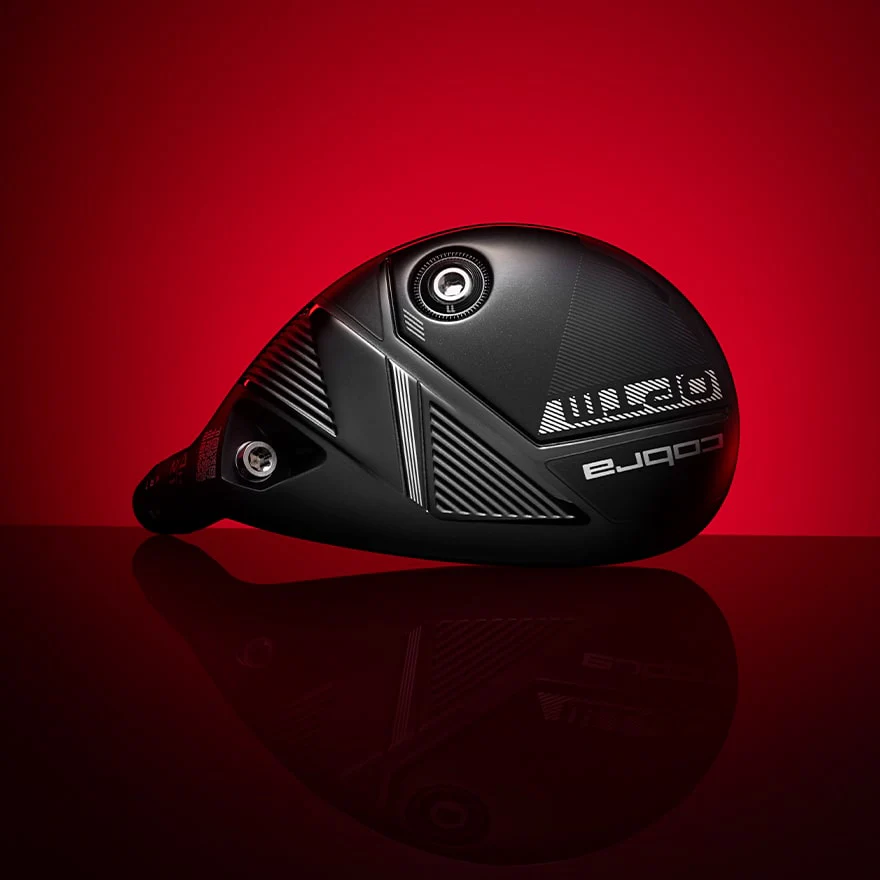
Cobra’s OPTM caught my eye, especially with its “FutureFit33 hosel,” boasting 33 independent loft and lie settings. That’s an astonishing level of adjustability, suggesting a commitment to precision fitting. The slightly larger profile and 15-zone face technology promise forgiveness, something every golfer, regardless of handicap, can appreciate when a 200-yard shot is staring them down. Cobra’s ongoing push for precision resonates with my own belief that thoughtful design extends beyond the course to the equipment we wield.

PING, with its G440 hybrids, presents an interesting design philosophy with loft-specific biases built into the different clubs in the series – a fade for the 2H, straight for 3H/4H, and a draw bias for 5H, 6H, and 7H. This tailored approach, much like a great architect shaping each hole for a specific challenge, shows a deep understanding of golfer needs. The Carbonfly Wrap crown is a neat piece of weight redistribution, allowing for a lower center of gravity and easier launch.
“The different hybrids in the series feature different biases: a fade-based bias for the 2H, straight for the 3H and 4H, slight draw for the 5H, and draw for the 6H and 7H. Combined with loft-specific flight tuning and adjustability settings, the G440 hybrid delivers a technologically sophisticated blend of distance, precision, and playability.”

Mizuno, often lauded for its exquisite iron feel, has channeled that expertise into their JPX ONE hybrids. The combination of the MAS1C maraging steel face and the CORTECH Chamber points to an aggressive pursuit of ball speed and forgiveness, even on those mis-hits that stray towards the heel or toe. A “Waffle Crown structure” is an interesting design choice, subtly redistributing weight for higher launch. I’ve always admired Mizuno’s commitment to nuanced feel, and it’s promising to see that philosophy extending to their hybrids.

TaylorMade’s Qi4D Rescue sounds like a technologist’s dream, merging a carbon-fiber crown with stainless steel to precisely control the center of gravity. Their “Twist Face” technology is almost iconic at this point, a testament to its effectiveness in mitigating the dreaded hook or slice. An 8-gram adjustable weight and 3-degree loft sleeve offer even more fine-tuning, reflecting the Tour-level customization that is trickling down to recreational golfers.

Finally, Titleist’s GT2 hybrid offers a blend of classic aesthetics with cutting-edge internal weighting. The ultra-high MOI and adjustable heel-toe weighting system speak to a very deliberate design philosophy: maximum stability and control. The flatter, more playable sole is a welcome touch. As someone who appreciates classic lines, the GT2’s sleek profile sitting flush to the turf is particularly appealing, promising clean strikes from varying lies.

Fairway Woods: The Long-Distance Workhorses
Fairway woods have undergone a similar transformation, shedding their clunky past for sleek, powerful designs. They’re no longer just for layups; many golfers are launching them prodigious distances from the turf, navigating long par-4s and aggressive par-5s with newfound confidence. The shared technological advancements between drivers and fairway woods mean that these clubs are hitting it farther and with more forgiveness than ever before.
Callaway’s Quantum Max fairway wood highlights its “Speed Wave 2.0 technology,” strategically placing weight low and forward to stabilize launch on those common low-face strikes. This speaks volumes about understanding real-world golf swings. The AI-optimized face and “Step Sole” design are details that might go unnoticed by the casual observer but are critical for performance, ensuring the club glides through the turf rather than digging in, reminiscent of how a well-maintained fairway provides an ideal lie.
Mizuno’s JPX ONE fairway woods emphasize their refined CORTECH Chamber, an ingenious way to enhance face flex and create more energy at impact. Coupled with the multi-thickness MAS1C maraging steel face and a composite crown, these clubs promise faster ball speeds and a higher, more penetrating launch – a trajectory that will comfortably clear troublesome bunkers and reach distant greens.

PING’s G440 SFT (Straight Flight Technology) is a revelation for those battling a slice. The draw-biased CG, created by pushing weight towards the heel, is a direct counter to that pervasive swing flaw. This kind of targeted design is brilliant, offering real-world help rather than just incremental gains. The “Free Hosel” concept, reducing weight while maintaining stability, is another subtle but effective engineering choice. It’s like a classic golf course designed with specific hazards in mind, but PING engineered a club to help you navigate those personal hazards.

PXG’s Lightning Tour fairway wood with its “Progressive Face Geometry” for tighter dispersion and “Spined Sole Design” for reduced vibration speaks to a highly refined engineering process. The compact, Tour-preferred shape suggests it’s for the discerning player who values workability and precision. It’s akin to a minimalist, strategic golf course that rewards thoughtful execution rather than brute force.
Srixon’s ZXi fairway woods are a study in combining classic aesthetics with cutting-edge performance. The “i-FLEX face” and “Rebound Frame technology” are strong indicators of a club designed to maximize energy transfer and maintain ball speed across the face, crucial for those less-than-perfect strikes. A stepped carbon crown and adjustable hosel round out a club that aims to deliver across the board.

TaylorMade, once again, positions its Qi4D Tour Fairway as their “most technologically advanced line.” The Trajectory Adjustment System (TAS) with an 8-gram movable weight provides an incredible level of customization, allowing golfers to truly match the club to their swing. The familiar Speed Pocket and Twist Face technologies continue to serve as pillars of their design, ensuring forgiveness and straighter flight on those off-center impacts. This attention to detail in customization mirrors the way a great architect can adapt a design to the natural contours of the land, coaxing optimal performance from its features.

Finally, Wilson’s DYNAPWR Carbon fairway wood is an impressive blend of Tour-inspired design and modern tech. The AI-powered PKR-360 face and lightweight carbon crown demonstrate a commitment to maximizing ball speed and optimizing the center of gravity for a penetrating, low-spin trajectory. The 30-gram tungsten sole weight is a significant element, further stabilizing impact and reducing spin. The six-way adjustable hosel speaks to the continued importance of fitting, ensuring that the golfer can tailor their club to both their swing and the course conditions they frequently encounter.

While my passion lies in the timeless canvas of greens, bunkers, and routing, the tools we use to navigate these masterpieces are equally important. The continued evolution of hybrids and fairway woods, with their increasingly sophisticated engineering and adjustability, is a testament to the game’s ongoing pursuit of excellence. For any golfer looking to tame those long holes, reduce dispersion, or simply find a little more joy in their mid-to-long game, exploring these new offerings from 2026 is undoubtedly a worthwhile endeavor. A perfectly struck hybrid into a well-designed green complex can be just as satisfying as a flawlessly executed tee shot. And ultimately, that satisfaction is what keeps us coming back, isn’t it?
