


TGL’s Year Two Proves the Format Works—But the Real Story is What Comes Next
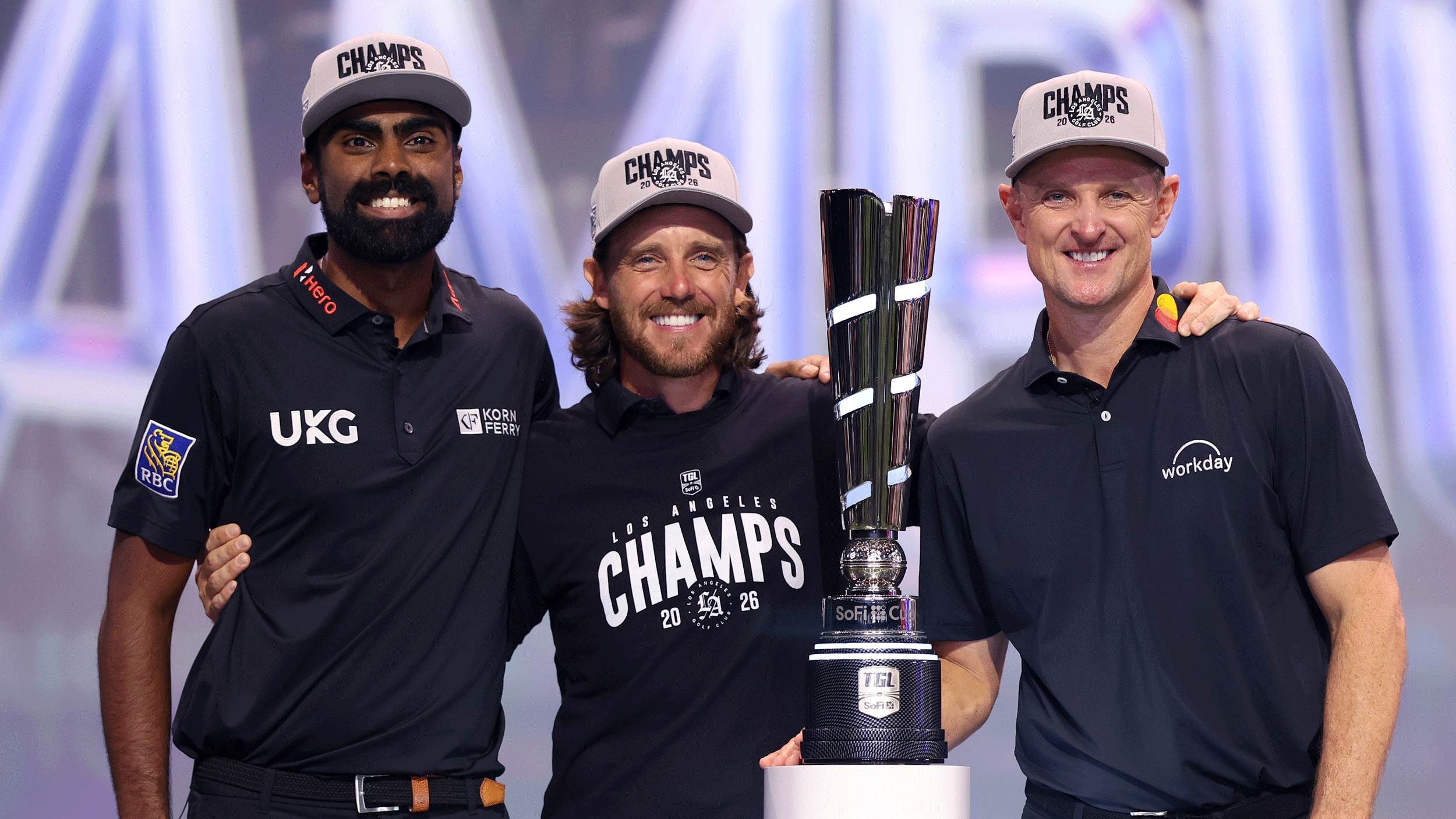
Los Angeles Golf Club’s dominant 2-0 series victory over Jupiter Links to capture the TGL championship tells us something important: this indoor golf league isn’t just surviving—it’s actually becoming appointment television. But here’s what really caught my eye after 35 years covering this tour: the narrative that matters most isn’t who hoisted the trophy on Tuesday night. It’s what Tiger Woods’ late-season insertion into the Jupiter lineup reveals about how the PGA Tour ecosystem is evolving.
Let me start with what impressed me about this Finals matchup. Tommy Fleetwood, Justin Rose, and Sahith Theegala closing out a best-of-three with a gutsy 6-5 win followed by a dominant 9-2 romp? That’s not luck. That’s a team that understood the moment. In my experience caddying for Tom back in the ’90s, I learned that composure under pressure separates the good from the great. What we saw from LAGC was composed execution when it mattered most.
The Tiger Effect Cuts Both Ways
Now, about Woods. The fact that Jupiter Links felt compelled to swap Kevin Kisner for Tiger in match two tells you something fascinating about the leverage these franchise owners still feel they have with a 15-time Major champion. I think what’s happening here is more nuanced than the surface reading suggests.
“Tiger Woods was introduced into the Jupiter Links line-up for match two (and would have played match three) in place of Kevin Kisner, but even the 15-time Major winner could not help the No.4 seed turn things around.”
On one level, it’s a desperate move that didn’t work. But on another level, it’s validation that TGL has become significant enough to warrant such moves at all. Twenty years ago, you wouldn’t have seen something like this. Tiger wouldn’t have needed to play in an indoor simulator event for it to matter. The fact that he did—and that the league was willing to make a roster change at the Finals stage—suggests TGL has become part of the fabric of professional golf in a way that early skeptics (including yours truly, I’ll admit) didn’t necessarily anticipate.
What strikes me, though, is that even with Woods in the lineup, Los Angeles’ three consecutive eagles after his missed three-footer on the seventh was the dagger. That’s the kind of execution you can’t manufacture, even with a living legend in your corner.
Follow the Money to Understand the Future
The prize money distribution for TGL’s 2026 season tells the real story here:
| Position | Team (Players) | Prize Money (Per Golfer) |
|---|---|---|
| 1st | Los Angeles (Tommy Fleetwood, Justin Rose, Sahith Theegala, Collin Morikawa) | $9 million ($2.25 million) |
| 2nd | Jupiter Links (Tiger Woods, Max Homa, Kevin Kisner, Tom Kim) | $4.5 million ($1.125 million) |
| 3rd | Boston Common (Rory McIlroy, Keegan Bradley, Hideki Matsuyama, Adam Scott) | $2.25 million ($562,500) |
| 4th | Atlanta Drive (Billy Horschel, Justin Thomas, Patrick Cantlay, Lucas Glover) | $2 million ($500,000) |
| 5th | The Bay (Ludvig Aberg, Wyndham Clark, Min Woo Lee, Shane Lowry) | $1.75 million ($437,500) |
| 6th | New York (Rickie Fowler, Xander Schauffele, Cameron Young, Matt Fitzpatrick) | $1.5 million ($375,000) |
Each Los Angeles player walked away with $2.25 million for winning a league that plays indoors, over a compressed schedule, with format elements that didn’t exist five years ago. That’s real money. That’s not a novelty anymore.
I think what’s particularly telling is that even the fourth-place finisher (Atlanta Drive, which includes a legitimate Major champion in Justin Thomas) is splitting $2 million four ways. These aren’t participation trophies we’re talking about. This is a revenue stream that’s generating serious capital for the PGA Tour’s ecosystem.
The Bigger Picture: Format Evolution
In my three decades covering professional golf, I’ve seen the tour adapt to player preferences, television demands, and commercial realities. TGL represents all three simultaneously. The league only lost two matches all season under Los Angeles’ ownership, yet they arrived as the No. 2 seed behind Rory McIlroy’s Boston Common. That’s a credit to the playoff structure—it keeps things unpredictable and prevents regular-season dominance from feeling inevitable.
“The west-coast outfit only lost two matches all season, thanks as well to the efforts of fourth player Collin Morikawa, but arrived into the Playoffs as the no.2 seed behind Rory McIlroy’s Boston Common.”
What I appreciate about this format is that it forces teams to execute in real-time. There’s no hiding in team events when you’re playing under these conditions. Sahith Theegala and Tommy Fleetwood couldn’t coast on reputation—they had to perform when it mattered most.
Here’s the balanced take: TGL has legitimacy concerns that still linger (the indoor setting feels artificial to some purists, and I understand that perspective), but it’s clearly found an audience and a financial model that works. The league completed its second season without drama, produced a compelling Finals, and proved it can attract top-tier talent even when circumstances require last-minute adjustments.
For the future of professional golf, that’s actually pretty significant. We’re watching an experiment validate itself in real-time.
