


Houston’s Wide-Open Field Tests the Depth of the Modern Tour—And It’s Refreshing
When Scottie Scheffler withdrew from the 2026 Houston Open on Tuesday, citing the imminent birth of his child, I’ll admit my first thought wasn’t about the tournament’s competitive landscape—it was a smile. After 35 years covering this game, you learn to recognize what matters. A first child beats a Houston tune-up every single time, and I respect the man for his priorities.
But here’s what strikes me about this situation: The Houston Open doesn’t need Scottie. And I mean that as a compliment to the field that’s gathering at Memorial Park this week.
When the Favorite Fades
We’re now looking at defending champion Min Woo Lee as the consensus favorite at +1300, a significant move from his opening +2200 odds. On the surface, that’s the story—the Australian who won it last year is back for another run. But having spent the better part of a decade watching tour dynamics shift, I think there’s a more interesting narrative lurking beneath the numbers.
"Lee, the defending champion and the favorite, does not repeat," according to the model’s projections. And here’s why that matters: defending champions in these pre-Masters tune-ups often struggle because they’re caught between two competing mindsets. They’re either playing conservatively, not wanting to risk injury before a major, or they’re pressing, trying to prove last year wasn’t a fluke. Lee’s performance at The Players Championship—shooting 70 or higher in each round, including a fourth-round 74 that left him at T32—suggests he might be in that conservative zone.
The Real Story: Depth Over Stars
What genuinely interests me about this year’s Houston field isn’t who the favorite is. It’s who’s lurking in the mix. We’ve got Chris Gotterup at +1600, Jake Knapp at +2000, and Sam Burns at +2200. These aren’t names that make casual fans sit up and take notice, but they’re exactly the kind of competitive fillers that make modern tour golf so unpredictable.
In my experience as a caddie for Tom Lehman back in the ’90s, you’d typically have three or four legitimate contenders and then a bunch of hopefuls. Now? The gap between the favorite and the 20th player in the betting odds is razor-thin. That compression of talent across the field—it’s one of the most underappreciated changes in professional golf over the last decade.
The Surprise Play Worth Watching
Here’s where it gets interesting. The model is calling for Nicolai Hojgaard as a top-three contender despite his longer +2500 odds. That caught my eye, and I’ll tell you why: consistency matters more than we give it credit for in these regular-season events.
"The model says Nicolai Hojgaard is a top-three favorite this week despite his longer odds at +2500. He had a tough weekend at the Valspar Championship last week, but hasn’t finished worst than T27 at any other event this season. That includes a T3 at the WM Phoenix Open and a T6 at the Cognizant Classic."
Think about that resume. In this modern era, where volatility seems to define every tournament, a player who consistently finishes in the mix—even after a bad week—often peaks at exactly the right moment. I’ve seen it time and again. The guy who’s been top-25 for eight straight weeks suddenly finds his putter in week nine and wins by three shots. Hojgaard has that kind of upside.
Brooks and the Redemption Arc
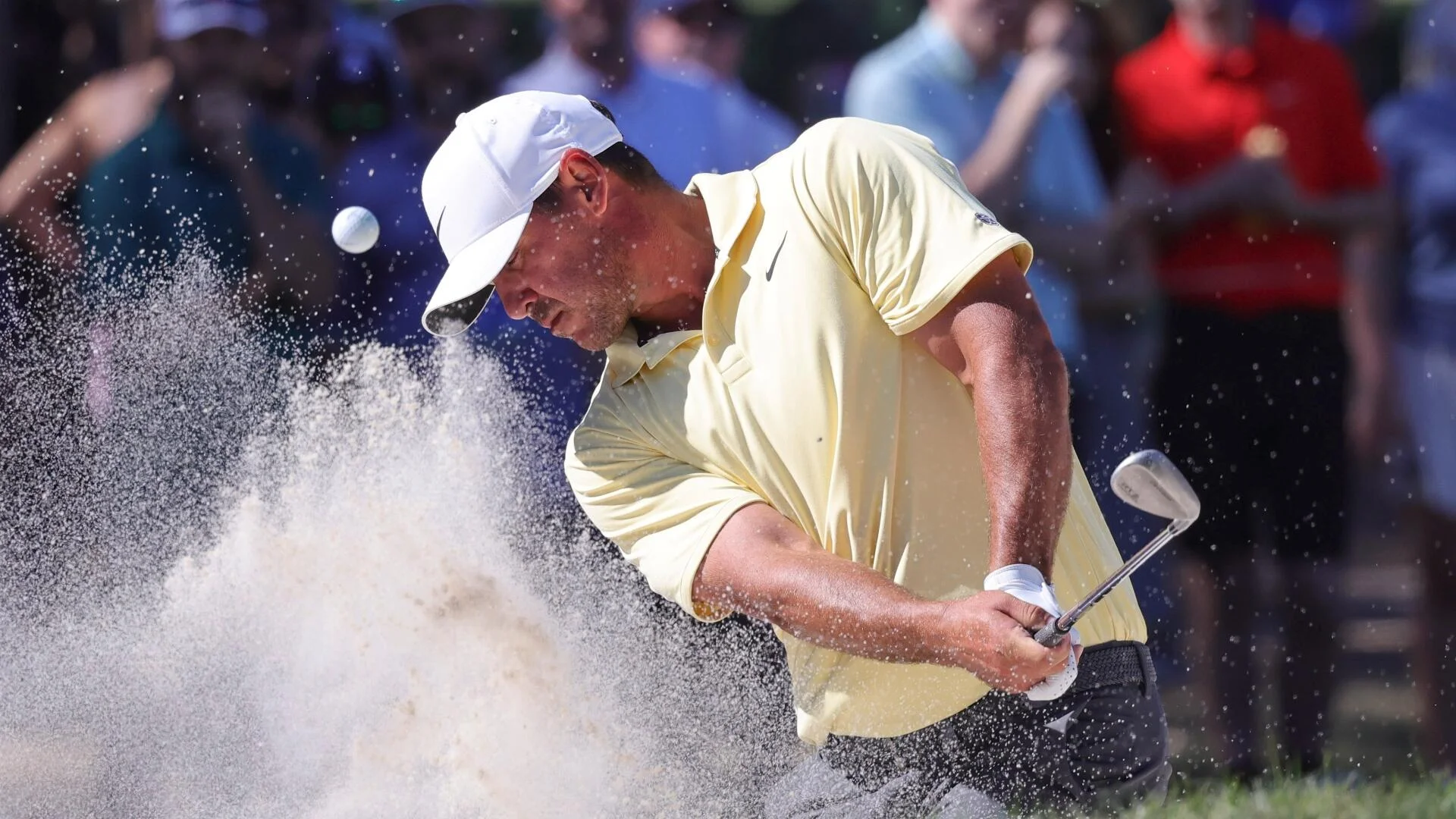
Brooks Koepka at +2200 is another name that deserves examination. He’s got just one top-10 finish this season in five tournaments since returning to the PGA, which on the surface reads as disappointing. But—and this is important—that one top-10 suggests the timing is working. Sometimes with Brooks, it’s not about the volume of good weeks. It’s about showing up ready when it matters.
2026 Houston Open Odds (via FanDuel)
- Min Woo Lee +1300
- Chris Gotterup +1600
- Jake Knapp +2000
- Sam Burns +2200
- Brooks Koepka +2200
- Nicolai Højgaard +2500
- Michael Thorbjornsen +2500
- Marco Penge +2700
- Kurt Kitayama +2700
The full field stretches much deeper, but notice how compressed this really is. That +1300 to +2700 range—that’s barely a full stroke in expectation. This is peak modern golf.
The Bigger Picture
What we’re witnessing this week in Houston is the natural evolution of professional golf. Parity has increased. Talent pools have globalized. The gap between elite and very-good has narrowed considerably. Scottie not being here? In another era, that would’ve been a huge story. This year, it’s almost a non-event because the field can carry itself.
That’s not cynical. That’s actually bullish on the state of the tour. It means competition is genuine. It means surprises are possible. It means that when someone goes out Thursday morning and shoots 64 at Memorial Park, it won’t shock anyone because we’ve learned to expect excellence at multiple levels.
The Houston Open is ready to roll without its Texas native. And honestly, that tells you everything you need to know about where professional golf stands heading into another Masters week.
