

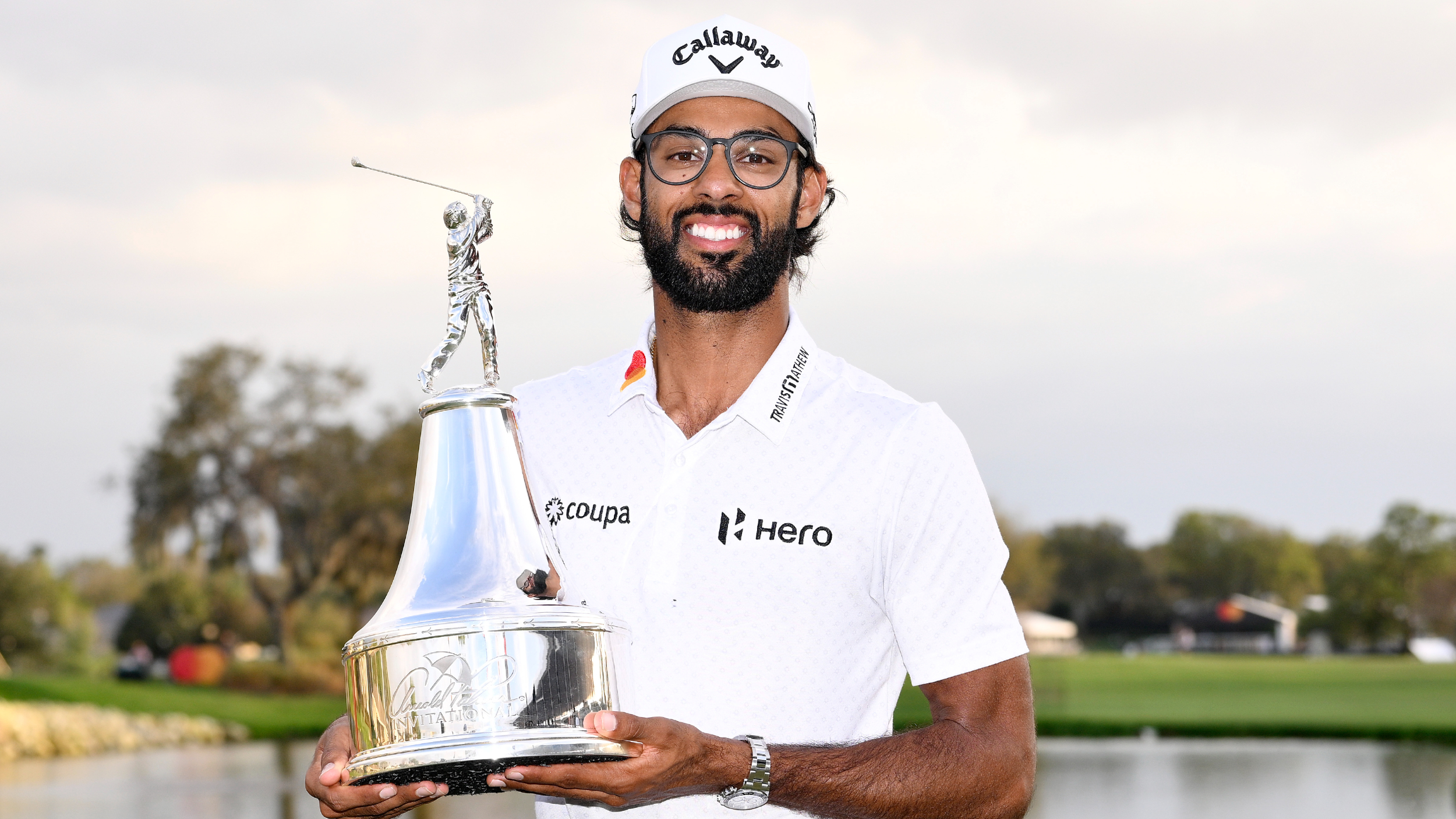

Akshay Bhatia’s Risky India Detour: A Masters Test We Should All Be Watching
Look, I’ve watched enough pre-Masters preparation strategies over 35 years to know that most players stick to what works. They head to Texas, play some familiar tracks, get comfortable with their swings in mild pressure situations, then head to Augusta with their games dialed in. Akshay Bhatia decided to take a completely different path—and after his opening day at the Hero Indian Open, I’d wager some folks back in the States are wondering if the kid lost his mind.
But here’s what I think is actually happening, and why I’m more intrigued than concerned: Bhatia is playing chess while others are playing checkers.
When Things Fall Apart Before They Come Together
Let’s start with the brutal honesty. Bhatia’s opening nine at DLF Golf & Country Club was, frankly, a masterclass in going sideways:
“Out of bounds on the opening hole, hit the wrong ball, triple-bogey on the 15th—eight over for the front-nine”
That’s not just a rough day; that’s the kind of round that makes you question every decision you’ve made in the last 48 hours. Out of bounds on hole one? Hitting the wrong ball? These aren’t the mistakes you see from a World No. 22 who just won the Arnold Palmer Invitational in a playoff. These are the kinds of things that happen when a player’s head isn’t quite synced with the task in front of him.
But here’s where the story gets interesting.
The Back-Nine Resurrection
What strikes me most about Bhatia’s day isn’t the disaster on the front nine—it’s what he did after hitting rock bottom at eight over par. He shot 33 on the back nine. Three under. Flawless golf when it mattered most in that moment.
“Tough day, hit the wrong ball, which was very unfortunate. Just did not play good on the first nine but shot three under on my back side was great.”
In my experience caddying for Tom Lehman back in the ’90s, I learned that the measure of a champion isn’t perfection—it’s resilience. Tom could play poorly for nine holes and then flip the switch like someone turned on a light. That’s what I saw from Bhatia yesterday. After one of the most humbling stretches imaginable, he regrouped and played some genuinely solid golf.
Finishing at five over after a 77 on a brutish golf course? That’s not the headline. The headline is that he found something in the back nine that’s going to serve him well at Augusta.
Why This India Decision Actually Makes Sense
Now, let’s talk about the elephant in the room: Why would a legitimate Masters contender travel halfway around the world two weeks before the year’s first major?
It seems reckless on the surface. Some observers have definitely called it that. But I think there’s genuine method in what might look like madness. Consider Bhatia’s 2026 resume: a win at the Arnold Palmer Invitational (a tournament played on a genuinely difficult course against top-tier competition), solid performances across the board, and—critically—he’s already made the cut in both his Masters appearances.
DLF Golf & Country Club is unforgiving. It’s the kind of course that doesn’t care about your world ranking or your recent victories. It punishes lazy golf and rewards precision and mental toughness. In some ways, that’s exactly what you need to experience right before Augusta.
“This golf course is hard so if I can just try and get it back to even par it’ll be a nice comeback for me. I’ll never give up and that’ll be the goal.”
Think about it this way: Bhatia gets four rounds of genuine adversity on a track that won’t cut him any slack. He plays in front of his family’s homeland, which carries emotional weight. And if he can pull off a respectable finish, he arrives at Augusta not as someone who played it safe in Texas, but as someone who challenged himself in an unfamiliar environment and came through.
The Short Game That Changed Everything
Here’s something that gets lost in the narrative about his opening day: Bhatia’s short game is historically elite right now. His Arnold Palmer Invitational victory came with a record +16.3 strokes gained for short game play—the best mark since ShotLink started tracking it.
That’s not a stat that disappears after one rough front nine. That’s muscle memory. That’s confidence in a crucial area of the game. One bad round doesn’t erase that kind of excellence.
Left-Handers and Augusta
I’d be remiss if I didn’t mention this: left-handers have a decent historical record at Augusta. While Bhatia hasn’t yet figured out the major championship puzzle (the cuts he’s made are respectable but hardly scintillating), he’s at least proven he can navigate the course. Now he’s arriving with adversity under his belt and a proven ability to bounce back.
The Real Question
Here’s what I’m watching over the next three days: Can Bhatia post solid rounds and walk away from India feeling like this was preparation rather than distraction? If he does, if he plays all four rounds and gets back to even or better, then this becomes a brilliant pre-Masters story—a young player willing to challenge himself away from the traditional tour prep circuit.
If he misses the cut or limps home in frustration, we’ll all wonder why he didn’t just head to Texas like everyone else.
My money’s on the former. I’ve seen enough resilience in his back nine to believe Bhatia knows exactly what he’s doing.
