


The Matt Wallace Moment: Why One Penalty Shot Matters More Than You Think
I’ve been covering professional golf for 35 years now, and I’ve seen enough tour drama to fill a small library. But every so often, something happens that cuts through the noise—not because it’s sensational, but because it’s genuinely instructive. Matt Wallace’s self-called penalty at the Valspar Championship is one of those moments.
Let me be clear: this isn’t a feel-good story dressed up as news. It’s actually a window into something far more interesting—the real tension between competitive instinct and personal integrity that exists in professional sports, and how that tension is increasingly rare at the highest levels.
The Setup: Pressure and Opportunity
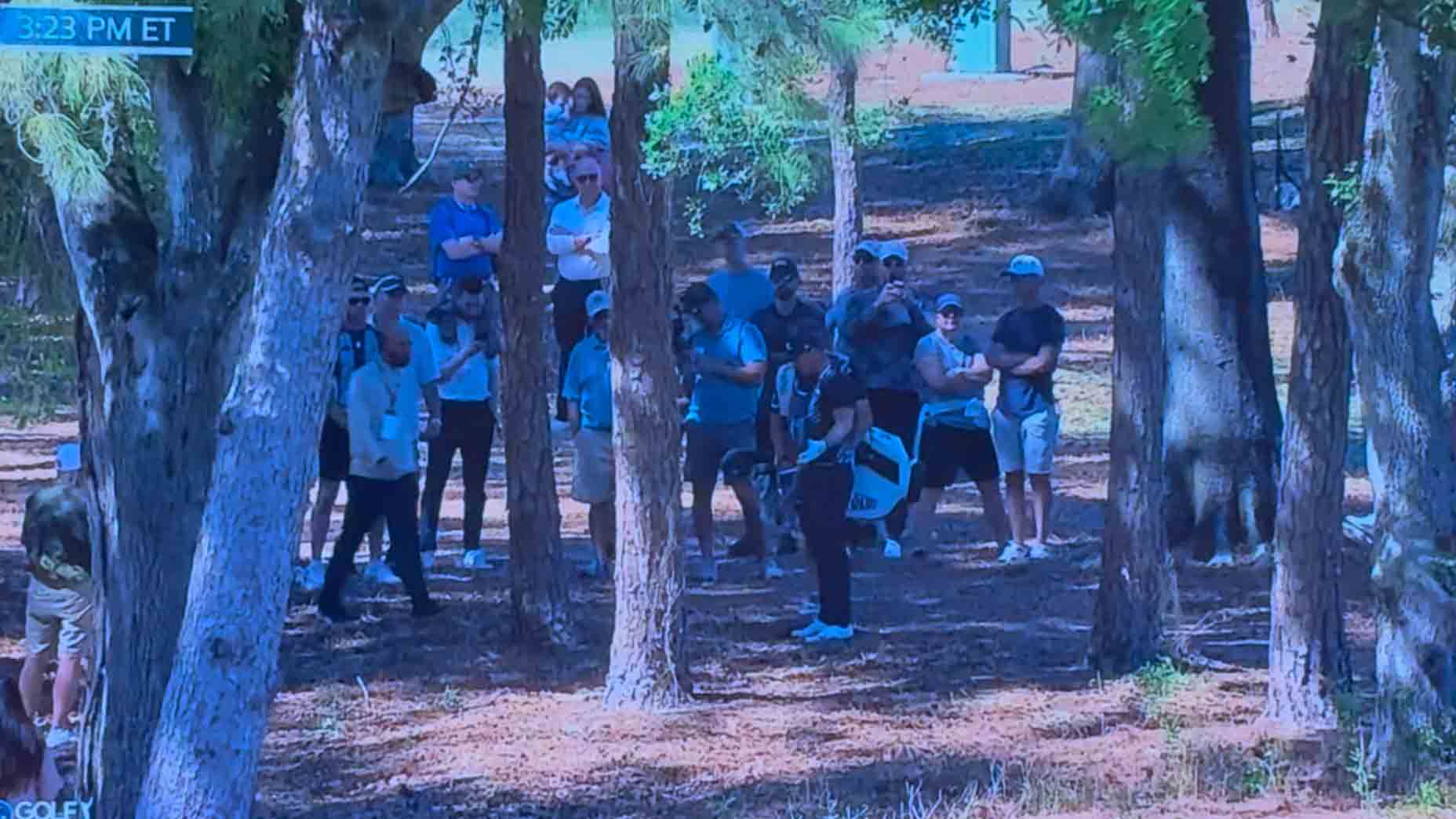
Here’s what happened. During Friday’s second round on the Copperhead Course’s par-5 11th hole, Wallace’s tee shot drifted right into the pine straw—exactly the kind of position where you need precision and luck in equal measure. As he addressed the ball, attempting to navigate around a wayward twig, his club made contact. The ball moved. He could’ve stayed silent. He was two-over for the tournament and fighting to make the cut. One stroke stood between him and the weekend.
Think about that for a moment. We’re talking about a professional golfer at a critical juncture, facing the kind of moment that defines careers. Miss the cut, and you’re playing for nothing. Make it, and you’re alive for 36 more holes and a potential paycheck. Most people wouldn’t have called it on themselves.
The Decision
What strikes me about Wallace’s response is not some Pollyanna notion of sportsmanship—it’s his actual reasoning, which reveals something shrewd beneath the obvious morality:
"You’re not just doing it for yourself though, even though it’s such an individual sport. You’re doing it to protect the rest of the field. You’re doing it for your caddie, your team, your family. I would rather miss the cut doing something like that by one shot, and then giving it my all for the rest, than making it and knowing something’s happened."
That’s not sentiment. That’s a man who understands the architecture of professional sport. He gets that the credibility of the competition—which protects his own career and reputation—depends on moments exactly like this one. If Wallace cheats, he doesn’t just gain an advantage; he devalues everyone’s victory at this tournament, including his own caddie Jamie Lane, who was standing right there knowing what happened.
In my decades around the tour, I’ve noticed that the players who think about golf this way tend to have longer, more stable careers. There’s less psychic baggage. Your conscience doesn’t become a liability waiting to detonate.
The Karma Question (Or Is It Just Golf?)
Here’s where the story gets interesting in a different way. After taking his penalty, Wallace proceeded to play some genuinely good golf:
"And then I made a few birdies… Yeah, so about that golf gods thing."
Let me walk through the sequence: He made par on 11 after the penalty. Then birdied the par-4 14th with a 22-foot putt. Birdied the par-3 15th from 6 feet. Birdied the par-3 17th with a 27-footer. Par on 18. A final round of 68, three-under, putting him at one-under for two rounds—exactly good enough to make the cut.
Now, I’m not going to pretend the golf gods intervene in professional tournaments. That’s nonsense. But here’s what I think is actually happening: Wallace took his penalty, freed his mind from the weight of a decision he didn’t make, and played the last seven holes with clarity. The stress of "should I report this?" was gone. He was just playing golf—which, frankly, is what he does best.
That’s not karma. That’s psychology. And it’s a lesson I’ve seen play out dozens of times in my career.
What This Really Means
Here’s the thing that concerns me slightly as someone who’s been covering this tour for so long: moments like this shouldn’t be noteworthy. They should be routine. The fact that we’re treating Wallace’s self-call as remarkable says something about the current state of professional sports—not just golf.
But I’m also not a pessimist about this. What I’ve observed over the past decade is that a younger generation of players—Wallace included—seems to have absorbed a different ethos than some of their predecessors. They recognize that the integrity of competition is a shared asset, not something to be exploited for personal gain.
Wallace is 32 now, in the middle of his career. He’s not chasing history. He’s trying to build consistency, and that requires a clear conscience. His willingness to call a penalty on himself during a cut line situation demonstrates something that’s increasingly valuable in professional sports: the ability to think beyond the immediate tactical advantage.
The Takeaway
What strikes me most about this Valspar moment isn’t the penalty itself. It’s that Wallace saw the choice clearly and made the right one—and lived to tell about it. He made the cut, kept playing, and got his karma or his psychological freedom or whatever you want to call it.
That’s the real golf gods at work: rewarding the people who understand that integrity and competitive excellence aren’t opposing forces. They’re the same thing.
