


Ah, TPC Sawgrass. Just the name conjures images of the ultimate golf gladiatorial arena, a coliseum for the modern game. For us golf architecture nerds, Pete Dye’s Stadium Course isn’t merely a golf course; it’s a living, breathing testament to psychological warfare disguised as pristine turf. I’ve walked these fairways myself, notebook in hand, charting the visual deception and strategic demands that make this place so unforgettable. It’s an iconic destination nestled in Ponte Vedra Beach, Florida, very much open to the public, where mere mortals like us can test our mettle against the pros’ playground.
Dye, a master of unsettling the comfortable, crafted this course not just to challenge the best players in the world, but to entertain the masses. He succeeded spectacularly. The routing, a fascinating journey through dense Florida wetlands and pine forests, culminates in one of the most thrilling finishes in golf. What makes TPC Sawgrass special isn’t just its immaculate conditioning or the roster of champions it produces; it’s the sheer audacity of its design principles. Waste areas that blend seamlessly into native vegetation, railroad ties framing treacherous bunkers, and of course, those infamous water hazards – Dye’s fingerprints are everywhere, demanding not just physical prowess but unwavering mental fortitude.
Consider the stretch from 16 to 18 – golf’s ultimate pressure cooker. The par-5 16th, a reachable beast, offers a glimmer of hope for a birdie before the main event. It sets the stage for what’s to come, offering a slight reprieve, a deep breath before the plunge. And then, there it is…
The 17th. The Island Green. No matter how many times I’ve seen it, played it, or watched the world’s best wrestle with it, it never loses its magnetic pull. From the tee, it looks like a simple wedge shot, a mere 140 yards or so. In any other setting, on any other course, it would be. But Pete Dye, bless his mischievous soul, knew better. He understood the profound impact of context, of environment, of sheer, unadulterated pressure. As the recent Players Championship highlighted, even a sudden, brief storm can turn a routine shot into an existential crisis.
“Even the most casual fan knows what follows 16 on Pete Dye’s vaunted Stadium Course: the iconic par-3 17th, where players, from approximately 140 yards, are asked to hit to a green surrounded by water.”
The article captures this perfectly. It’s not just the water; it’s the thousands of roaring fans, the towering corporate hospitality tents, the swirling winds off the Atlantic, and the knowledge that a major championship hangs in the balance. This generously sized 4,000-square-foot target suddenly shrinks, visually contracting to what feels like 400 square feet. It’s a psychological marvel, designed to induce fear and indecision in the most composed athletes. Players, from the moment they step onto the course, are already doing the mental calculus for 17.
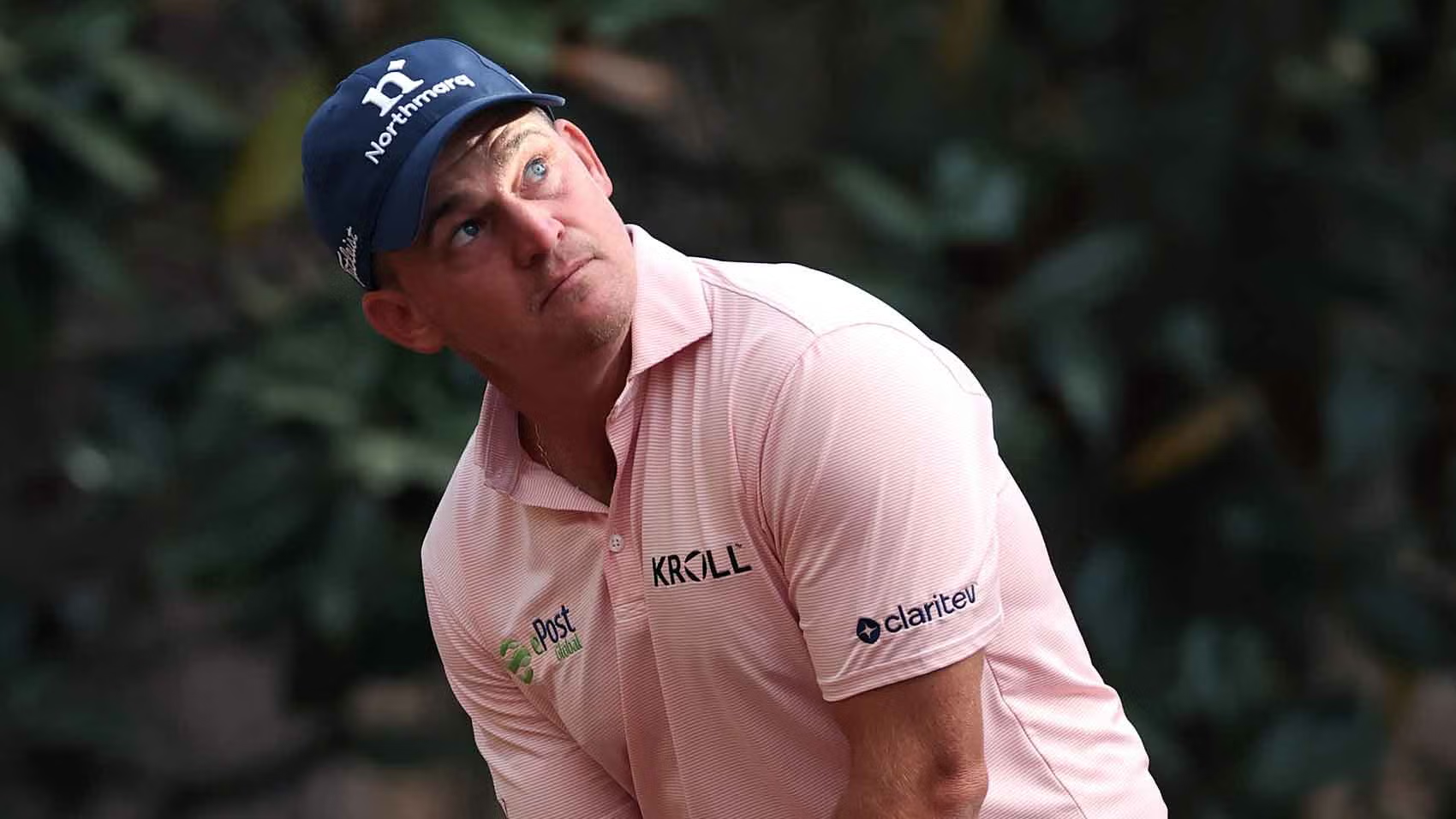
Bud Cauley’s experience during the Players Championship perfectly illustrates this dynamic. After a solid birdie on 16, he faced the unenviable task of approaching the 17th tee just as a storm horn blew. This momentary reprieve, a mere 21 minutes, became a period of intense mental review. As Cauley himself noted:
“The first thing I thought of was, is the wind going to switch? Because that happens a lot when a storm blows through.”
Upon returning, the conditions had dramatically shifted. A wind that was previously a helpful assist was now directly into their faces, effectively adding 30 yards to the shot. What was a wedge became an 8-iron. Cauley, having the honors, was forced to guess, to trust his gut, and to execute a shot under rapidly changing and immense pressure.
“I was the first guy to hit so I was kind of guessing,”
His relief at finding land, even in the rough, speaks volumes about the hole’s grip on a player’s psyche. It’s this intelligent design, this understanding of human psychology, that elevates Dye’s work here beyond mere target golf. It’s strategic; it’s harrowing; it’s brilliant.
The 18th hole, a sweeping par-4 dogleg left with water all down the left side, offers no respite. It’s another Dye signature, forcing a precise tee shot and an approach over water, demanding heroism or capitulation. The pressure from 17 simply spills over, making the closing stretch an absolute clinic in emotional fortitude. To make two pars coming in, as Cauley did, is a testament to the mental toughness required to conquer this course.
TPC Sawgrass isn’t just a host for The Players Championship; it’s a character in its own right. It embodies Pete Dye’s philosophy: golf should be visually intimidating and strategically demanding, forcing players to think and execute, rather than just swing. It’s a course that rewards courage and punishes complacency, a true masterpiece of modern golf architecture. If you get the chance, play it. You won’t just be playing a round of golf; you’ll be experiencing a piece of golf history, a design marvel that continues to challenge, frustrate, and exhilarate golfers of all skill levels.
