


Greetings, fellow golf architecture enthusiasts! Mac Thompson here, reporting from my well-worn armchair, notepad in hand, ready to dissect the nuances of golf course design and the enduring quest for the perfect golf experience. Today, however, we’re taking a slight detour from the hallowed grounds of century-old links and modern minimalist masterpieces. Instead, we’re focusing on the tools that allow us to conquer these architectural wonders – the very clubs we wield. Because, let’s be honest, even the most exquisitely designed course demands a certain proficiency from the player, and that often comes down to what’s in your bag.
I’ve walked the fairways of over 200 courses, from the windswept dunes of the British Isles to the pine-laden landscapes of the American South. I’ve seen Pete Dye’s ingenious deception, marveled at Tom Doak’s understated brilliance, and pondered Alister MacKenzie’s timeless principles. But even on a course where every hole is a strategic puzzle, a well-struck 3-wood or a precisely placed hybrid can be the key to unlocking its secrets. And for the 2026 season, club manufacturers have really stepped up their game, recognizing that our long approaches and tricky lies demand as much innovation as our booming drives.
The industry buzzwords remain familiar: MOI, launch, distance, feel. These are the cornerstones of club design. But what’s truly fascinating is how these design philosophies, much like those in course architecture, are evolving. The pursuit of optimal forgiveness and distance, while maintaining a connection to the player, is a delicate balance. It reminds me of how a great architect balances challenge with playability, ensuring that every golfer, regardless of skill, can find enjoyment and strategic engagement.
Let’s talk hybrids first. These versatile clubs have become indispensable for many of us, bridging that often-awkward gap between long irons and fairway woods. The market now offers an array of choices, each with a slightly different flavor, much like how various architects apply their signatures to the land.
Take the Callaway Quantum Max, for instance. It’s built for those who prefer to attack the ball with a more iron-like, descending blow. Its compact head visually transitions smoothly from an iron, fostering confidence. What stands out to me is the integration of artificial intelligence in its design:
“Callaway again used AI to help design the variable-thickness cup face on these hybrids, which have movable heel and toe sole weights to help customize them to your swing preferences.”
This use of AI in optimizing face thickness is a testament to how far technology has come, ensuring ball speed across a wider area – a significant advantage on those crucial approach shots.
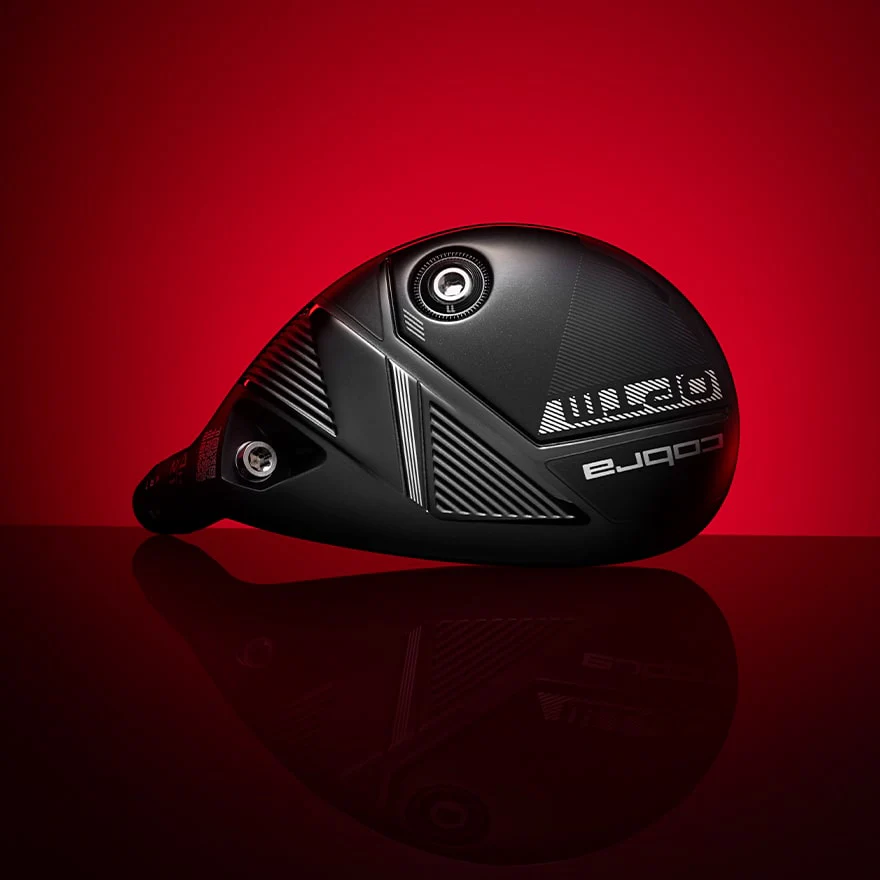
Cobra’s OPTM hybrids also caught my eye, particularly their commitment to precision and adjustability. The 33 independent loft and lie settings are frankly astounding, offering a level of customization that rivals a bespoke fitting session. It’s like having an architect fine-tune the ground you’re playing on to perfectly suit your game.

Then there’s the PING G440, offering different biases across its range – a thoughtful touch that acknowledges the diverse needs of golfers. This speaks to a design philosophy that, much like a great course, anticipates the player’s natural tendencies and offers solutions rather than roadblocks. The Carbonfly Wrap crown, for instance, cleverly lowers the center of gravity, promoting easier launch. This reminds me of how Alister MacKenzie would often use natural contours of the land to aid in drainage or create strategic carries, making the course feel as if it were always meant to be there.

My personal affinity for Mizuno’s irons is well-documented, so I was keen to see how their JPX ONE hybrids translated their legendary feel into this segment. The uniform 1.8mm MAS1C maraging steel face and enhanced CORTECH Chamber promise high ball speeds and preservation on off-center strikes, backed by that characteristic Mizuno feel. The Speed Bevel sole for improved turf interaction is a thoughtful addition, mimicking the way a well-designed bunker complex leads the ball subtly towards the green, rather than penalizing unjustly.

TaylorMade’s Qi4D Rescue, with its carbon-fiber crown and familiar Speed Pocket/Twist Face technologies, is a testament to iterative design refinement. These proven technologies, much like a well-established strategic routing on a golf course, continue to deliver measurable benefits. The adjustability, allowing for fine-tuning of launch and spin, is paramount for unlocking a player’s full potential.

Finally, Titleist’s GT2 hybrid offers classic lines married with modern performance. The ultra-high-MOI construction and adjustable weighting system allow for nuanced customization, while the flatter sole design improves turf interaction. It’s a club that speaks to the purist, much like a classic Donald Ross design, where the beauty is in the subtle details of its engineering and how it interacts with the ground.

The Enduring Power of the Fairway Wood
Now, onto fairway woods, a category that often gets overshadowed by the big stick but is arguably more crucial for consistent scoring. Just like the strategic placement of bunkers and the nuanced contours of a green complex, the design of a fairway wood plays a vital role in our ability to navigate the longer holes on any course. Manufacturers are increasingly transferring their driver innovations into these clubs, and the benefits are palpable.
Callaway’s Quantum Max fairway wood introduces its Speed Wave 2.0 technology, aiming to enhance performance on low-face strikes – a common reality for many golfers. This focus on minimizing the penalty for imperfect contact is a clear design win. It evokes the feeling of a well-placed bail-out area on a challenging hole; it’s still not perfect, but it offers a path forward.
Mizuno, with its JPX ONE fairway wood, continues its mission of blending classic aesthetics with cutting-edge engineering. The re-engineered CORTECH Chamber and multi-thickness MAS1C maraging steel face are designed to deliver explosive ball speeds and consistent distance. It’s akin to a course that appears deceptively simple but reveals layers of strategic depth upon closer inspection. The commitment to a higher launch with reduced spin is a design choice that benefits a wide range of players.
“The Mizuno JPX ONE fairway woods showcase the brand’s ongoing mission to combine classic shaping with advanced engineering designed to produce faster ball speeds and improved launch characteristics.”

PING’s G440 SFT, with its “Straight Flight Technology,” is a clear nod to addressing a common golfing malady – the dreaded slice. By repositioning mass towards the heel, they’ve engineered a draw bias, which for many golfers is a literal game-changer. This targeted design solution reminds me of how a great architect might strategically place a water hazard or bunker to subtly influence a player’s shot shape, albeit in a more challenging way.

PXG’s Lightning Tour fairway wood boasts a thinner, reduced-perimeter face for explosive ball speeds and tighter dispersion. The Spined Sole Design, which reduces unwanted vibration, is a subtle but effective feature that contributes to improved feel and energy transfer. The adjustable front and back weighting allows players to fine-tune launch and spin, providing an almost tour-level customization. It’s an example of how meticulous engineering can transform the playing experience.
Srixon’s ZXi fairway woods combine classic looks with innovative tech like the i-FLEX face and Rebound Frame. The dual flex zones in the Rebound Frame amplify energy return across the face, which means more consistent performance even when the strike isn’t textbook perfect. This philosophy—designing for the reality of human error—is something Tom Doak champions in his course designs, where recovery shots are often as interesting and challenging as the perfect one.
“Srixon’s classic-looking ZXi fairway woods couple innovative engineering with on‑course performance in a club design that will appeal to both better players and ambitious mid‑handicappers.”

And TaylorMade’s Qi4D Tour Fairway continues to refine its tried-and-true technologies, proving that even established designs can be pushed further. The 8-gram movable weight and 4-degree adjustable loft sleeve create a level of bespoke fitting that allows golfers to truly own their equipment. Much like how a great golf course can be played in myriad ways, these clubs offer multiple paths to optimize your game.

Finally, Wilson’s DYNAPWR Carbon fairway wood is a beautiful blend of traditional aesthetics and modern performance. The AI-powered PKR-360 face and lightweight carbon crown are serious speed enhancers, while the 30-gram tungsten sole weight up front does wonders for stability and a penetrating trajectory. It’s a club that performs like a modern marvel but looks as if it could have been pulled from a vintage leather bag – a perfect marriage, much like Pete Dye’s ability to evoke classic links characteristics on American soil.

Ultimately, whether it’s exploring the architectural genius of a classic course or selecting the perfect hybrid for your game, the common thread is understanding design and how it impacts performance. The 2026 lineup of hybrids and fairway woods demonstrates a profound commitment to helping us navigate those longer holes with greater confidence and precision. So go forth, get fitted, and find the clubs that will help you unravel the beautiful challenges that golf course architects have laid before us.
