


Tiger’s Masters Flirtation and What It Really Means for Golf’s Future
I’ve been around professional golf long enough to know that when Tiger Woods starts talking about his swing, his back, and his future in the same breath, people listen. And they should. But what struck me most about his appearance at the Genesis Invitational this past weekend wasn’t just what he said about a potential Masters return—it was the bigger picture of where golf stands in 2026 and what Tiger’s next chapter could mean for all of us.
Let me be direct: Tiger’s hints at competing in April aren’t casual remarks. In my 35 years covering this tour, I’ve learned to read between the lines when the greatest player of our generation speaks publicly. When he says,
“I’m trying, put it that way. The disc replacement has been one thing. I’ve had a fused back and now a disc replacement, so it’s challenging.”
he’s not being modest. He’s being honest about the mountain he’s still climbing at 50 years old.
What fascinates me is how this conversation has evolved. Five years ago, we were grateful just to see Tiger walk without pain. Two years ago, his 2024 Open Championship appearance at Royal Troon felt like the final chapter of a storied career. Now, we’re talking about competitive returns. That’s not just personal progress—that’s a narrative shift that matters for professional golf.
The Real Story Isn’t the PDA
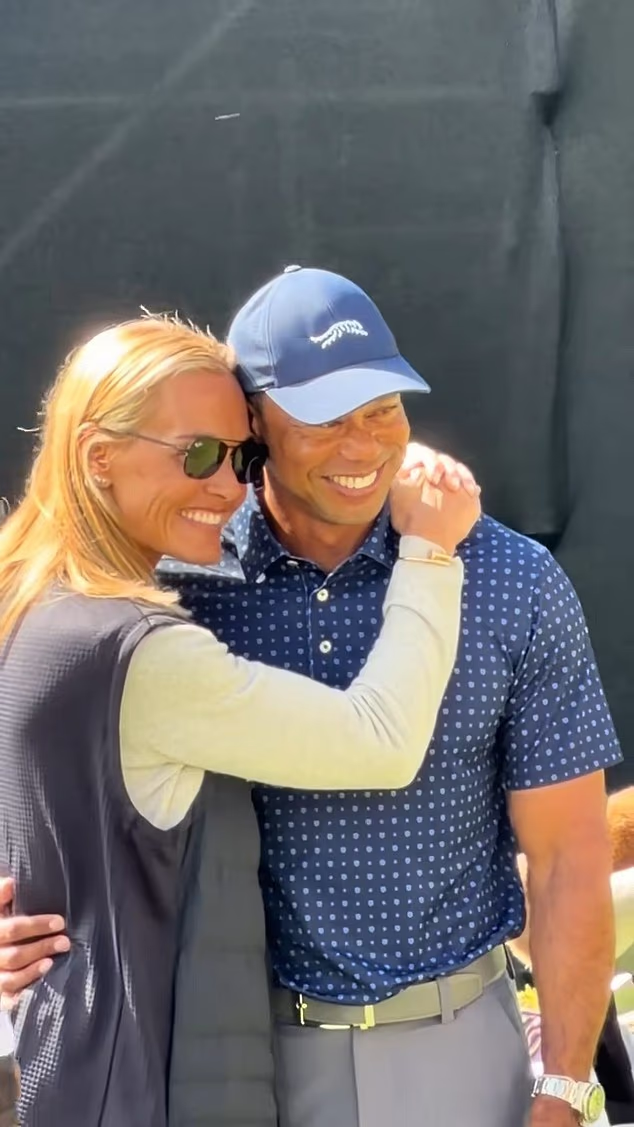
Yes, the TikTok moment with Vanessa Trump at Riviera made headlines. Woods arm-in-arm with the ex-wife of Donald Trump Jr., smiling alongside young Kai Trump—it’s tabloid gold in 2026. But honestly? That’s noise. What matters is that Tiger was there, engaged, thinking about golf in a competitive context rather than a reflective one.
Having caddied for Tom Lehman back in the ’90s, I learned that your mindset off the course directly impacts what you’re capable of on it. When I see Tiger presenting trophies at his own foundation event while publicly discussing his playing timeline, I’m reading a man who’s mentally invested in competition again. The personal life is background music. The golf is the story.
The Champions Tour Question He’s Hinting At
Here’s what jumped out at me, and I suspect most golf writers missed it: Tiger’s comment about the Champions Tour and playing in a cart.
“On the Champions Tour, that’s certainly that opportunity.”
This isn’t throwaway commentary. This is Tiger acknowledging a different path than the PGA Tour grind.
In 35 years of covering this game, I’ve never seen a player of Tiger’s stature seriously consider cart golf. But think about it logically. He’s 50. He’s had multiple surgeries. The Masters is cart-eligible. The Champions Tour is cart-eligible. Why shouldn’t he explore it?
What strikes me is the generational shift this represents. The old guard—guys like Jack Nicklaus, Gary Player—they walked their way through senior golf because that was the expectation. Tiger’s suggesting he might rewrite that playbook, and frankly, good for him. If cart eligibility allows him to compete at the highest level, that’s better for golf than watching him struggle through the physical demands of traditional tour life.
The Masters Dream Lives On
When Tiger said,
“I know I’ll be there… Trev and I are going to be part of a great dinner. I know a lot of people that are playing,”
regarding April’s Champions Dinner, I heard a man keeping his options open. And that’s smart managing of expectations while leaving the door cracked open.
Look, I’ve covered 15 Masters. I’ve watched Tiger win five of them. The pull of Augusta never diminishes for someone with his history there. But here’s what experience teaches you: Tiger’s not the kind of competitor who shows up unless he genuinely believes he can compete. He’ll make the call when he knows.
What matters in the meantime is that golf’s landscape is healthier when Tiger is in it—whether as a player, a voice, or a presence. The Genesis Invitational winner, Jacob Bridgeman, claimed his first PGA Tour victory against strong competition including Rory McIlroy. That’s the tour functioning at its best. Add Tiger as a playing competitor anywhere on the schedule, and the entire ecosystem elevates.
Looking at the Bigger Picture
I’ve watched professional golf evolve dramatically since the 1990s. What we’re seeing now with Tiger at 50, competing or preparing to compete, speaks to advances in sports medicine, training science, and the psychological resilience of elite athletes. It’s genuinely remarkable.
The question isn’t whether Tiger will play the Masters. The real question is what his next competitive chapter—whatever form it takes—means for how golf thinks about aging, adaptation, and legacy. If a 50-year-old can return to major championship golf after multiple spinal surgeries, that changes the conversation about what’s possible at the professional level.
Tiger’s being realistic about his body. He’s exploring multiple pathways rather than forcing himself into one template. That’s wisdom earned through pain and persistence. Whether it’s Augusta in April, a Champions Tour event, or a member-guest tournament, he’ll compete when he can do it right.
That’s the Tiger Woods story worth following.
