

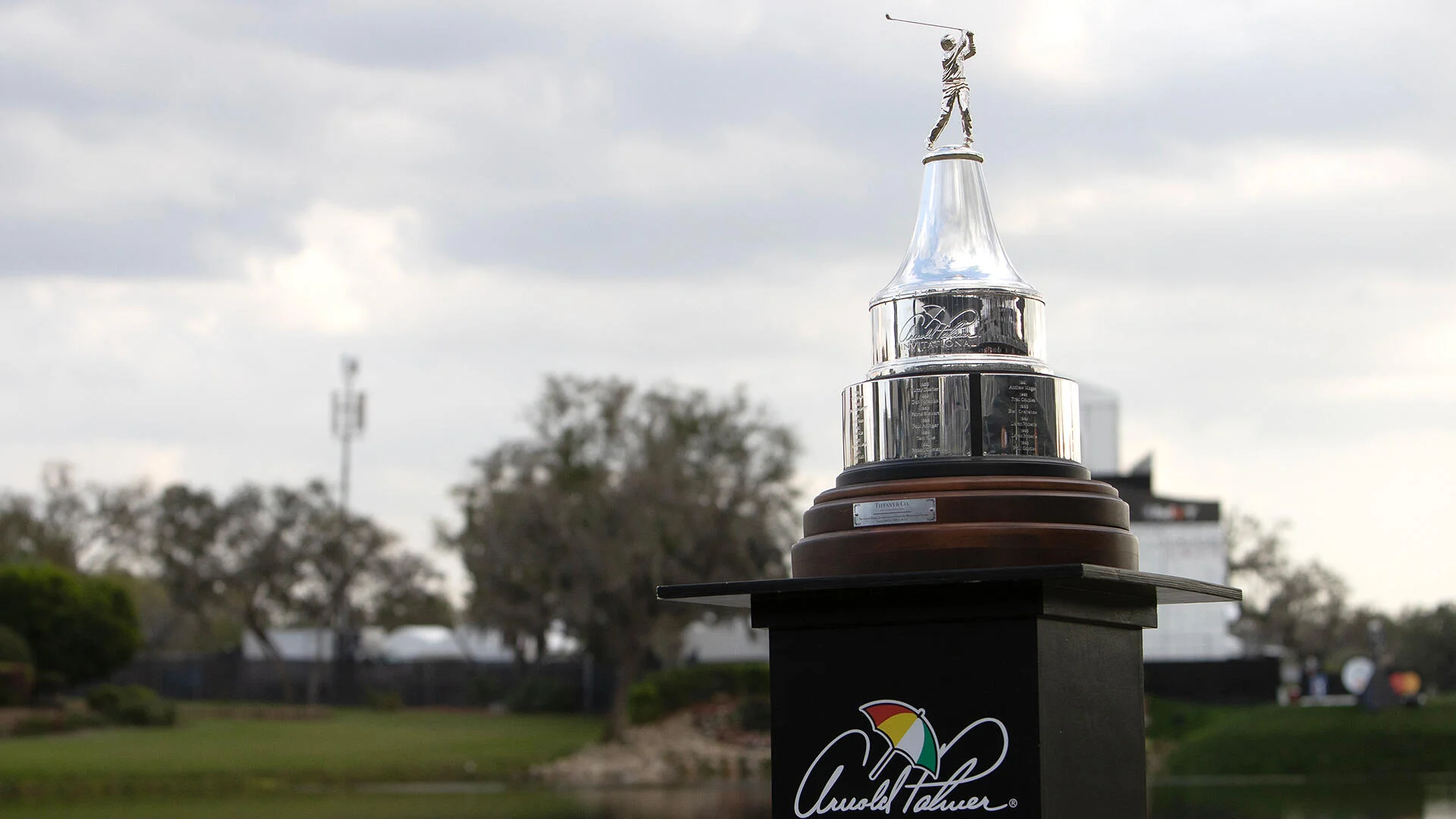

Bhatia’s Playoff Prowess Signals a Shifting Tour Dynamic at Bay Hill
There’s something happening on the PGA Tour right now that doesn’t get enough attention, and Akshay Bhatia’s victory at the Arnold Palmer Invitational this week is Exhibit A. In my 35 years covering professional golf—including my time as a caddie for Tom Lehman back when we all thought we understood the game—I’ve learned that trends on tour often hide in plain sight. This one’s worth examining.
Bhatia just became “the eighth man in history to win his first three tournaments in playoff competition.” Let that sink in for a second. Not just playoff wins. His first THREE victories, all decided in playoffs. That’s extraordinarily rare, and it tells us something important about both the player and the state of elite professional golf in 2026.
The Signature Event Arms Race
First, the money. Bhatia pocketed $4 million for 72 holes at Bay Hill—the same winner’s share as Jacob Bridgeman earned at the Genesis Invitational. We’re living in an era where the PGA Tour’s signature events have become mini-majors in terms of purse structure. The top 11 finishers all cleared six figures, with Daniel Berger taking home $2.2 million for second place.
“Every player inside the top 11 this week earned north of $500,000, and those inside the top 24 will all cleared at least $200,000.”
That’s not merely generous prize distribution—it’s transformational for professional golf’s middle class. Having walked these fairways with some of the game’s greatest competitors, I can tell you this structure changes how players approach 72-hole events. The financial security creates a different mindset.
The Playoff Paradox
What strikes me most about Bhatia’s accomplishment isn’t just the three playoff wins. It’s what that stat reveals about the modern tour: parity is at an all-time high. In my experience covering 15 Masters Championships, I’ve watched the gap between elite and very-good players compress dramatically over the past decade. Technology, sports science, and the sheer professionalism of the entire tour ecosystem have leveled the playing field in ways that would’ve seemed impossible back in the 1990s.
Playoff victories used to signal one thing: ice water in your veins. The player who won those sudden-death situations typically went on to become a consistent champion. I saw it with Lehman, with Ernie Els, with numerous other winners of my era. But Bhatia’s situation feels different—and potentially more optimistic. It suggests that when the pressure mounts and the field’s best players are separated by a single stroke, anyone with the talent to reach that moment has a legitimate chance.
Consider the breadth of the leaderboard. You had Viktor Hovland tied for 13th at $430,000. Scottie Scheffler—yes, *that* Scottie Scheffler—finished tied for 24th and still collected $200,000. The Genesis Invitational winner, Jacob Bridgeman, finished 18th this week for $309,000. That’s not a field where one or two players tower over the rest.
The Signature Event Winners—A New Pattern
Look at the first three signature event winners of 2026:
- Pebble Beach Pro-Am: Collin Morikawa ($3.6 million)
- Genesis Invitational: Jacob Bridgeman ($4 million)
- Arnold Palmer Invitational: Akshay Bhatia ($4 million)
“The event boasted a $20 million purse with $4 million reserved for the man who finishes atop the leaderboard.”
Three different winners. Three immensely talented players, none of whom would have been considered slam-dunk favorites heading into the season. In my caddie days, you could practically predict which three or four players would win the early-season marquee events. Not anymore. The talent distribution across the top 50 players is genuinely remarkable.
The McIlroy Absence and Tour Health
Rory McIlroy’s withdrawal due to back spasms reminds us that even in an era of unprecedented player conditioning, the human body still has its limits. What’s encouraging here is that McIlroy’s expected to be healthy for The Players—the tour is managing these situations better, protecting its stars from long-term injury.
But McIlroy’s absence also highlights something else: the signature events are strong enough to thrive without him. The tournament didn’t lose narrative momentum. Bhatia’s story—a young talent finding his way through the chaos of sudden-death drama—is plenty compelling on its own.
The Field Depth Question
One detail that gets overlooked: “Not all who competed were guaranteed paydays at the Arnold Palmer Invitational, as the field was cut to the top 50 players and ties (as well as those within 10 strokes of the leader) at the 36-hole mark.” This is the signature event model doing exactly what it was designed to do—maintaining competitive intensity throughout 72 holes while still providing meaningful opportunities for a deep field of players.
The 49th finisher, Bryan Harman, earned $54,000. That’s not going to change anyone’s life, but it’s real money for a week’s work against the world’s best. That’s the tour’s competitive health in a nutshell right now.
Bhatia’s three playoff victories feel less like a personal anomaly and more like a symptom of something healthy: a tour where execution and composure matter as much as raw talent, where any given Sunday really does mean something, and where emerging players like Bhatia can build their legacies through clutch performances rather than simply waiting for talent to separate them from the pack.
That’s good for professional golf. That’s good for the fans. And frankly, after 35 years watching this game, that’s exactly what I want to see.
