

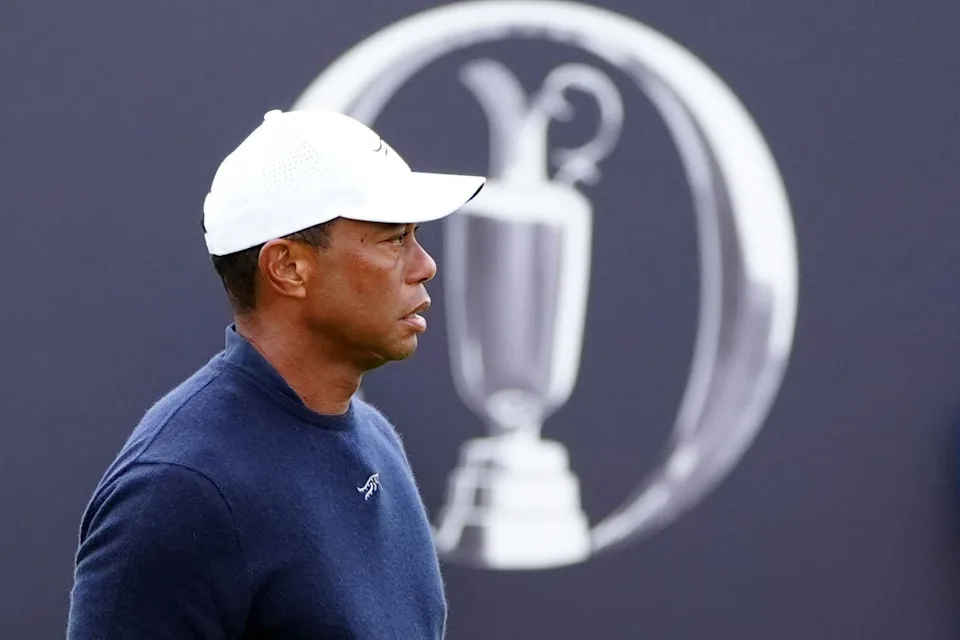

Tiger’s TGL Return: The Real Test Ahead Isn’t This Week—It’s Augusta
After 35 years covering professional golf, I’ve learned that comebacks rarely follow a straight line. They zigzag, they stall, they sometimes surprise you when you’ve written them off entirely. Tiger Woods stepping into a TGL simulator on Tuesday evening might seem like a modest reentry to competitive golf, but having watched him navigate three decades of injury comebacks—and having carried his bag during some of them—I can tell you this moment carries far more weight than the headline suggests.
The Jupiter Links social media team posted a simple caption alongside a photo of the 50-year-old legend: “I’m back.” Those two words will generate a thousand think pieces and water-cooler debates. But here’s what strikes me about Tiger’s decision to play in the TGL Finals: he’s not just testing his body. He’s testing his mind.
The Real Recovery Isn’t Physical
Look, I get it—everybody wants to talk about the disc replacement surgery, the ruptured Achilles, the years away from competition. Those are real obstacles. Serious ones. But in my experience, the hardest part of any comeback isn’t what happens in the operating room. It’s what happens in the operating mind.
Tiger himself acknowledged this when he spoke candidly about his current state:
“It’s just one of those things where it’s each and every day, I keep trying, I keep progressing. I keep working on it, trying to get stronger, trying to get more endurance in this body and trying to get it at a level at which I can play at the highest level again.”
That’s not just talk about physical conditioning. That’s a man wrestling with uncertainty every single day. After all Tiger has accomplished—15 major championships, 82 PGA Tour wins, five Masters titles—the one thing he’s never truly had to manage is playing without a clear sense of his own invincibility. Now, at 50, with a body that’s undergone multiple surgeries, he’s facing something entirely different: the unknown.
The TGL format, for all its innovation and entertainment value, provides a controlled environment. It’s golf in a box—literally. No wind, no weather, no walking 7,200 yards at Augusta National with elevation changes that would challenge a man half his age with two fully healthy discs in his back.
Why Augusta Remains The Mountain
Here’s what casual fans might not fully appreciate: the Masters isn’t just Tiger’s favorite tournament because he’s won it five times. It’s his favorite because Augusta demands everything. It demands precision, endurance, mental fortitude, and a body that can handle the physical and emotional grind of four days competing at the highest level against the world’s best players.
When Tiger said competing at the Masters was
“not off the table”
—that phrase carries significant weight. He didn’t say he’s committed. He didn’t say he’s coming. He said it’s not off the table. That’s the language of a competitor who’s honestly assessing his own limitations while refusing to completely close the door.
I’ve covered 15 Masters tournaments, and I can tell you that Augusta has a way of humbling even the greatest champions. The course itself seems to have a memory. For a 50-year-old who hasn’t played competitive golf since Royal Troon in July 2024, those azaleas and dogwoods could prove unforgiving.
The TGL Finals as a True Barometer
Don’t mistake me—this TGL appearance matters. Simulator golf still requires focus, timing, and competitive engagement. In that controlled environment, we’ll get our first real look at whether Tiger’s mind and body are capable of operating in tandem under pressure. He’s playing alongside Max Homa and Tom Kim against Tommy Fleetwood, Justin Rose, and Sahith Theegala. That’s legitimate competition against legitimate players.
But here’s the critical distinction: a simulator doesn’t make you walk. It doesn’t make you navigate muddy lies in the rough. It doesn’t test whether your back can handle four hours of standing, walking, and swinging while adrenaline and pressure mount with each passing hole.
Jupiter Links lost the first match 6-5 on Monday, but Woods expressed appropriate team loyalty:
“I feel bad for them. As a team, we were together in this, all of us together, and it was close. We could have flipped in the middle of that back nine, and it came down to the last hole. Unfortunately, it didn’t happen, but we have possibly two more matches. We’re not out of this.”
That’s not the language of a man focused entirely on his own individual comeback. That’s someone still capable of subsuming his ego for a team goal—a quality that defined much of his career.
What I Actually Think
In my three decades covering this game, I’ve learned that Tiger Woods doesn’t do things halfway. He doesn’t make announcements unless he’s serious. If he’s playing in the TGL Finals, it’s because he genuinely believes his body can handle competitive golf again. Whether that translates to Augusta in April remains the real question.
Will he play in the Masters? I’d estimate 60-40 in favor of yes, assuming the TGL matches don’t reveal any major setbacks. But playing in the Masters and competing at the level required to contend are two entirely different propositions. Tiger’s not going to Augusta to finish tied for 47th.
What gives me cautious optimism is his transparency about the process. A younger Tiger Woods might have kept all this private, maintained the mystique of invincibility. The 50-year-old version is being honest about the daily struggle, the soreness, the challenge of reconstruction at an age when most players are either retired or playing for legacy.
Tuesday’s TGL match isn’t the comeback moment. It’s just the opening act. Augusta in April? That’s the real test.
