


Tiger’s Return to Competition Reveals the TGL’s Biggest Challenge—and His
I’ve watched Tiger Woods compete in more pressure-packed situations than I can count over the past 35 years, but Tuesday night’s TGL finale showed me something I haven’t seen in a long time: a legend genuinely grappling with rust that no amount of competitive fire can immediately overcome.
Don’t misunderstand me—I’m not being pessimistic. If anything, Woods’ appearance in the Jupiter Links squad’s 9-2 loss to Los Angeles was a net positive for TGL as a concept. But what struck me most wasn’t his competitive spirit or even his brief flashes of solid play. It was the stark reality in his own words about the nature of modern competition at 50, after multiple surgeries and extended time away from tournament golf.
The Rhythm Problem Is Real
When Tiger told ESPN’s Scott Van Pelt that he felt “iced a bit at times” due to the format’s unique rhythm, he was articulating something that 35 years of covering this game has taught me: golf’s mental architecture depends heavily on repetition and flow. In my experience covering the Presidents Cup and Ryder Cup—formats Woods referenced—I’ve seen even the world’s best players struggle when that rhythm breaks down.
“It feels like I’m getting iced a bit at times. … It’s just a different rhythm. It’s like when you play Ryder Cup or Presidents Cups and you play in foursomes. Some matches you just don’t hit a putt for like 10, 11 holes and all of a sudden you’ve got to make a three-footer.”
The TGL’s nine-shot format—four of which were putts in this match—creates exactly this disorienting dynamic. But here’s what matters: this isn’t a flaw unique to Woods. Every player faces this challenge. What separates the LA Golf Club’s championship-winning trio from Jupiter Links wasn’t just skill; it was adaptation and familiarity with the format.
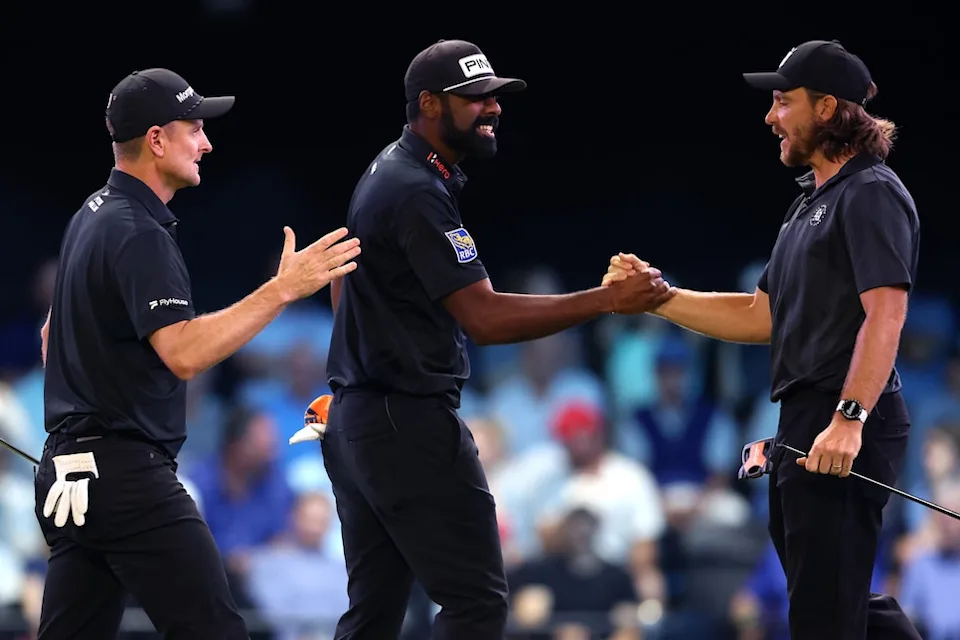
Justin Rose, Tommy Fleetwood, and Sahith Theegala won their first TGL title and the $9 million first prize by sweeping the best-of-three series. They’ve been doing this for two seasons. Woods hadn’t competed in competitive golf since the 2024 British Open—more than a year ago—and his previous TGL experience was limited to one match last March.
The Physical Reality Nobody Wants to Discuss
What really caught my attention, though, was Woods’ candid assessment of his body’s recovery capacity. Having worked with players across several decades, I know this admission carries weight:
“Just this body, it doesn’t recover like it did when it was 24, 25. It doesn’t mean I’m not trying. I’ve been trying for a while. I’ve had a couple bad injuries here over the past years that I’ve had to fight through and it’s taken some time.”
Between Achilles surgery in March 2024 and L4-L5 disc replacement surgery last October, Woods has been through procedures that would sideline most athletes permanently. The fact he’s competing at all—let alone hitting fairway woods that drew praise from Rose—speaks to his durability. But the missed 3½-foot putt on the seventh hole? That’s where competitive rust bites hardest.
In my years as a caddie for Tom Lehman in the ’90s, I learned that short putts under pressure are the first thing to deteriorate when you haven’t been competing regularly. They come roaring back too—often faster than distance or accuracy—but there’s no shortcut through that process.
What This Means for Augusta
The elephant in the room, of course, is the Masters in less than two weeks. Woods, a five-time champion, didn’t exactly send the signal his fans were hoping for. His language suggested preparation, desire, and hope—but notably absent was any declaration of imminent readiness.
“I want to play. I love the tournament. I’ve loved being there since I was 19 years old. It’s meant a lot to me and my family over the years.”
That’s love talking, not confidence. And I respect that honesty more than I would’ve respected false optimism.
TGL’s Real Victory
Here’s what actually matters about Tuesday night: the format worked. The season finale generated genuine intrigue by announcing Woods would play, attracted eyeballs and conversation, and delivered competitive drama. Justin Rose’s observation about Woods’ play—“Everything looked great. The only bad shot he hit was not a bad shot; it was just too good a shot almost with a wedge that went too far”—reveals that the fundamental golf was sound.
The $9 million prize pool, the best-of-three championship format, and the spectacle-driven presentation are succeeding in their stated mission: attracting younger audiences while maintaining competitive integrity for traditional golf fans like me.
Sahith Theegala captured something important in his post-match reflection: “Golf’s a brutal sport where you don’t win a lot. You have a great week, you finish third or fourth, but then you still lost to a guy or two. It’s just a sport where you’re not on top a lot, so you’ve got to savor every moment of being on top.” That’s wisdom from a 27-year-old that cuts across all formats—TGL, PGA Tour, or otherwise.
Tiger Woods’ competitive spirit remains undiminished. His body’s ability to recover and adapt remains his actual opponent. The TGL provided him with one important step forward in this year-long comeback. Whether Augusta becomes the next chapter is a question only time and practice will answer.
