


As a golf architecture enthusiast who has walked the fairways of over 200 courses across the globe, I’ve learned to appreciate the subtle art of design – the way a course can whisper stories through its contours, challenge you strategically, and leave an indelible mark on your memory. So, when I hear whispers of revolutionary advancements in the tools we use to navigate these masterpieces, my ears prick up. While I typically muse on the genius of Alister MacKenzie’s greens or the daring lines of Pete Dye, today, I find myself contemplating the very instruments we wield on their hallowed grounds. Because, frankly, no matter how brilliantly a course is laid out, success often hinges on how efficiently we can cover its expansive canvas, especially those long par-fours and fives.
The quest for greater accuracy and distance isn’t just about raw power; it’s about strategic placement, managing the course, and reducing the stress of a forced carry over a menacing hazard. This is where the new breed of hybrids and fairway woods for 2026 comes into sharp focus. The engineers, much like golf architects, are striving for a perfect blend of form and function, aesthetic appeal with unparalleled performance.
The Art of the Hybrid: Precision and Versatility
Hybrids, those glorious shapeshifters of the golf bag, have become indispensable. They bridge the gap between hard-to-hit long irons and bulky fairway woods, offering a blend of both. But within this category, there’s a fascinating design philosophy at play: head shape. Do you prefer the compact, iron-like profile that encourages a crisp, descending blow, perhaps leaving a slight divot? Or are you a “picker” or “sweeper,” preferring a wider sole that glides effortlessly across the turf? This choice, much like selecting a preferred line off a tee, dictates how you approach a shot.
Take the Callaway Quantum Max, for instance. It presents a more compact clubhead, a visual cue that transitions seamlessly from your irons. This subtle design choice isn’t just cosmetic; it influences your swing shape and how you perceive the club at address.
“The midsize Callaway Quantum Max features a more compact clubhead, so visually, it’s an easier transition from your irons and looks less like a downsized fairway wood.”
This emphasis on transition and visual appeal is crucial. Just as a well-designed tee shot doesn’t intimidate but rather invites a confident swing, a club’s aesthetics can profoundly impact a golfer’s mental game. Callaway’s continued use of AI in designing variable-thickness faces is akin to an architect meticulously surveying every inch of a green site – finding optimal contours for varied ball flight. And with movable heel and toe sole weights, you’re looking at a level of customization that would make a course architect proud of fine-tuning every bunker lip.
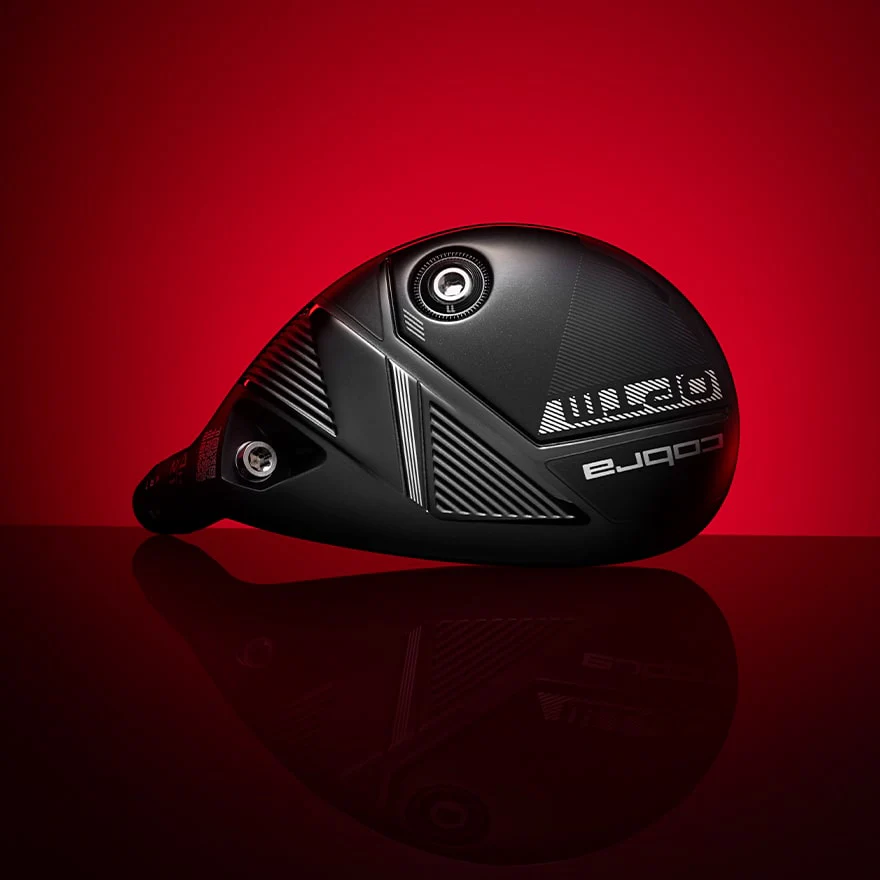
Then there’s the Cobra OPTM, a club signaling Cobra’s commitment to precision. Its slightly larger profile enhances forgiveness, a common trait in this category, but it’s the 15-zone face technology that intrigues me. This isn’t just a broad sweet spot; it’s a strategically mapped surface, much like a well-contoured landing area, designed to yield optimal results even when you stray from the absolute center. And the FutureFit33 hosel? That’s 33 independent loft and lie settings! Imagine having that much control over the angle of attack and dispersion – it’s like having an architect adjust the tilt of a green to suit your preferred shot shape.

PING, with its G440 hybrids, continues its tradition of innovation. Their “free-hosel design” and Carbonfly Wrap crown speak to a sophisticated weight distribution, allowing for a lower center of gravity. This, for the golfer, translates to easier launch and improved stopping power, much like a well-mounded bunker can stop a wayward shot from disappearing into the ether. The G440 even offers loft-specific biases, a concept often seen in course design where certain holes favor a fade or a draw.
“The different hybrids in the series feature different biases: a fade-based bias for the 2H, straight for the 3H and 4H, slight draw for the 5H, and draw for the 6H and 7H.”


Fairway Woods: Long Drives, Strategic Second Shots
Fairway woods have always been the long-ball specialists, the clubs that help us reach those distant greens or position ourselves perfectly for a wedge. The advancements in 2026’s offerings showcase a clear lineage from driver technology, refining concepts of speed, forgiveness, and adjustability. The modern fairway wood is no longer just a “mini-driver”; it’s a finely honed tool for specific strategic objectives.
Consider Callaway’s Quantum Max Fairway Wood with its Speed Wave 2.0 technology, placing low and forward weighting. This not only boosts face flex but stabilizes launch conditions, especially on those dreaded low-on-the-face strikes – a common miscue when trying to propel the ball over long distances. It’s about designing forgiveness into the very core, ensuring that even imperfect execution still yields a playable result. Their AI-optimized face, again, speaks to an intricate understanding of impact dynamics, ensuring consistent energy transfer across the entire face. Much like a well-designed green complex, it provides an optimal yield for a wider range of approach angles.
Mizuno’s JPX ONE fairway woods, with their re-engineered CORTECH Chamber, are fascinating. Encasing a dense steel weight within elastomer, it creates an additional energy source at impact. This is where engineering begins to echo the natural forces an architect harnesses – using the terrain to amplify a shot’s potential. It’s not just about what you see; it’s about the hidden mechanisms that create a powerful and consistent flight.

PING’s G440 SFT, or “Straight Flight Technology,” offers a draw-biased center of gravity, a direct solution for the dreaded slice. This is practical golf architecture at its finest, designing around common pitfalls without compromising performance. It’s like a golf course designer strategically placing a gentle slope to kick a fading shot back onto the fairway. This blend of forgiveness and directional correction is a testament to clever design.

My interest is always piqued by designs that balance performance with workability, particularly for the ambitious mid-handicapper. Srixon’s ZXi fairway woods seem to hit this mark perfectly, with their i-FLEX face and Rebound Frame technology. This dual-zone flexibility and variable-thickness face are like a green complex designed with multiple pin positions – offering challenge but also pathways to success for different skill levels. And like an adjustable tee box, the adjustable hosel allows for fine-tuning loft, lie, and face angle, truly empowering the player to tailor the club to their game and the demands of the course.

TaylorMade’s Qi4D Tour Fairway, with its Trajectory Adjustment System (TAS) and movable weight, embodies the spirit of strategic flexibility. This isn’t just about raw power; it’s about customizing the trajectory, spin, and even the “feel” of the club to match the conditions of a links course on a windy day or a tree-lined parkland layout. The familiar Speed Pocket and Twist Face technologies are like trusted design elements – essential features that stand the test of time and provide consistent benefits, much like a well-positioned bunker or a classic MacKenzie green contour.

And finally, Wilson’s DYNAPWR Carbon fairway wood is a fine example of blending modern tech with “classic, Tour-inspired design.” This is the holy grail for many golfers and course architects – preserving the timeless appeal while incorporating modern advancements. The AI-powered PKR-360 face is like a meticulously crafted green, designed to receive shots from various angles and still offer a fair outcome. The 30-gram tungsten sole weight at the front demonstrates an understanding of the purest ball strikers who seek penetrating trajectories and control. It’s all about empowering the golfer to sculpt their shots, much like a great course allows a golfer to orchestrate their round.

Ultimately, these clubs, much like a well-designed golf hole, aim to reduce variables, maximize enjoyment, and make the game more accessible and rewarding. While I’ll always gravitate towards the elegant simplicity of a C.B. Macdonald template hole or the dramatic contours of a Tom Doak masterpiece, I also appreciate the thoughtful engineering that allows us to better navigate these architectural wonders. The journey of golf is as much about the physical space as it is about the tools we bring to conquer it.
