

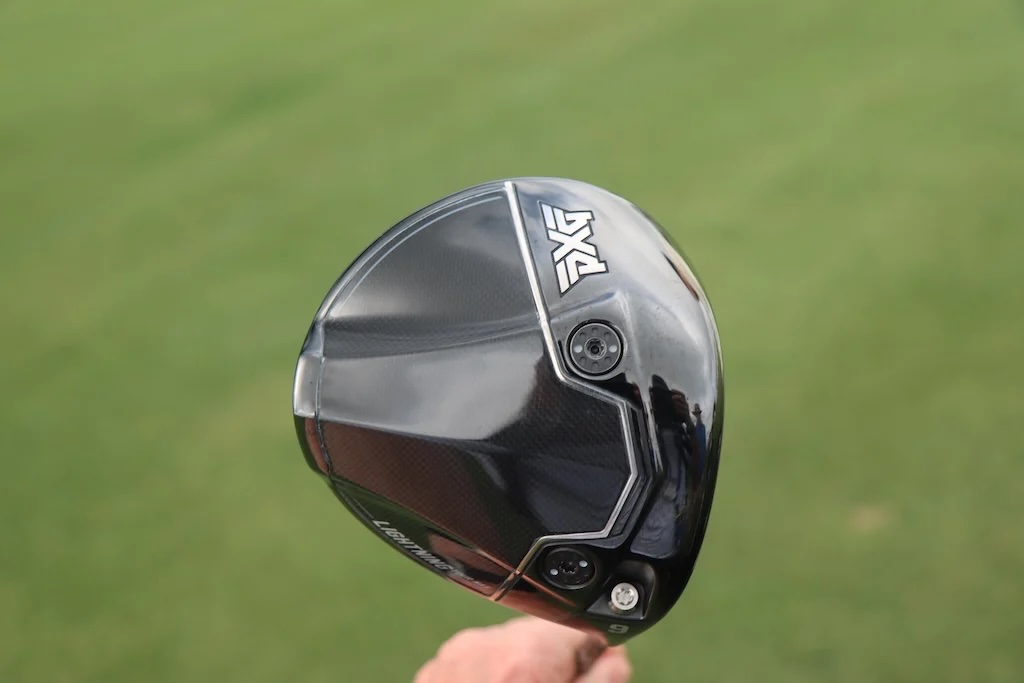

The Houston Open, always a hotbed for new gear, delivered as expected. While the buzz around Titleist’s new GTS line was palpable, my eyes, as always, were drawn to the less-heralded yet potentially more impactful changes. This isn’t about shiny new products; it’s about what actually moves the needle on the launch monitor and more importantly, on the course. What truly caught my attention this week were two specific revelations: a distance leader chasing more speed and a shaft company delivering on stability, plus an interesting putter switch.
Chasing the Dragon: Aldrich Potgieter and the PXG Tour Max Prototype
Aldrich Potgieter is already a bomber. Second on the PGA Tour in driving distance and ball speed is no joke. So when I heard he was switching drivers, my first thought was: ‘Does he *really* need more speed? Or is he chasing consistency?’ Having fitted hundreds of golfers, I know that even for Tour players, optimizing launch conditions for better dispersion can be just as valuable as raw distance, if not more so.
Potgieter’s move from the PXG Lightning Tour head to an unreleased Tour Max prototype is intriguing. He claims,
“I hit it yesterday for the first time and it’s really good. Picked up probably about 2 or 3 miles an hour ball speed, which is huge. So we’ll hopefully keep that out on the course. But no, it’s looking good.”
Two to three mph of ball speed is indeed significant, especially when you’re already in the upper echelon. On the launch monitor, that translates to an additional 6-9 yards of carry for an average player, and potentially more for someone with Potgieter’s swing speed. What’s even more compelling is his comment on forgiveness:
“I feel like some of the miss-strikes are straightening up, I think it has a bit more bulge and rolls as well.”
This suggests the Tour Max prototype likely features a higher Moment of Inertia (MOI) and possibly a more forgiving face design. “Bulge and roll,” for those unfamiliar, refers to the curvature of the driver face. Optimized bulge (horizontal curve) and roll (vertical curve) are critical for mitigating the effects of off-center strikes, helping to straighten out toe and heel shots and control vertical launch from high and low face impacts. If PXG has managed to combine increased ball speed with enhanced forgiveness in this new head, they’ve got a winner on their hands. For the average golfer, this is the Holy Grail: more speed *and* more accuracy on mishits. I’ll be eager to get this on the launch monitor myself to see if the data backs up Potgieter’s claims.

Fujikura’s Ventus TR VeloCore+ Black: Stout Stability Without the Boardy Feel
Potgieter’s driver switch wasn’t just about the head; he also opted for the new Fujikura Ventus TR VeloCore+ Black 7x shaft. This is where innovation truly shines for many players. I’ve long been a proponent of a properly fitted shaft as the engine of the club, often having a bigger impact than the head itself for consistent performers.
Fujikura has a strong reputation, and the original VeloCore line transformed the aftermarket shaft landscape with its stability. The new TR VeloCore+ Black promises even more rigidity.
“The Black is one of the stiffest shafts we’ve ever created,” said Andrew Haong, Fujikura Tour rep. “… We got a lot of feedback from Tour players, that we want to see something that’s extremely stable and extremely stout.”
What differentiates true innovation from marketing hype, however, is maintaining feel despite increased stiffness. Haong adds:
“The one thing that we didn’t want to sacrifice, though, is feel and that’s where I feel like VeloCore+ has been a great addition to this line, where we have a beautiful blend of a lot of stability without sacrificing feel.”
This is crucial. In my fitting bay, I’ve seen countless golfers chase clubhead speed only to end up with a shaft that feels like a lead pipe, leading to timing issues and loss of control. The VeloCore technology, with its multi-material core, has proven to reduce shaft ovaling and improve energy transfer, which contributes to both stability and maintaining feel. The mention of Neal Shipley’s Ventus Black, tipped 2 inches, hitting “almost 320 CPM (Cycles Per Minute)” during testing, highlights just how beefy these shafts are. For context, most X-flex driver shafts are in the 260-280 CPM range. This kind of stiffness is ideal for extremely high swing speeds, mitigating excessive spin and maximizing ball speed through impact by minimizing shaft deflection. For golfers with smooth, powerful swings who generate significant clubhead speed and need to tame spin, a shaft like the Ventus TR VeloCore+ Black could be a game-changer. For the average Joe who swings at 95 mph, it’s likely too much shaft, leading to a feeling of being ‘under-loaded’ and a loss of swing speed.
Denny McCarthy’s Spider Fever: When a Putter Matters This Much
Denny McCarthy changing putters is the golf equivalent of a meteorologist suddenly predicting sunshine in Seattle – rare and noteworthy. His putting stats are legendary; he’s consistently one of the best on Tour. So, his switch from a beloved Scotty Cameron GoLo to a blacked-out TaylorMade Spider Tour X is significant. Given his dip to 106th in Strokes Gained: Putting, it’s clear he’s looking for something to rekindle that magic.
The Spider putter line is renowned for its high MOI design, offering exceptional forgiveness on off-center strikes. For a player like McCarthy, who typically makes every putt, even the slightest deviation from the sweet spot can impact his confidence and overall performance. The Spider’s stability could well help him tighten up his dispersion on those edge-case putts. Whether it’s purely the design or a fresh mental outlook on the greens, a putter change for a player like McCarthy is never taken lightly and suggests a genuine effort to regain form.
Innovation vs. Aesthetics: Fowler’s Custom Kicks and Day’s Wedge
Rickie Fowler’s custom Puma shoes, designed by patients at Texas Children’s Hospital, are a wonderful philanthropic gesture and nothing to do with performance, but certainly look sharp! While custom aesthetics are great for visibility, my focus always remains on what impacts the ball.

View this post on Instagram
Jason Day’s custom Avoda W3 lob wedge is another example of highly specialized gear for specific conditions. A “high-bounce, high-leading-edge-height design built for softer conditions” is a classic Tour-level adjustment. For golfers playing on lush, soft courses, this grind allows the club to glide through the turf without digging, improving turf interaction and consistency around the greens. The description of “more fall off in the trailing-edge release, especially in the heel of the head” means the sole is designed to reduce resistance when the face is opened, perfect for hitting delicate flop shots or playing from tricky lies around the green. Most recreational golfers don’t need this level of specialization, but for those who play frequently in soft conditions and have a precise short game, it could be beneficial.

Finally, Davis Chatfield’s custom milled insert in his TaylorMade Spider Tour X, mimicking the feel of a Scotty Cameron GoLo, is a testament to the power of feel in putting. It underlines that sometimes, the ‘best’ putter isn’t just about MOI or alignment; it’s about what instills confidence and a familiar sensation through impact. This is where fitting really matters – understanding the subtle preferences of a player to optimize their performance.

Overall, Houston delivered a mixed bag of innovation. The PXG driver and Fujikura shaft changes are genuinely exciting for performance hounds, especially those with high swing speeds looking to optimize launch and spin. The putter changes highlight the eternal quest for consistency on the greens, even for the best in the world. As always, the biggest takeaway is this: Tour pros are constantly seeking even the smallest edge, and whether it’s a few extra mph of ball speed or a slightly different feel in a putter, every detail is scrutinized. For the everyday golfer, these insights should reinforce the importance of proper club fitting and understanding how each piece of equipment contributes to your overall game, rather than just chasing the latest buzzword.
