

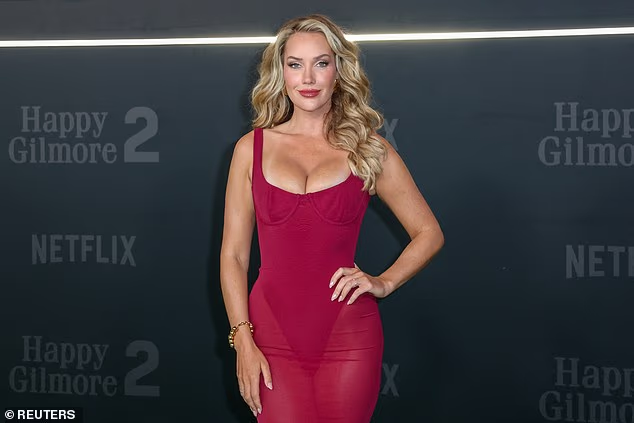

The Paige Spiranac Paradox: Why Golf’s Most Followed Figure Represents Both Progress and Peril
After 35 years covering professional golf—and having carried the bag for some genuinely talented players—I’ve learned that the sport’s biggest stories rarely happen on the course anymore. They happen in the space between what golf is and what it’s becoming. Paige Spiranac’s candid recent interview with Golf Monthly perfectly captures that tension, and it’s worth taking seriously.
Here’s what struck me first: A golfer with 11.6 million social media followers—more than Rory McIlroy or Tiger Woods—is now openly wrestling with the persona that built that empire. That’s not just interesting. It’s complicated in ways that reveal something fundamental about modern sports, personal branding, and the peculiar burden of being a woman in a male-dominated industry.
The Numbers Tell Part of the Story
Let’s establish the baseline. Spiranac commands four million Instagram followers alone. She’s built a multimedia presence that most professional athletes—including major champions—would trade their short game for. That’s not opinion; that’s market reality. The woman understands audience engagement better than most sports marketing executives I’ve met at Tour events over the decades.
But here’s what I think gets overlooked: Those numbers don’t exist in a vacuum. They exist because golf, for all its traditions and country club aesthetics, has become desperately hungry for younger, more diverse viewership. Spiranac didn’t create that hunger—she simply recognized it and filled it. In my experience, that’s not cynical. That’s entrepreneurship.
The Trap Built By Success
What’s genuinely thought-provoking about Spiranac’s recent comments is her honesty about the cage that success creates.
“It’s hard to dive into all the intricacies of how this has come to be and how I feel about it, because I can see it from a feminist perspective, but I can also feel trapped sometimes. They all work together.”
I’ve covered enough athletes’ careers to know that this kind of vulnerability doesn’t come from nowhere. Having watched the tour evolve across three decades, I’ve seen players struggle with public perception before—but rarely with such clarity about the gendered nature of that struggle. A male golfer building a brand around his appearance faces entirely different calculus than a woman doing the same thing.
Spiranac’s point about being judged for attributes “out of her control” resonates differently when you consider how professional sports has historically treated female athletes. The fact that she’s explicitly calling this out—connecting it to empowerment rather than victimhood—suggests a maturity about her own narrative that frankly surprised me.
From Necessity to Agency
Here’s the insight that most casual observers miss: Spiranac frames her rise not as rebellion, but as pragmatism within constraint.
“I was in a position of necessity. I was a young woman in a male-dominated industry with no power, no say, and needing to make money. I just decided I was going to run with this and see what would happen.”
That’s not the origin story we typically hear about success in sports. We prefer narratives of pure talent or pure grit. But Spiranac’s honesty—that she was responding to structural realities rather than indulging in mere provocation—actually reframes the entire conversation. Having caddied back in the ’90s when women’s golf got a fraction of the media attention it deserves, I recognize what she’s describing: a player recognizing where the leverage actually exists and using it.
The question isn’t whether that’s problematic. The question is whether it’s any different from any professional athlete monetizing their personal brand. Spoiler alert: It’s not.
The Mentor’s Burden
What genuinely impressed me about Spiranac’s recent statements is her role as a trailblazer with a conscience. She’s explicitly refused to shield younger influencers from hard truths about building a brand around appearance.
“There are setbacks to the brand I’ve built and how people view you. There are pros and cons to building a brand and looking the way that I do. You can just never win, and you just have to pick where you feel most comfortable.”
That’s not the cheerleading you’d expect from someone who’s benefited enormously from a particular formula. She’s created space for figures like Lucy Robson, Grace Charis, and Bri Teresi to exist in professional golf’s ecosystem—but she’s not pretending the path is consequence-free. In my experience covering the tour, that kind of honesty from successful figures is rare and valuable.
What This Means for Golf
I think what we’re witnessing is golf’s awkward adolescence. The sport built on exclusivity and tradition is suddenly contending with voices and audiences it didn’t invite through the front door. Some in the golf establishment remain uncomfortable with that reality. Others—wisely, I’d argue—recognize that Spiranac’s presence has made golf relevant to millions of people who would never have watched a tournament otherwise.
That’s not a clean victory. It’s messy. It raises questions about authenticity, about whether social media influence translates to actual love of golf, about whether the sport is expanding or diluting itself. Those are fair conversations.
But here’s what I know after three and a half decades of following this game: Golf’s future depends on bringing in new people and new perspectives. Paige Spiranac—complicated, polarizing, shrewdly self-aware Paige Spiranac—is doing that. She’s also refusing to pretend it’s simple or cost-free.
That’s not just good branding. That’s integrity.
