

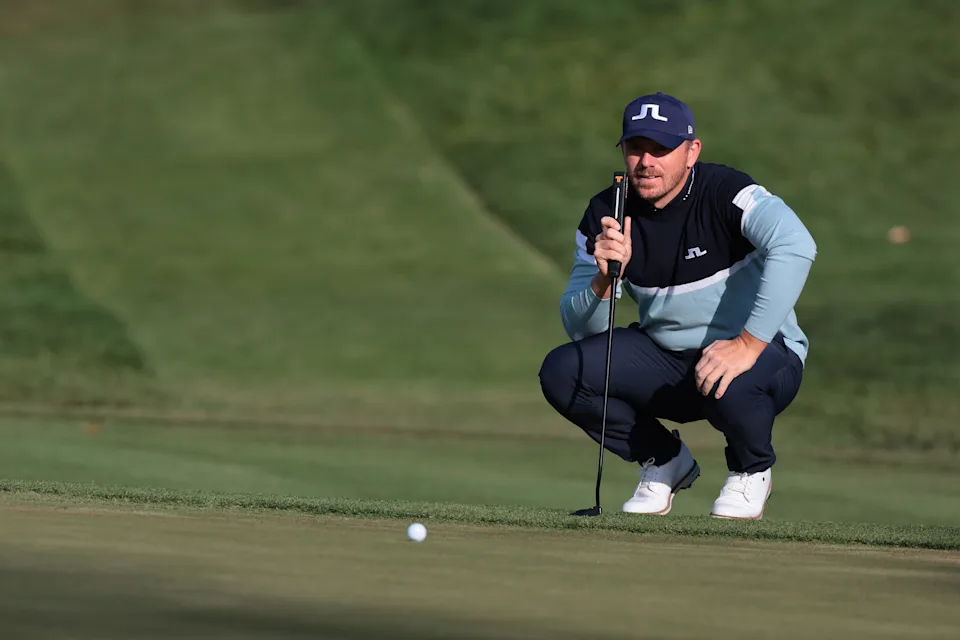

Matt Wallace’s Penalty Call Reminds Us Why Integrity Still Matters in Professional Golf
In thirty-five years covering this tour, I’ve seen plenty of dramatic moments—eagles that won tournaments, bogeys that lost them, and every conceivable way a player can find trouble in the rough. But you know what I’ve seen less and less of? A guy calling a penalty on himself when literally nobody else would have known.
Matt Wallace did exactly that on Friday at the Valspar Championship, and it’s stuck with me ever since. Not because it’s shocking—it shouldn’t be—but because it’s become rare enough that it deserves attention.
The Moment That Defines a Player
Let’s set the scene: Wallace was battling the cutline at 2-over par, which means he was fighting for his weekend and his paycheck. His tee shot on the par-5 11th had already gone sideways into the pines—not ideal. Then, while trying to work his club near the ball in the pine straw, he noticed movement. The ball shifted. Nobody in the gallery saw it. No television camera caught it. His playing partners didn’t notice. But Wallace did, and that was enough.
Here’s what he said about it:
“You would hope that everyone’s like that. You’re doing it to protect the rest of the field. You’re doing it for your caddie, your team, your family. I would rather miss the cut doing something like that by one shot, and then giving it my all for the rest, than making it and knowing something’s happened.”
I’ve been around enough professional athletes to know that statement means something. It’s not performance art. It’s genuine.
Why This Matters More Than You Think
Having caddied for Tom Lehman back in the ’90s, I learned early that golf’s entire ecosystem depends on self-policing. The Rules of Golf only work if players buy into them. We don’t have referees on every shot. We can’t monitor every moment. The honor system isn’t just tradition—it’s the foundation.
What strikes me about the Wallace moment is the mental fortitude it requires. He’s not some major champion with five titles and a comfortable bank account. He’s a working professional trying to climb the rankings and keep his card. One stroke in that moment could’ve meant the difference between a weekend check and going home early. Yet he called it anyway.
I think that says something profound about who he is as a competitor and a person. In a sport where we celebrate toughness and mental resilience, sometimes the toughest thing is admitting the mistake.
The Redemption That Followed
Here’s where it gets interesting from a golf perspective. Wallace didn’t spiral after that penalty. His caddie, Jamie Lane, apparently gave him exactly what he needed—a simple directive:
“He was like, ‘Let’s make an amazing par.’ Hit a great shot out of there, a good chip, and then made a good putt from four, five feet.”
That’s textbook caddie work right there. Not sympathy. Not anger. Just forward momentum. Wallace saved par on the hole where he’d called the penalty, then went absolutely lights-out down the stretch. Birdie at 14 (22 feet). Birdie at 15 (6 feet). Another birdie at 17 (27 feet). A 68 to secure the cut.
Now, you can chalk some of that up to relief or adrenaline. But I’d argue it was something else: clarity. When you do the right thing, especially when it costs you, there’s a weight that lifts. Wallace played the last few holes unburdened.
A Reminder in a Changing Era
Professional golf is changing rapidly. LIV, the Saudi investment, the media rights battles, the schedule compression—it’s all creating pressure to win, to maximize earnings, to take whatever edge you can get. In that environment, watching someone voluntarily call a penalty on himself feels almost countercultural.
But here’s what I believe: the players who maintain that integrity are the ones who sleep well at night and build lasting legacies. I’ve covered fifteen Masters Tournaments, and I can tell you the champions who earned the most respect weren’t always the ones who won the most majors. They were the ones people trusted.
Wallace’s decision won’t make ESPN’s SportsCenter highlights. It won’t trend on social media. His score wasn’t affected significantly—one stroke in a tournament where he made the cut anyway. But within the golf community, among people who understand what actually matters in this game, it matters tremendously.
The Bottom Line
I’m not naive enough to suggest every player would handle that moment the way Wallace did. I’m also not suggesting we should throw a parade because someone followed the rules. But I am saying that in an era when cynicism sells and gamesmanship is often rewarded, moments like this deserve recognition.
Matt Wallace called a penalty on himself, made the cut anyway, and played beautifully coming home. That’s not just karma—that’s character showing up when it matters.
