

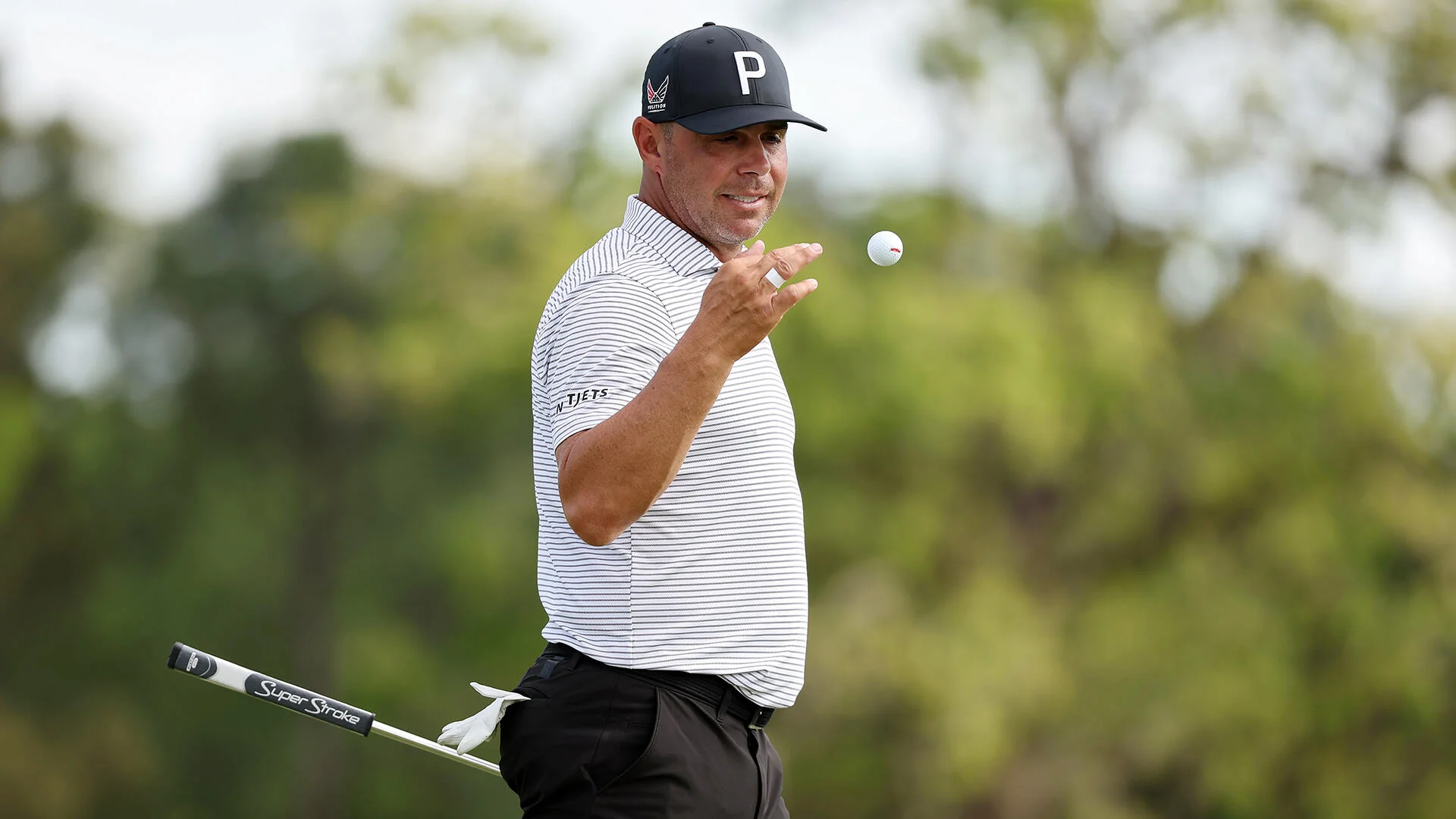

I’ve been covering professional golf for thirty-five years, and I’ve learned that the Houston Open doesn’t always produce the most glamorous storylines. But this week at Memorial Park, we’re witnessing something far more compelling than another trophy chase. We’re watching redemption, resilience, and the messy reality of what it takes to survive on the PGA Tour in 2026.
When the Long Road Finally Pays Off
Paul Waring’s 7-under 63 to command the first-round lead isn’t just a good score—it’s a vindication. The 41-year-old Englishman arrived in Houston on a medical extension after a brutal 2025 campaign that saw him post 10 missed cuts and a withdrawal in just 12 tournaments. His transition from the DP World Tour, where he won the Abu Dhabi HSBC Championship in 2024, to the PGA Tour has been nothing short of humbling.
What strikes me most isn’t the round itself—though bogey-free golf anywhere is impressive—but what it represents. In my experience, veteran players who’ve tasted success elsewhere often struggle with the mental side of starting over. They know what they’re capable of, but the body and circumstances don’t always cooperate. Waring’s been battling injury while simultaneously trying to prove he belongs on this tour. That’s a double burden.
His own words are telling: “I found a little bit of momentum coming forward in the last few weeks. I know I missed cuts at Valspar and Cognizant, but I felt like my golf game was in a good spot.”
Notice what he’s saying here—the missed cuts weren’t demoralizing endpoints; they were diagnostic sessions. That’s the mindset of someone who’s learned to separate noise from signal. When Waring holed 160 feet of putts in Round 1, it wasn’t luck. It was a player who’d been grinding in obscurity finally getting the ball to roll his way.
Gary Woodland’s Quiet Courage
Then there’s Gary Woodland, just one stroke back at 6-under with a 64. I’ll be honest—when Woodland opened up about his PTSD following his 2023 brain surgery at The Players Championship, I wasn’t sure what to expect from him at tour events moving forward. These things don’t disappear because you’ve gone on record about them.
But here’s what I’ve witnessed in my time around this sport: sometimes the burden of secrecy weighs heavier than the condition itself. Woodland felt compelled to carry this alone until he couldn’t anymore. Now he’s not.
His words at Memorial Park resonate because they’re honest: “The response has been big, and it’s also been big for me because I got a lot of relief. I literally feel like I got a thousand pounds off my back that day.”
What’s remarkable is that Woodland isn’t suddenly playing flawless golf. He ranked second in greens in regulation Thursday and cracked the top 10 in ball-striking categories. These are solid, professional numbers. But more importantly, he felt comfortable inside the ropes. That’s the real victory—not some dramatic 62 or a sudden return to form, but simply feeling like himself while playing.
In my three decades covering the tour, I’ve seen how mental health directly impacts performance. You can’t fake comfort. You can’t manufacture that feeling of being “at home” on a golf course when you’re battling anxiety and hypervigilance. The fact that Woodland is competing effectively—and the PGA Tour brought in additional security measures to support him—tells me something important about where our sport is heading.
The Desperation Factor
Rickie Fowler and Sahith Theegala are both sitting at 3-under, tied for third, but their situations are dramatically different from Waring’s redemption arc or Woodland’s mental-health breakthrough.
Both men are fighting the calendar. Fowler, ranked No. 61, needs a high finish to climb inside the top 50 and earn an invitation to the first major. Theegala, at world No. 80, is similarly desperate. For younger players, especially, this week represents something binary: advancement or stagnation.
Fowler’s frame of mind is telling: “A lot of it is on the mental side, not trying to do too much or anything special, trying to kind of let the rounds come to me.”
That’s the paradox of pressure golf. The harder you chase desperation, the worse it usually goes. Fowler’s learned to dial it back, to play simple golf. Whether he can maintain that philosophy when Friday’s leaderboard materializes is another question entirely.
The Leaderboard and the Narrative
Leader
1. Paul Waring (-7)
Contenders
2. Gary Woodland (-6)
T3. Sam Burns, Michael Brennan, Tom Hoge (-5)
T6. Marco Penge, Stephan Jaeger, Kurt Kitayama, Matt Wallace (-4)
This field doesn’t scream “major championship preview.” It’s not loaded with the usual suspects. But that’s precisely why this week matters. The Houston Open has always been a tournament where secondary stories become primary narratives. Where veteran journeymen like Waring can remind us they’re still relevant. Where players like Woodland can demonstrate that vulnerability and performance aren’t mutually exclusive.
I think that’s the real story emerging from Memorial Park this week. Not who wins the trophy, but what happens when players stop pretending everything is fine and start playing like people who’ve actually worked through something.
That’s the golf I’ve always wanted to cover.
