


Houston Open Delivers the Tour’s Most Human Narrative Yet
Paul Waring’s 63 Masks a Larger Story About Perseverance, Mental Health, and What It Really Means to Belong
I’ve been covering professional golf for 35 years, and if there’s one thing I’ve learned, it’s that scorecards tell you what happened. They don’t tell you why it matters. Thursday at the 2026 Houston Open is a perfect case study.
Yes, Paul Waring shot a bogey-free 63 to lead the tournament. Yes, it was the low round of the day by a stroke. Yes, he’s a 41-year-old Englishman who spent 16 years grinding on the DP World Tour before finally making his way stateside. Those are the facts. But the real story—the one that matters—is about a man who arrived in Houston on a medical extension after three straight missed cuts, fighting both his body and his demons, and somehow found exactly what he needed at exactly the right moment.
That’s golf. That’s life on the PGA Tour.
What strikes me most is the contrast between Waring’s methodical excellence and the chaos that preceded it. In my caddie days with Tom Lehman, I learned that consistency is often invisible. Nobody remembers the shots you didn’t make. Waring holed 160 feet of putts Thursday—that’s genuinely exceptional—but he also connected on 14 greens in regulation and hit 9 of 13 fairways. The putter gets the headlines, but the tee-to-green game is what actually won him the day.
"I found a little bit of momentum coming forward in the last few weeks. I know [I] missed cuts at Valspar [Championship] and Cognizant [Classic], but [I] felt like my golf game was in a good spot…. This week, a lot tidier, no bogeys and holed a good amount of footage today."
This is the language of a player who refused to panic. Three missed cuts. Medical extension hanging over his head. Most guys pack it in. Waring stayed after it.
When the Course Becomes Safe Haven
Waring’s own analysis of why Memorial Park suits him deserves more attention than it typically gets. He mentioned that the course is "quite forgiving off the tee" and allows him to "swing freely, without any fear." In 35 years covering this tour, I’ve noticed that the best performances often come when players stop thinking and start being. The course design—wide fairways, room to move—removed obstacles that had been plaguing him mentally. That’s not luck. That’s preparation meeting opportunity.
The numbers back this up. Waring’s wedge play is exceptional, and the par-5 setup at Memorial Park has historically rewarded that skill set. He’s not going out there hoping. He’s going out there knowing what he’s supposed to do.
The Gary Woodland Factor: This Transcends Golf
Now here’s where my role as a journalist intersects with my role as a human being who covers this sport.
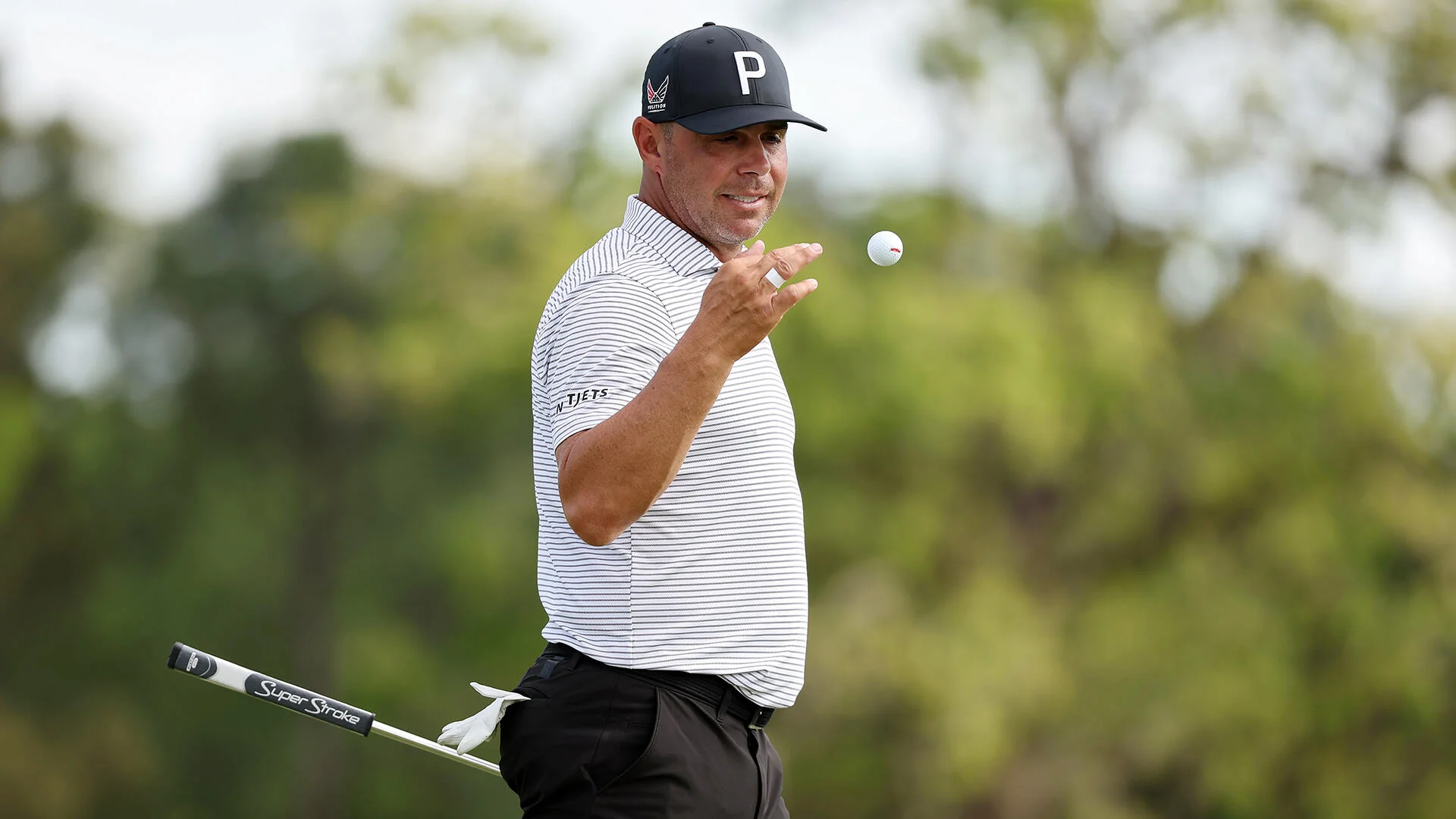
Gary Woodland’s 64 puts him at minus-6, just one shot back. That sentence is accurate. It’s also incomplete.
Woodland’s decision to publicly discuss his PTSD following brain surgery at The Players Championship was extraordinary. I’ve covered 15 Masters. I’ve seen players reveal injuries, struggles, personal tragedies. Rarely—almost never—have I seen someone address mental health with this kind of directness:
"The response has been … big, and it’s also been big for me because I got a lot of relief. I literally feel like I got a thousand pounds off my back that day. It was hard to do. I was crying going into the interview, and I left feeling a thousand pounds lighter."
That’s not soundbite fodder. That’s a man describing the weight of carrying something alone and the relief of not having to anymore. The PGA Tour’s response—additional security measures, publicly acknowledging his situation—represents institutional progress that I frankly didn’t expect to see five years ago.
Woodland shot a 64 one week after scoring at Valspar. His greens in regulation were second-best in the field. But what matters more is that he felt comfortable out there. That he’s fighting his battle publicly and living to tell about it.
The Contenders’ Board and The Urgency Below
The leaderboard tells multiple stories:
2026 Houston Open First Round Leaders
- Paul Waring (-7): 63
- Gary Woodland (-6): 64
T3. Sam Burns, Michael Brennan, Tom Hoge (-5): 65
T6. Marco Penge, Stephan Jaeger, Kurt Kitayama, Matt Wallace (-4): 66
But look deeper. Rickie Fowler sits at 3-under alongside Sahith Theegala, both fighting for positioning in the World Rankings. Fowler needs to crack the top 50 to earn his invite to the spring majors. Theegala, a former Texas Longhorn and Houston resident, is battling similar demons. Pierceson Coody shot a 70 and will be playing for his Masters spot on Friday.
This is where desperation meets opportunity. In my experience, you don’t get more focused urgency than when a player’s calendar-year goals hang in the balance.
Looking Forward
The odds favor Burns at 15/2, but I’d actually rather own Woodland at 12/1 than most plays in this field. Momentum is real. Mental health recovery is real. And sometimes a guy who’s fought his way through genuine adversity—not just a bad tee shot, but actual brain surgery and PTSD—plays with a clarity that can’t be faked.
Waring will need to maintain the form that produced that 63. But having watched a thousand tournaments, I can tell you that when a 41-year-old grinder finally finds his game and his confidence simultaneously, you better respect it.
The leaderboard is crowded. The narrative is wide open. That’s exactly how this sport should be.
